06 / 10
Chapter 6: Nobody Looks At The Waitress
Ethan Caldwell sat on the only chair in my studio, his knees nearly touching my radiator, while I made two mugs of tea on a stove the size of a lunchbox. He looked at the stacks of secondhand textbooks on my windowsill and tilted his head.
"Psychology?" he asked.
"Hunter College, one class a semester," I said. "At this rate, I'll graduate right around retirement."
He laughed, but it faded fast. "My father was a machinist in Dayton," he said, wrapping his hands around the mug. "He drank, and when he drank, he broke things, so I learned how to fix them—radios, chairs, a cracked windshield—so I'd never have to watch anything stay broken."
"And Peter?" I asked.
"Peter was the first person who ever looked at the kid who fixed radios and saw something worth betting on," Ethan said, his voice rough. "I'd have trusted him with my life—and I guess I did."
So I told him about my father. I told him about the footsteps, the car in the driveway, and the night I finally picked up the phone, and he listened the way he had in the salon, without a single interruption.
When I finished, he was quiet. "That's why you see everything," he said.
"That's why I can't stop," I said.
Then I told him about the Aldridge Club. His face went hard before I even finished.
"Absolutely not," he said. "If Peter did this, he's willing to frame his best friend for treason—what do you think he'd do to a waitress?"
"Nothing, because he won't see one," I said. "They'll talk in front of me like I'm a coat rack, Ethan—that's the one thing I'm better at than anyone in your entire company."
We argued until three, and I won. At nine the next morning, we sat across from Agent Laura Kim in a windowless room at Federal Plaza, and to my surprise, she didn't laugh.
"The options records are enough to make me curious," she said. "But curiosity isn't a warrant, and nobody on my team can walk into that dining room without being made in a heartbeat."
She turned to me and studied me over her reading glasses. "So you want to be my waitress—fine, but you don't play hero. You listen, you pour, and you get out."
Ethan insisted on waiting in the surveillance van on Sixty-First Street, and Kim agreed only after he promised to sit in the back and touch nothing. "I've seen men like you in vans," she told him dryly. "You always touch something."
Her technician replaced the clasp of the thin gold necklace my grandmother had left me with a tiny transmitter. Kim gave me a code phrase, too—if anything went wrong, I would ask whether anyone would like to see the dessert cart, and her agents would come through the door.
The week crawled by. Ethan called every night, and every night we talked a little longer, until one of us fell asleep with the phone on the pillow.
He told me about the first drone he ever built, which crashed straight into his neighbor's birdbath. I told him about the senator's wife who once hid a lobster tail in her purse, and he laughed so hard he had to put the phone down.
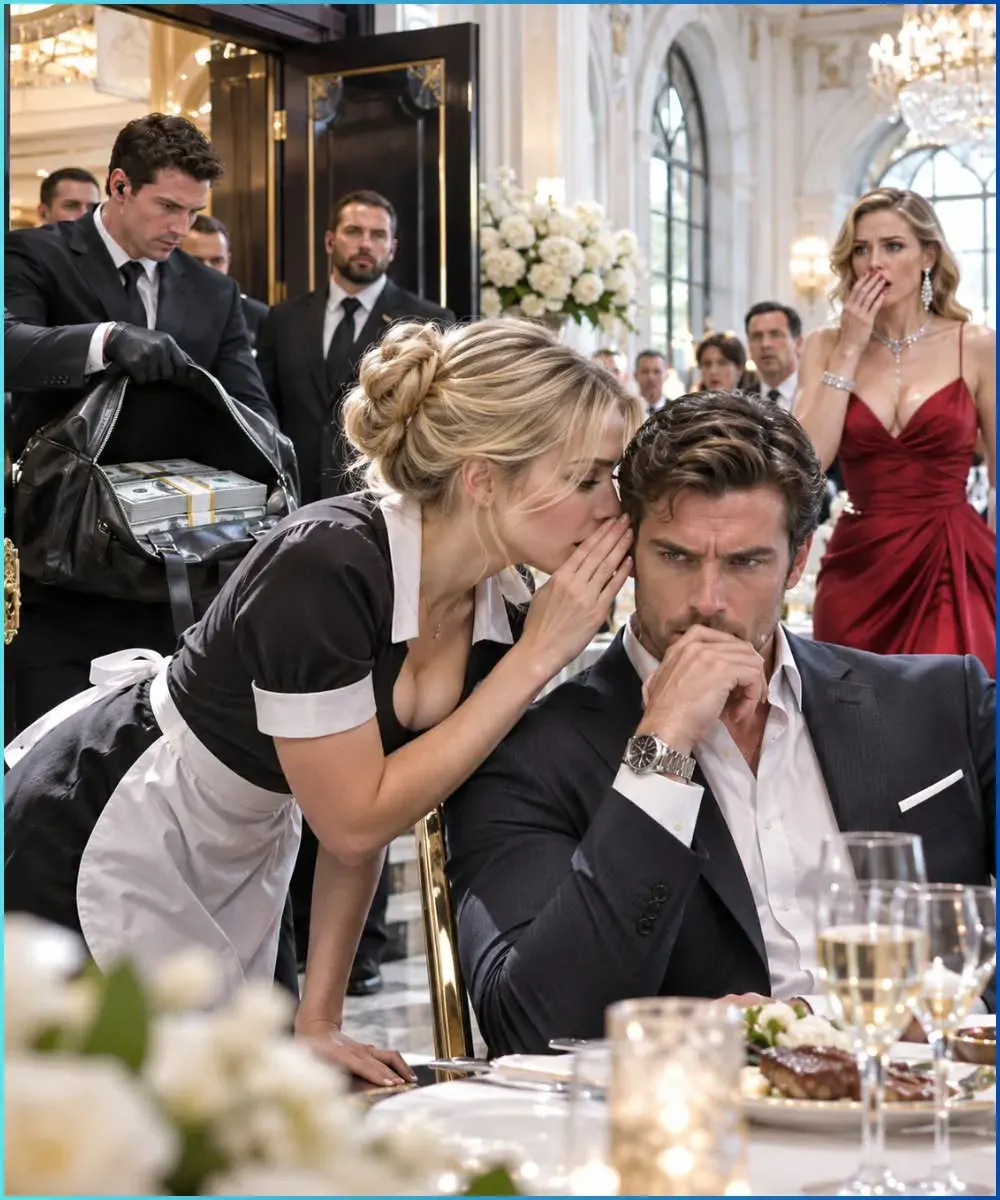
On Friday evening, I braided my hair into a tight bun, pulled on the black uniform dress with the white collar and white cuffs, and tied my old apron around my waist. Then I walked through the staff entrance of the Aldridge Club as Annie Walsh.
Rosie squeezed my hand by the dish station without a word. Martin stood at the head of the kitchen reading assignments off his clipboard, and when he got to Annie, he pointed at the private dining room without lifting his eyes.
I picked up a tray of champagne and carried it through the oak doors. The private room glowed with candlelight and dark paneling, and at the long table sat Peter Sloane, four silver-haired men in expensive suits, and one woman.
She wore black velvet tonight instead of red satin, her honey-blonde waves pinned up off her neck, and she sat at Peter's right hand like she belonged there. As I set a glass in front of her, Diana raised her eyes and looked directly into mine.