05 / 10
Chapter 5: My Father's Table
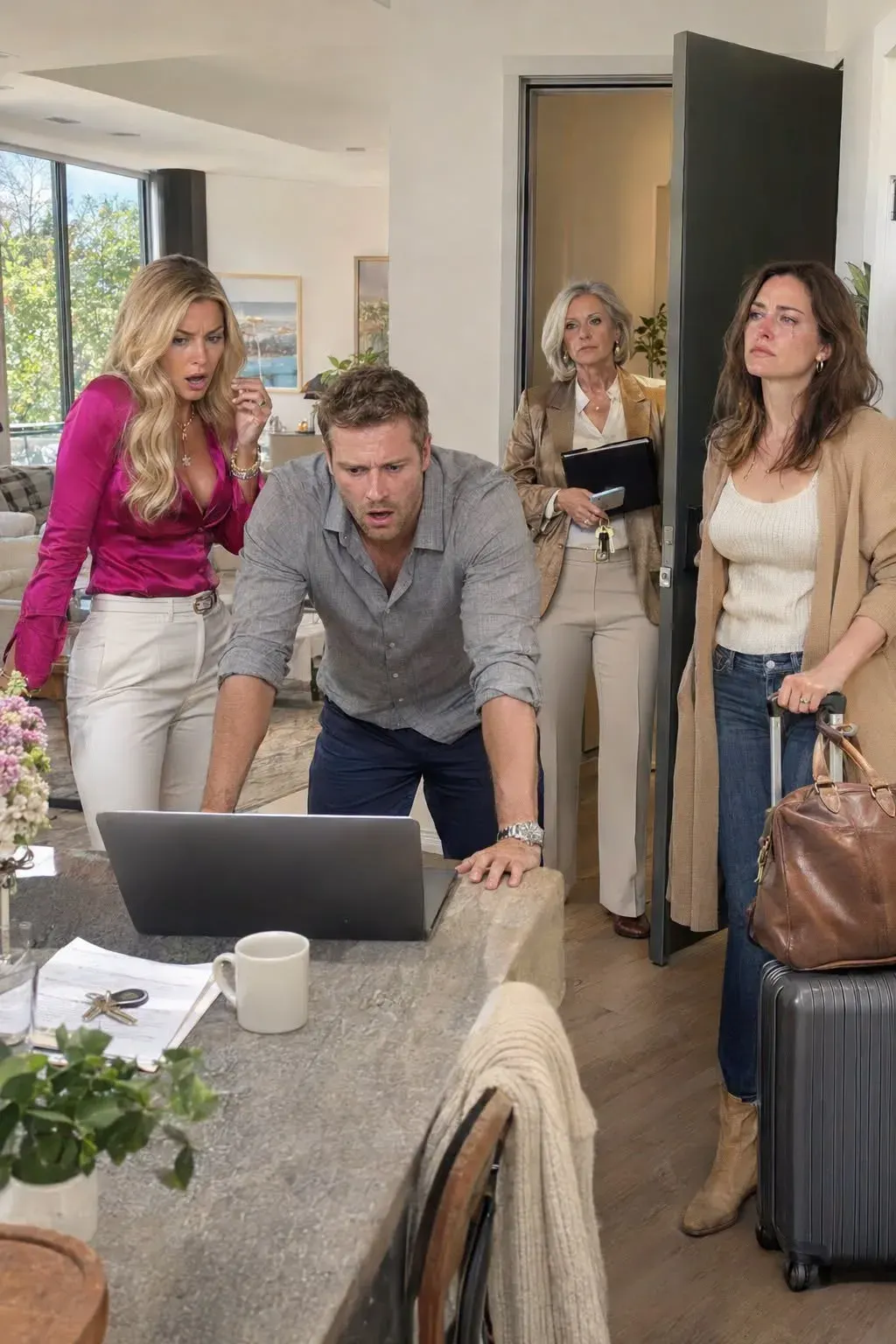
I spent Friday and Saturday alone in 4C, eating cereal for dinner and walking past the den without looking in. On the wall where Hadley's watercolor used to hang, there was a pale rectangle on the lavender paint, and every time I saw it, my chest hurt.
On Sunday, I drove down the interstate to Colorado Springs for dinner, because I couldn't stand another night in that silent apartment. My parents still lived in the same tan split-level where I grew up, with the same plaid couch and the same framed photo of my brother, Cole, and me in matching baseball uniforms.
My mother hugged me at the front door a little longer than usual, as if she could tell something was wrong just from the way I stood. My father stayed in his recliner watching a football game and lifted two fingers from the armrest by way of hello.
My mother made pot roast. My father sat at the head of the table and carved it the way he always did, as if the meat had personally disrespected him.
I told them everything—Delaney, the den, the email, the suitcase, Mrs. Carter's question in the doorway. I left out the eleven lines and the sticky note, because I couldn't say those parts out loud yet.
My father listened, chewing, and then pointed his fork at me. "Your mistake was explaining yourself," he said. "You tell a woman how it's going to be, and she's back in a week, son—they always are."
Across the table, my mother set down her glass of iced tea without a sound.
I had heard my father say things like that my whole life. This time, though, I heard my own voice inside his—the rehearsed line in the parking garage, the shrug, the phone I wouldn't look up from—and the pot roast turned to sand in my mouth.
"She's not coming back, Dad," I said. "And she shouldn't."
He snorted and reached for the gravy. "Then she wasn't worth keeping."
"She paid the rent, Dad," I said. "Most of it, for most of a year, while I let her."
"Well, there's your first mistake," he said, shaking his head like a coach after a fumble. "You never let a woman handle the money in your own house."
My mother got up and started clearing plates, the way she always had. But when I carried my own plate into the kitchen, she was standing at the sink with both hands flat on the counter, and she was shaking.
"Come out back with me, Wes," she said.
We sat on the back porch steps while the sun went down behind Pikes Peak, turning the whole sky orange and violet. My mother was sixty, small and silver-haired, and she had spent thirty-four years agreeing with a man who had never once asked for her opinion.
"Your father told me we were moving here the week after our wedding," she said. "He told me I'd be quitting my job at the bank, and he told me what color our kitchen would be."
She smiled a little at the dark yard. "I said 'no problem' every single time. I said it for thirty-four years."
Something tight closed around my throat. "Mom—"
"Your Hadley said it once and meant it," she said. "Do you understand how much courage that takes? I've been trying to find that much courage since my wedding day."
Then she went inside and came back with an old blue coffee can, the kind with a plastic lid. She pried it open and tilted it toward me, and I saw a thick roll of bills held together with a rubber band, along with a folded index card covered in tiny dates and numbers.
"Twenty-two years," she said. "Four thousand one hundred dollars, a little at a time from the grocery money, and I count it every Christmas."
Behind us, through the screen door, I could hear the television and my father yelling at a referee. My mother didn't even turn her head.
"For what?" I asked, though some part of me already knew.
My mother pressed the lid back on and held the can in her lap like something alive. "For the day I finally stop saying no problem," she said. "And lately, Wes, I've been thinking that day might be close."