08 / 10
Chapter 8: The Same Room Again
The federal courthouse on Dearborn Street smelled like floor wax and burnt coffee, and my heels echoed so loudly across the marble lobby that I was sure everyone could hear my heart.
I had left Lily in San Diego with Maggie, and Owen had driven me to the airport with a thermos of coffee and a note from Hazel that said BE BRAVE in purple crayon. I kept it folded inside my jacket pocket the whole flight.
Harold met me at the security line in his best brown suit, smelling of peppermints. "You look like a woman who's already won," he said, squeezing my elbow.
"I feel like a woman who's about to throw up," I admitted.
Sophia was waiting outside the courtroom in a cream-colored suit and pearls, her blonde hair smoothed into a demure low knot as if she were attending a christening. When she saw me, she smiled the same small, satisfied smile she'd worn at Castellane.
"Evie," she said sweetly, loud enough for the reporters down the hall to hear. "California agrees with you—running away must be so relaxing."
Seven weeks earlier, I would have flushed and stammered and walked away hating myself. Instead, I stopped right in front of her, close enough to smell her perfume.
"I didn't run, Sophia," I said evenly. "I just stepped out of the way so everyone could finally see you."
Her smile flickered, and I walked past her into the courtroom without looking back.
The hearing lasted most of the day. Harold walked the judge through every invoice and every transfer, and a handwriting expert compared my real signature with the forgeries side by side on a large screen, explaining why the tail on my Moretti curled left and Sophia's curled right.
Then Dana called me to the stand, and I told the truth plainly—about Marisol's phone call, the ledgers at three in the morning, and the date on that invoice. When Sophia's attorney suggested I had invented the whole thing out of jealousy, I simply held up a copy of Lily's birth certificate.
"I was in labor," I said. "Ask anyone who was in the room."
Dana called Alexander next.
I hadn't seen him in seven weeks, and he looked like a man who'd been sleeping in a chair. He wore a plain gray suit instead of his usual black, his dark hair cut shorter, and when he passed my seat, he didn't try to catch my eye—he simply nodded once, the way you'd nod to someone at a funeral.
Under oath, he described March third in detail I didn't know he remembered—my grip on his hand, the nurse who called him Daddy before Lily had even cried, the pink balloons Sophia carried in that evening. Then Sophia's attorney rose and asked whether he was lying now to win his wife back.
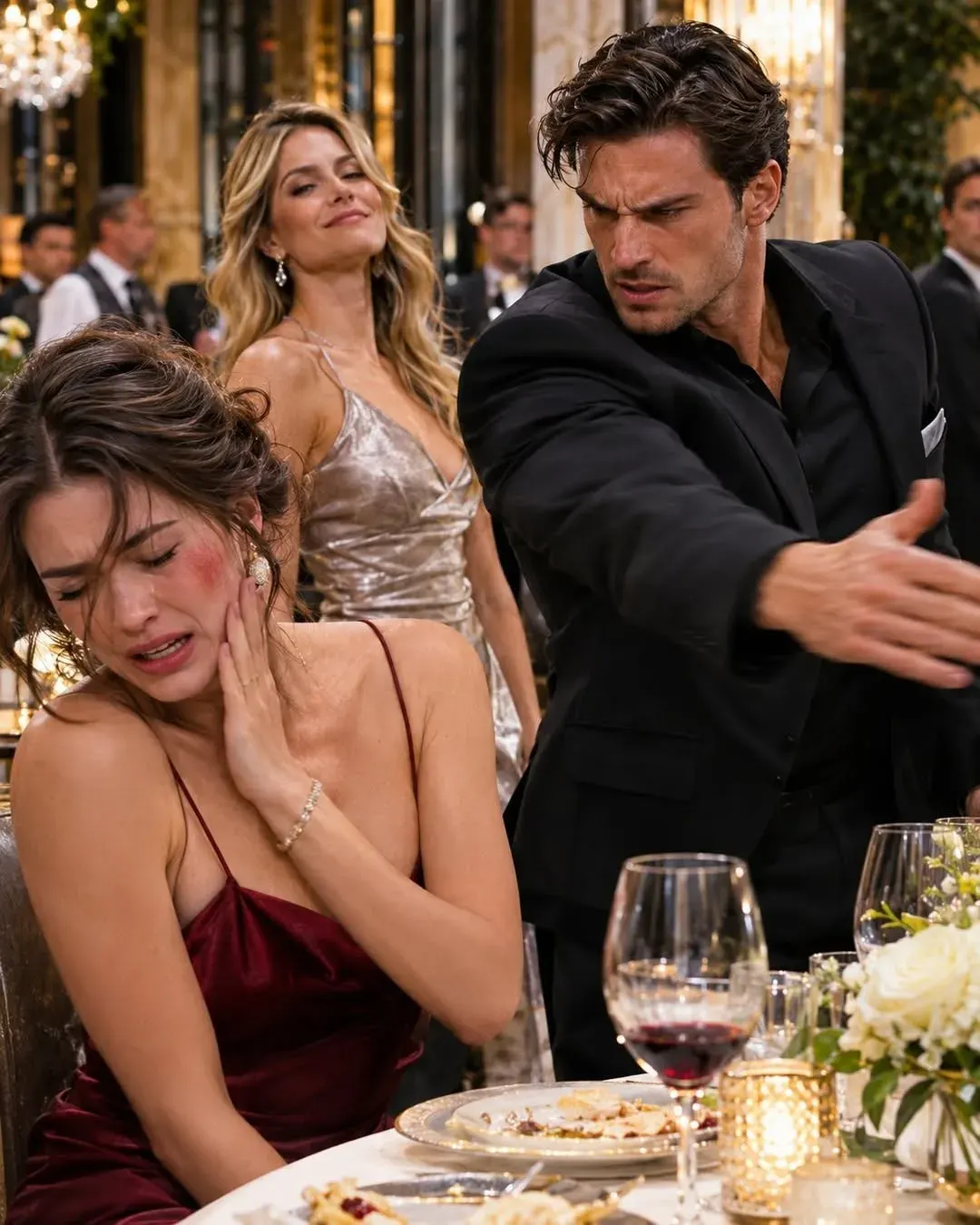
Alexander turned and looked directly at the judge. "Seven weeks ago, I hit my wife in a restaurant full of strangers because she refused to apologize for something she never did," he said, his voice steady. "My wife did nothing wrong—I did, and I'm not here to win her back, I'm here because I owe her the truth."
The courtroom went completely silent.
Then Sophia shot to her feet so fast that her chair scraped across the floor. "You were supposed to be mine!" she screamed at him, her voice cracking into something raw and ugly—"eighteen years, Alex, and she was never supposed to stay!"
Her attorney pulled her back into her seat, but it was far too late. By four o'clock, the judge had found probable cause on every count, and Sophia Reynolds was led out a side door with her pearls askew.
When I stepped out onto Dearborn Street, the cold November wind stung my face, and so did the sight waiting on the courthouse steps.
Twenty-three families stood there in the cold—Marisol Ortega at the front with Mateo beside her, holding a cardboard sign that said THANK YOU, MRS. MORETTI in thick black letters. Mateo hugged me so hard my feet left the ground.
Reporters surged toward Alexander as he came down the steps behind me, thrusting microphones toward his face. He stopped, and I braced myself for the polished, powerful voice that had always made rooms obey.
Instead, he spoke to the cameras plainly. "I hit my wife in front of eighty people," he said. "So I'll say this in front of all of you—she was right, I was wrong, and I am deeply sorry."
Then he turned to me, keeping a careful six feet of cold air between us. "I'm not asking you to come home, Evelyn," he said, his voice low. "I'm only asking whether, someday, I might be allowed to see my daughter."