02 / 10
Chapter 2: What The Box Was Hiding
I took the stairs instead of the elevator, the velvet box clenched in my fist, and burst out onto Fifth Avenue into a wall of honking cabs and late-summer heat. Tommy, my driver for eleven years, was standing beside the car with his cap in his hands, looking at me as if he'd been dreading this moment.
"Mrs. Falcone asked me to drive her home, boss," he said carefully. "Then she changed her mind at the curb, flagged a cab instead, and told me you'd be needing the car."
"How did she look?" I asked.
Tommy hesitated. "Like she was saying goodbye to me," he said.
In the back seat, as Tommy ran yellow lights down Seventh Avenue, I opened the velvet box. My silver cufflinks sat polished in their satin slots, and when I lifted the satin insert to take them out, a folded square of glossy paper dropped into my lap.
I unfolded it under the passing streetlights. It was a grainy black-and-white image—a fan of gray static and, in the middle, a tiny pale curve no bigger than a bean—and printed across the top were the words FALCONE, CARLA, 8 WEEKS, beside a date from three weeks earlier.
On the back, in my wife's neat bookkeeper's handwriting, were two short lines. "Your cufflinks. Also, your son or daughter—surprise."
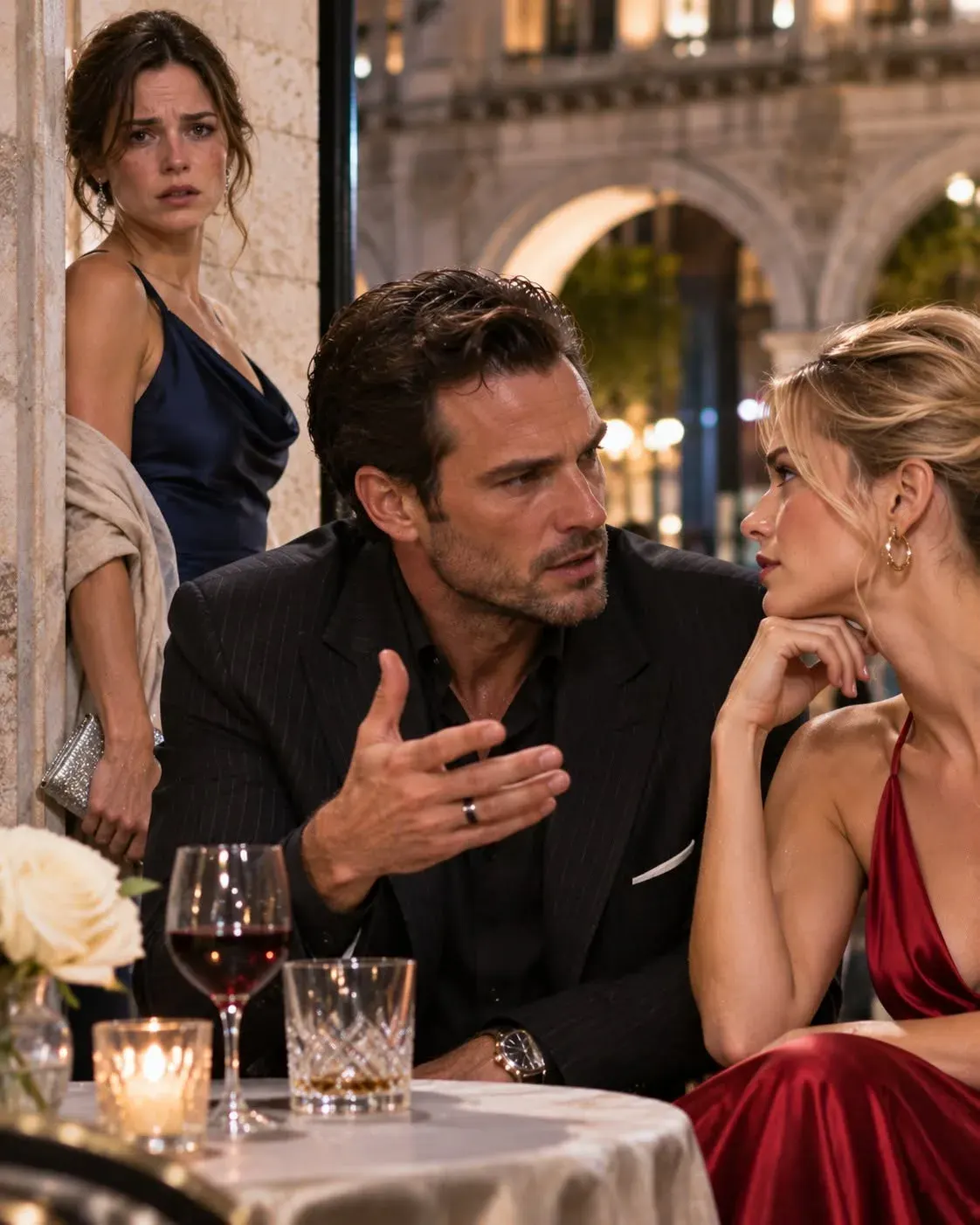
I read those words until the paper blurred. Then I understood what she had been trying to tell me for three weeks, and what she had walked out onto that terrace to give me, and exactly what she had heard me say instead.
The penthouse door was standing open when I got there. Nicky Russo, one of Leo's men who lived six blocks away, was waiting outside my office with his hands in his pockets, and Leo himself came off the elevator right behind me, still in his tuxedo.
"Boss," Nicky said, stepping aside. "You'd better see it yourself."
The oil painting of the ship in the storm had been swung back on its hinges, and the safe door stood wide open. My father's watches were untouched on their velvet tray, but a stack of cash was missing, and in its place lay a strip of notepaper—Fifty thousand, C.F.—because even running away from me, my wife kept honest books.
The shelf where the black ledger always sat was empty.
On my green leather blotter, under the lamp, lay Carla's diamond wedding band beside one of my uncapped fountain pens and a single sheet of my own stationery.
Matteo—I was on the terrace, and I heard everything you said to her. The docks stay with my family, and your book stays with me. Please don't come after me—you were right about one thing tonight, it was only ever business.
I sat down in my chair because my legs had decided for me.
I stared at that ring on the blotter, and for a moment I wasn't forty years old in a penthouse in Tribeca. I was nine, standing in a cold kitchen in Bensonhurst, looking at a gold band beside a bowl of soggy cereal.
"Boss," Leo said, closing the office door. "You know what's in that book better than I do."
I did. My father had kept that ledger for thirty years—the names of two judges, a deputy police commissioner, half the harbor inspectors in the city, and the private terms of every truce the families of New York had ever made with each other.
It kept the peace because everybody in it was afraid of everybody else. In the wrong hands, it was worth more than every dock in Queens.
"If anyone finds out she's carrying it around," Leo said grimly, "half this city will want the book, and the other half will want her quiet."
"Nobody touches her," I said, and my voice came out like gravel. "Nobody so much as says her name until I find her."
Before Leo could answer, someone knocked at the open door. It was Eddie Kaminski, my night doorman, sweating through his uniform and twisting his cap in both hands like a wet rag.
"Mr. Falcone, I have to tell you something," he stammered. "For three months, a man from Newark has been paying me two hundred dollars a week to call a number whenever Mrs. Falcone left the building alone."
The room went dead still.
"I thought they just wanted to know where she shopped," Eddie said miserably, his eyes filling. "She walked out ten minutes ago with a duffel bag—and I made the call."