02 / 10
Chapter 2: Dual Approval
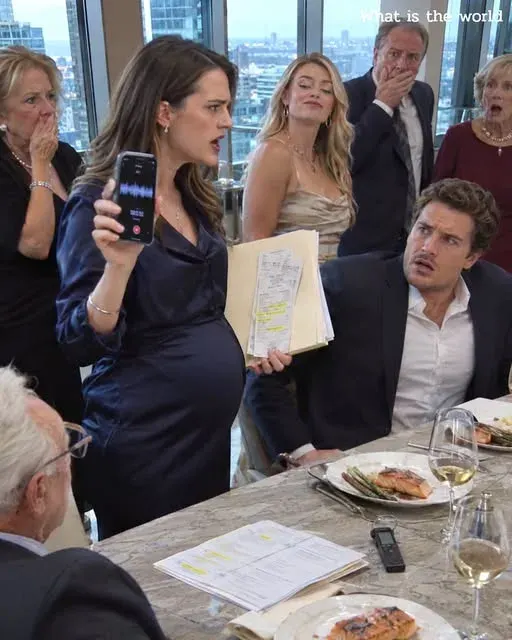
Here is something I learned from fifteen years of bookkeeping: never set up a joint account without dual approval on large transfers.
I had done it the week Thomas and I opened that savings account, back when we were newlyweds and he thought it was adorable that I read the fine print. Any transfer over ten thousand dollars required authorization from both account holders. Thomas had probably forgotten. He never read anything I set up.
I tapped "Decline." Then I called Chase's fraud line from the back of the Uber while my driver, a gray-haired man named Hector with a rosary swinging from his mirror, pretended not to listen.
"I'd like to freeze all outgoing transfers from joint savings 2290 pending a legal separation," I said. "And I'd like a record of every attempted transfer from that account tonight."
The representative put me on hold for six minutes. When she came back, her voice had changed.
"Mrs. Reed, there were three attempts in the last fourteen minutes. Sixty-one thousand four hundred, then fifty thousand, then thirty. All to the same external account. All declined for lack of secondary approval."
Three attempts. He'd tried to take less each time, like a man testing a locked door.
"Thank you," I said. "Please put the freeze in writing and email it to me."
When I hung up, Hector met my eyes in the rearview mirror.
"Sky Harbor, mija?"
"Sky Harbor," I said. "Terminal 4."
"Whoever he is," Hector said gently, "you're doing the right thing."
I bought a one-way ticket on the 10:50 p.m. Southwest flight to San Diego at the gate. I sat by the window and put my hand on my stomach, still flat under the cream sweater, and I finally let myself cry. Not loud. Just tears sliding down my face while the city lights of Phoenix spread out beneath us like spilled glitter and then disappeared into the dark.
My father was waiting at arrivals at 11:58 p.m. Frank Morales was sixty-six, a retired high school chemistry teacher with a gray mustache and a cardigan he'd owned since the Clinton administration. He didn't say anything when he saw me. He just took the suitcase out of my hand, wrapped his arms around me, and held on.
"Your mother's making soup," he said finally. "At midnight. Don't argue with her."
My childhood bedroom in Clairemont still had glow-in-the-dark stars on the ceiling and a framed poster of Selena on the wall. My mother, Lucia, was standing in the kitchen in her bathrobe stirring a pot of caldo de pollo, and when she saw my face she put down the spoon, crossed the kitchen, and took my face in both hands.
"Mija," she said. "What did they do?"
"I'm pregnant, Mamá," I said. "And Thomas asked for a divorce in front of his family. And I left."
My mother didn't say anything for a moment. Then she said a few words in Spanish that she would have washed my mouth out with soap for at fourteen, kissed my forehead, and sat me down at the table with a bowl of soup.
"Eat," she said. "Then tell me everything. Slowly."
So I did. The dinner. Brenda's smile. "It's easy spending somebody else's money." The tuition. The insurance. The physical therapy. The sixty-one thousand dollars Thomas tried to send to his sister ten minutes after I walked out the door.
My father listened with his arms crossed, his jaw getting tighter and tighter.
"How much, Emma?" he asked when I finished. "Over seven years. How much did you put into that family?"
"I don't know exactly," I said. "But I can find out. I kept everything."
My mother raised an eyebrow. "Everything?"
I hesitated. Then I told them the thing I had never told anyone.
"Two years ago, at Easter, I recorded something by accident. On my phone. I was dictating notes for a client in the kitchen, and I forgot to stop the voice memo and left it on the counter during dinner. Later that night, I started listening to delete it, and I heard Brenda say something about me." I looked down at the soup. "I turned it off. I couldn't listen to the rest. But I never deleted it. And after that night, I started saving every receipt, every transfer, every screenshot. I told myself it was just good bookkeeping."
My father uncrossed his arms.
"That's not bookkeeping, mija," he said quietly. "That's a part of you that already knew."