01 / 10
Chapter 1: The Widow In The White T-Shirt
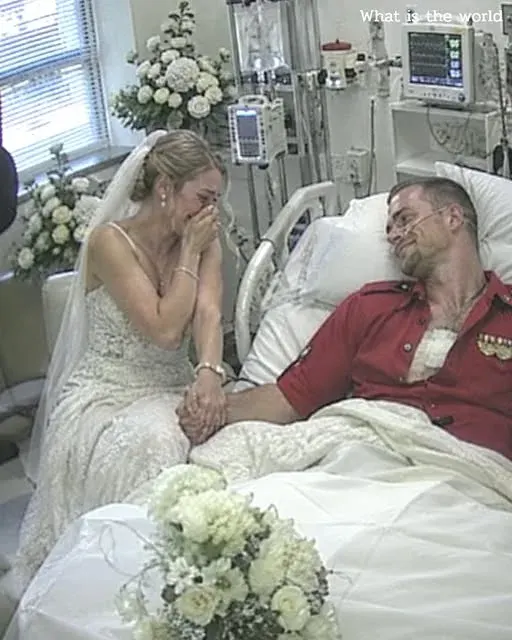
I married a dying man because it was his final wish. Ten days later I buried him, and at his graveside a woman in a four-thousand-dollar black coat called me a predator in front of everyone, while her son shoved me into the mud beside his coffin. That same night, his lawyer knocked on my door and said, "He made me wait until today to tell you who he really was."
My name is Hannah Pierce, and I am twenty-eight years old. I work days as a dental hygienist in Wethersfield, Connecticut, and three evenings a week I volunteer with the Riverbend Hospice Companion Program. Most of the people I visit are elderly, or very sick, or both. They need someone to wash the dishes, pick up prescriptions, read the newspaper out loud, or just sit there so the silence in the house doesn't get too loud.
Last March, my coordinator, a tired, kind woman named Denise, handed me a new file.
"Carl Hale," she said. "Forty-one. Stage four pancreatic. Lives alone on Maple Hollow Road. He asked for a companion who doesn't talk about God or real estate."
I laughed. "I can do that."
Carl lived in a small blue cape house with peeling shutters and a garden that had gone wild. He was thin in the way only cancer makes a person thin, with sandy hair going gray at the temples, a soft voice, and the bluest, saddest eyes I had ever seen. He opened the door in a cardigan with a hole in the elbow and said, "You must be Hannah. I made tea. It's terrible. Come in anyway."
We became friends almost immediately. I brought him chicken soup from my mother's recipe, scrubbed his kitchen, and on rainy evenings we played Scrabble at his little oak table. He cheated shamelessly and always confessed. He asked about my patients, my mother, my terrible ex-boyfriend Kyle, and he listened as if every word mattered. Nobody had listened to me like that in a long time.
He never talked about his own family. When I asked, he just said, "I don't have much of one left. Not the kind you'd want."
Then one evening in late April, with the rain ticking on the windows, Carl set down his tea and looked at me for a long moment.
"Marry me," he said.
I almost dropped my cup. "Carl."
"I know how it sounds," he said quickly. "I'm not confused, and I'm not trying to trick you. I just would like to die knowing I'm not alone. Knowing that someone like you was mine, even for a little while."
"We haven't known each other very long," I whispered.
"Long enough for me to know exactly what kind of person you are," he said. "It's the one thing I want before I go. The only one."
I don't know how to explain it, but I said yes. Something in me had felt connected to him from the very first cup of terrible tea, as if I'd known him much longer than six weeks.
The next afternoon, Father Tom Keegan from St. Brigid's came to the little blue house and married us in the living room. There were no guests, no flowers, and no music except the rain. I wore jeans and a plain white T-shirt, because it was the only white thing in my closet. Carl wore a pressed blue shirt that hung off his shoulders, and when Father Tom said, "You may kiss the bride," Carl kissed my forehead and cried.
I had never seen anyone look so happy.
He died ten days later, at 4:10 in the morning, holding my hand.
I grieved for him far more than I expected to. I picked out the plain pine casket myself and paid for the burial plot at Cedar Hill Cemetery with $6,200 from my savings. I expected the funeral to be me, Father Tom, Denise, and maybe my mother.
I was wrong.
Halfway through the graveside prayers, three black SUVs pulled up on the cemetery lane. A tall woman in her sixties stepped out, silver-blonde hair swept into a perfect chignon, wearing a black cashmere coat and pearls the size of chickpeas. Behind her came a broad man around forty in a navy overcoat, with slicked-back hair and the smile of someone who has never been told no.
The woman walked straight past Father Tom and stopped in front of me.
"So you're the hospice girl," she said loudly. "The one who married my stepson while he was too drugged to sign his own name."
Every head turned. Denise gasped. My mother grabbed my sleeve.
"I'm sorry," I said, "who are you?"
"I am Vivian Ashford," she said, as if the name alone should knock me over. "And the man in that cheap box is Carl Ashford. Heir to Ashford Holdings. Do you know what that company is worth, sweetheart? Four hundred and ten million dollars. Don't pretend you didn't."
I stared at the casket. Carl Hale. Carl, who wore a cardigan with a hole in it and apologized for the tea.
"I didn't know," I said. "He never told me anything."
"Of course you didn't." Her son laughed, loud enough for the gravediggers to hear. "Brent Ashford," he said to the little crowd, like a man introducing himself at a fundraiser. "We've already filed for an annulment. Undue influence. Elder exploitation. My lawyers have a word for women like her. So do the police."
Vivian opened her handbag, pulled out a check, and held it up so everyone could see. "Fifty thousand dollars," she said. "Sign the waiver my attorney brought, walk away, and we never have to say your name in a courtroom."
My face burned. My hands were shaking, but I took the check, looked at it, and tore it in half.
"I didn't marry him for money," I said. "I married him because he asked me to."
Brent's smile vanished. He stepped forward and shoved me hard in the chest. I stumbled backward on the wet grass, my heel caught the edge of the grave, and I went down into the cold April mud beside Carl's coffin. Mud soaked my black dress, my hands, my hair.
Somebody screamed. Vivian didn't even blink.
"That's where you belong," she said.
Then a calm, deep voice came from behind the SUVs.
"Mrs. Ashford. I'd step back, if I were you."
A tall Black man in his fifties walked across the grass in a gray wool coat, carrying a leather briefcase. He offered me his hand and pulled me out of the mud as gently as if I were made of glass.
"Graham Okafor," he said to the crowd. "I was Carl's attorney for nineteen years." He turned to Vivian. "Carl expected you today. The morning of the wedding, he had two independent physicians examine him and certify full mental capacity. Both evaluations were videotaped. The marriage is valid. And his will was signed the same afternoon."
Vivian's face went white beneath her makeup. "What will?"
"You'll receive a copy," he said. "Through the courts."
Brent started forward, and Father Tom, sixty-eight years old and five foot six, stepped right into his path. "Not at a graveside, son," he said. "Not today."
The Ashfords left in a spray of gravel. I stood shaking in my ruined dress while they lowered my husband into the ground.
Mr. Okafor leaned close to me. "Not here," he said quietly. "Tonight. He made me promise to wait until after the funeral."
At eight o'clock that night, someone knocked on my apartment door. Mr. Okafor stood on the landing with a thick cream envelope, my name written across it in Carl's careful handwriting.
"Carl made me wait until today to tell you the truth about who he really was," he said. "Once you read this, you'll understand everything."
I sat down on my kitchen floor, still in my bathrobe, my hair still damp from washing out the cemetery mud. My hands trembled as I unfolded the letter.
"My dearest Hannah. Our meeting was not an accident. I have known you your entire life, and I have quietly watched over you."
I read the next line, and the room tilted.
"Twenty-six years ago, your father died carrying me out of a fire. And the fire was not an accident either."


