03 / 10
Chapter 3: The Lantern Fund
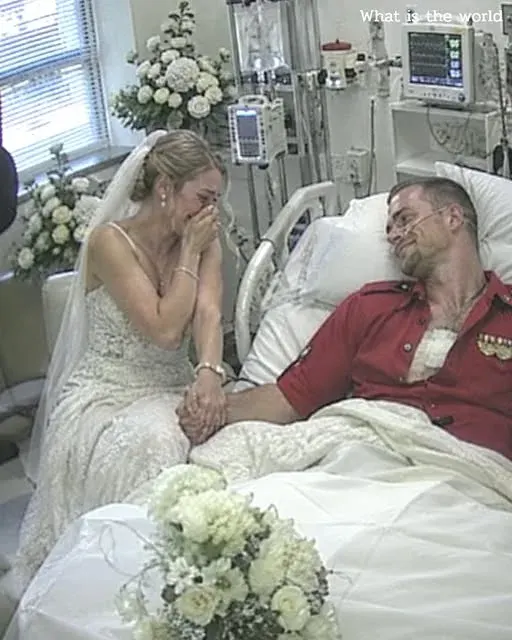
My mother drove up from Danbury that morning in her old silver Corolla and sat at my tiny kitchen table with both hands wrapped around a coffee mug she wasn't drinking.
"It started the first Christmas after your father died," she said. "An envelope in the mailbox. No stamp, no return address. Two thousand dollars in cash and a card with a drawing of a little lantern on it. Just that. A lantern."
"Every year?"
"Every December, for twenty-five years." She shook her head. "When you were nine and needed braces, the orthodontist told me the bill had been paid in full by a donor. When you were twelve, the bank called and said the mortgage on the house had been satisfied. I thought it was some kind of mistake. I called them a dozen times. They said it was handled by an attorney's office in Hartford and they couldn't say more."
"And college?" I asked softly.
She looked up at me with wet eyes. "The Lantern Scholarship. Full tuition for the daughter of a fallen firefighter. You were the only person who ever received it, Hannah. I always wondered why I couldn't find it listed anywhere."
I slid Carl's letter across the table. She read it with her lips pressed tight, and when she finished she put her face in her hands and cried the way I had heard her cry through the wall when I was a little girl.
"All those years," she said. "I thought the world had forgotten him. Somebody was paying for it. Somebody was sorry."
That afternoon, Graham Okafor met us in his office on the twelfth floor of a stone building on Pearl Street in Hartford. His walls were lined with law books and one framed photograph of a much younger Carl in a graduation gown, standing awkwardly beside him.
"Carl was my first client who wasn't a corporation," he said. "He came to me at twenty-two with his trust fund and one instruction. Everything about the Pierce family was to be handled quietly. No names. No credit. Ever."
"Why did he want to meet me now?" I asked. "Why the hospice? Why the marriage?"
Okafor folded his hands. "Because he was dying, and because of this."
He slid a thick document across the desk. It was the Ashford Family Trust, created by Carl's grandfather in 1971.
"Carl owned forty-one percent of the voting shares of Ashford Holdings," he said. "But under the trust, those shares can only pass to a spouse or a blood descendant. If Carl died unmarried and childless, every share would revert to the surviving trustee."
"Vivian," my mother said.
"Vivian," he agreed. "Combined with her own thirty percent, she would have controlled the company outright. And with it, every document, every archive, every record of what happened on Candlewood Lake."
I stared at him. "So he married me to stop her."
"He married you so the truth would belong to the one person who deserved it," Okafor said. "But Hannah, I need you to hear this part. He asked Riverbend for you by name. He donated to the hospice for ten years, so they were happy to oblige. But he didn't plan to fall in love with you. He told me that himself, the week before the wedding. He said, 'Graham, she beat me at Scrabble and I forgot I was dying for a whole hour.'"
I laughed and started crying at the same time.
Then he read the will. Carl had left me the blue house on Maple Hollow Road, his personal accounts totaling thirty-eight million dollars, and his forty-one percent of Ashford Holdings.
I didn't feel rich. I felt like someone had handed me a lit match in a room full of gasoline.
"They're going to come after me," I said.
Okafor nodded slowly. "They already have."


