01 / 10
Chapter 1: Two Hours At The Altar
At seven minutes past five, after two hours of waiting in a wedding gown for a groom who never came, I walked down the aisle alone to send two hundred guests home. Halfway to the altar, the chapel doors crashed open, and the man who had broken my heart three years earlier strode toward me and told me my fiancé had never been coming at all.
Twelve million dollars a year went from the Harbor Light Foundation into after-school programs, family shelters and summer camps across Massachusetts, and at thirty-two, I was the one who ran it—Brooke Ellison, executive director. I spent my days bargaining with city councilors, donors, contractors and lawyers, and I had a reputation for never losing my temper or an argument.
I was the woman people called when something fell apart. I did not fall apart myself.
Evan Cole had come into my life eighteen months earlier at my best friend's birthday party—a commercial real estate developer from Connecticut with a sailboat, a soft laugh, and manners my mother adored. In a year and a half, he had never been late once; he texted if he was running four minutes behind, and he knew how I took my coffee without ever asking.
So when the string quartet at Briarwood Country Club north of Boston began the prelude at three o'clock and the front of the chapel was still missing its groom, nobody panicked at first. Our planner, Monique, assured me there was an accident on Route 128.
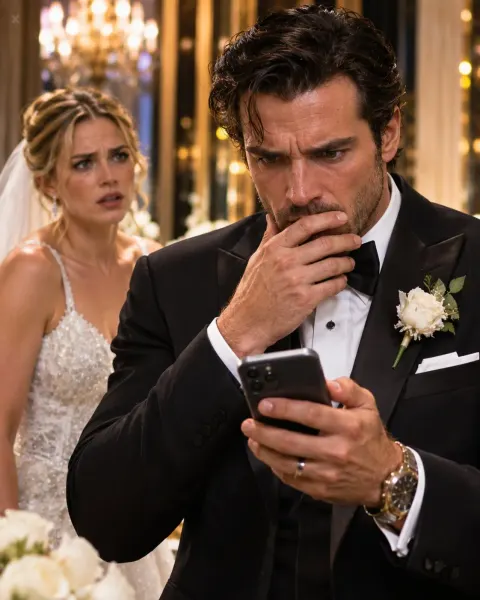
By half past three, Monique's smile had gone brittle, and she confessed that Evan's phone was going straight to voicemail. By four, his best man, Carter, had told my father that Evan sent his driver away that morning and insisted on driving himself.
By half past four, my father had gone quiet on me. Grant Ellison had grown Ellison Home Supply from two cramped hardware stores near Worcester into a chain with stores in thirty states, and in thirty-two years, I had never once heard him say he didn't know something.
Yet every time I asked where Evan was, he gave me the same four words. We're working on it.
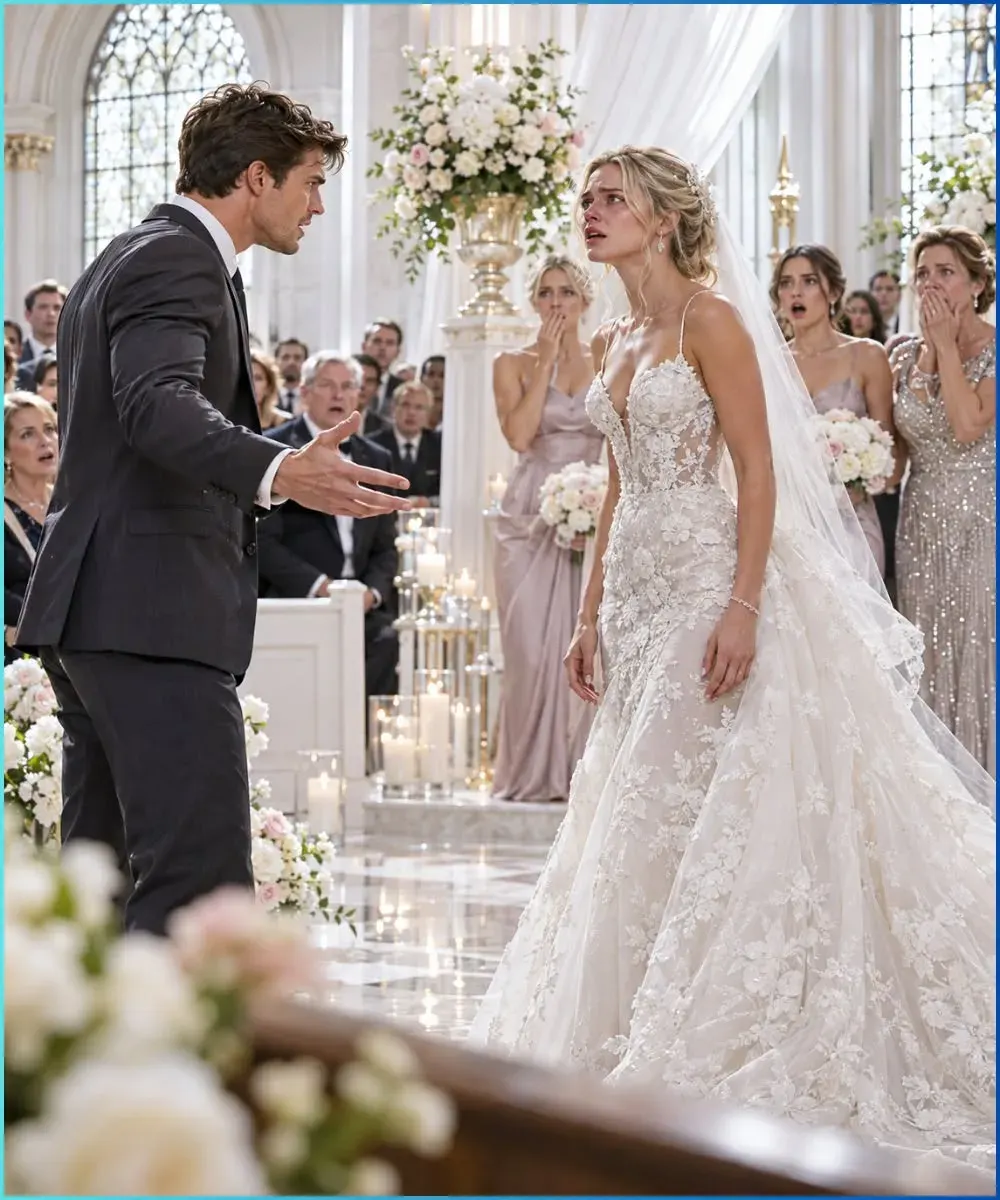
By five, I was standing at the window of the bridal suite in a floral lace gown with a sweetheart neckline and thin straps that had taken five months to make. A pearl comb held my honey-blonde updo and a long sheer veil, diamond drops hung from my ears, and a diamond bracelet glittered on my wrist. Below me, a few guests were already carrying their wrapped gifts back to their cars.
Then my mother took both of my hands in hers. "Brooke, sweetheart," she said, her eyes swimming, "he isn't coming."
I pulled away and told her not to say it, and she said it again, gently, until I couldn't pretend I hadn't heard. Then something in me went very cold and very calm.
If this was going to be the story everyone told about me, I would be the one who told it first. I fixed my veil in the mirror, wiped the mascara from under my eyes, and asked my mother to walk me to the chapel.
The Briarwood chapel glowed in the late light pouring through its tall stained-glass windows, scattering blue and gold across the white columns and white pews. Pillar candles still burned in gold stands along the marble aisle, and white and blush roses spilled from the end of every pew.
More than half the guests were still in their seats. When the doors opened and they saw me standing there alone, the murmuring stopped as if someone had cut a wire.
My mother squeezed my arm and slipped into the front pew in her champagne sequined gown, her light-brown hair curled to her shoulders, beside my father, who sat stiffly in his black tuxedo and bow tie with his silver head bowed. At the altar, my bridesmaids stood frozen in dusty-pink satin, and at the end of the line, my maid of honor, Lauren Fisk, gripped her bouquet so hard her knuckles had gone white.
I lifted my chin and started walking. I was halfway down the aisle when the doors behind me slammed open so hard that one cracked against the wall.
Every head turned. A tall man stood in the doorway in a charcoal suit, a white shirt, and a dark tie, breathing as if he had run the whole way from the parking lot, his dark-brown hair wrecked and his jaw shadowed with stubble.
For one wild second, I wondered whether the shame of the day had started making me see ghosts. Because I knew that man.
Mason Reed had loved me for two years and then stood on my front porch three years ago and told me he didn't want the life I was building. He had climbed into his old green pickup, driven north to Maine, and never called again.
Now he came down the marble aisle past the candles and the roses and the guests holding up their phones, and he stopped in front of me, chest heaving. "Sorry for the wait," he said.
Somebody in the pews actually laughed. I didn't.
The tears I had held back for two hours spilled down my cheeks. "Mason, where is my fiancé?"
His hand reached toward me, and his voice broke on my name. "Brooke, he was never coming."
My hand flew before I could stop it, and the crack of my palm against his cheek echoed off the stained glass. Mason never lifted a hand to his cheek—he stood there and let it land, his eyes still on mine, while my bridesmaids gasped and my mother pressed both hands over her mouth.
My palm was burning, and it wouldn't stop trembling. Then a terrible thought crept up my spine, and I turned my head toward the front pew.
"Dad... you knew Mason was coming?"
My father rose to his feet. He glanced at Mason, then met my eyes and said one word.
"Yes."