07 / 10
Chapter 7: The Letter In The Desk
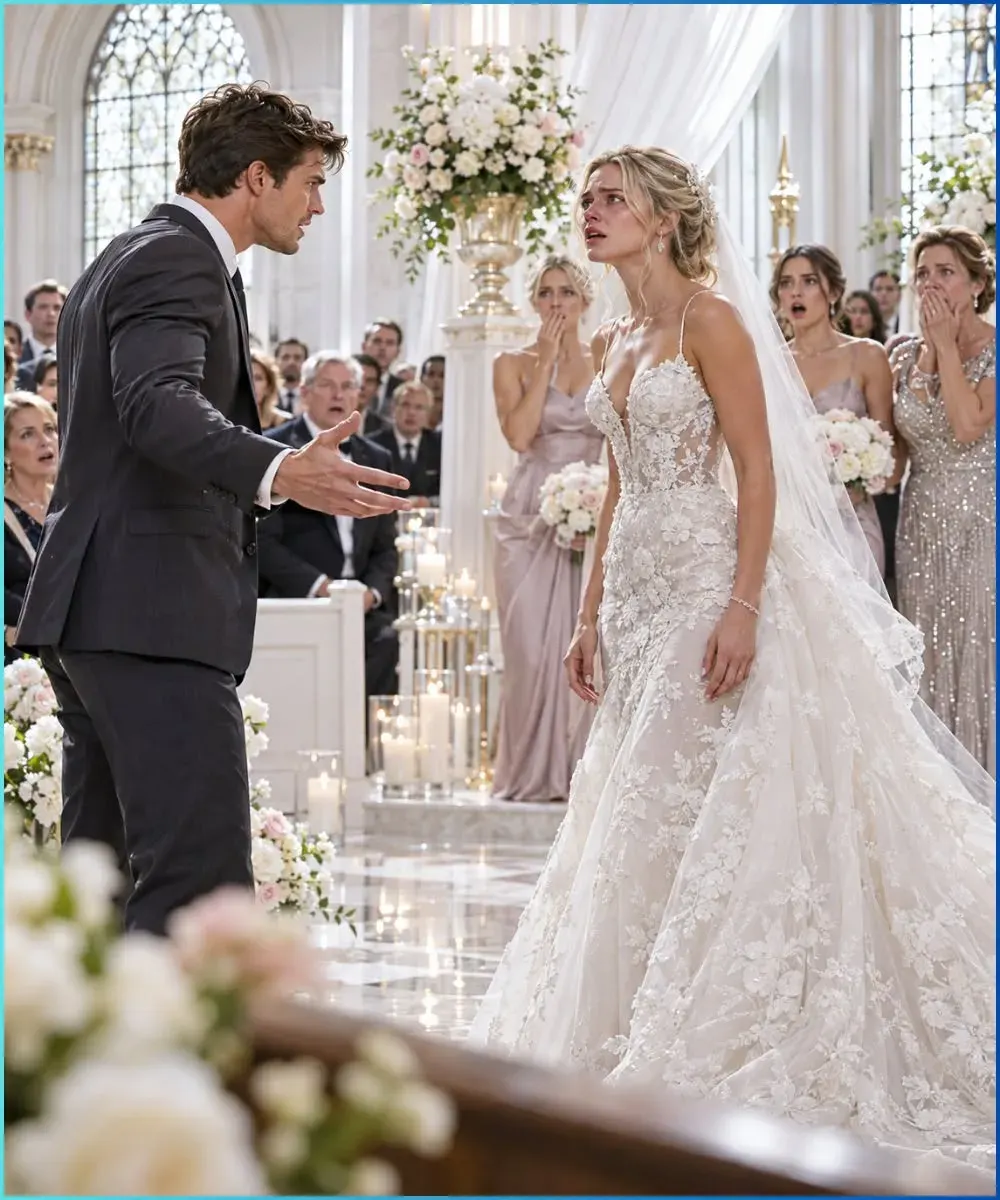
I came home on the first ferry Sunday morning wearing a borrowed Nantucket police sweatshirt over my wedding gown, my veil folded in a paper evidence bag on my lap. Lauren had spent the night in a holding room giving Holloway a statement that ran eleven pages, and before they drove her away, I promised to speak for her when the time came.
I wasn't sure yet whether I could forgive her. But I knew what it was like to be cornered by someone who had decided your life belonged to him.
Mason drove me from Hyannis to my parents' house in Wellesley without saying much. Every few miles, I caught him glancing at me, and every time, he looked back at the road before I could decide what my face should do.
My father was waiting in his study, a dark-paneled room lined with framed photographs of store openings and ribbon cuttings. He hadn't changed out of his tuxedo shirt, and Grant Ellison, who had always seemed carved out of granite, suddenly looked every one of his sixty-five years.
"I know about the steakhouse," I said from the doorway. "And I know about Walter Kessler."
He didn't argue. He took off his glasses, set them on the desk, and nodded.
"Mason was the best thing that ever happened to you, and I sent him away because I thought I knew what kind of man you needed," Dad said. "Then I shook hands with a liar because he wore the right suit, and I nearly lost you for it."
Mason stood behind me in the hallway, his hands in his pockets. My father looked past me at him.
"I owe you more than an apology, son," Dad said. "But I'll start there—I'm sorry."
Mason held his gaze and didn't look away. "Accepted," he said finally. "For her sake."
Then I asked about the letter. My father closed his eyes, reached down, and unlocked the bottom drawer of his desk with a small brass key from his watch chain.
The envelope inside was yellow and soft with age, addressed in shaky blue ballpoint to Mr. Grant Ellison, Personal. It had been opened, read, and folded so many times that the creases had worn nearly through the paper.
"Walter Kessler mailed it two weeks before he died," Dad said. "He asked for a meeting, then a job, any job—stocking shelves, driving a forklift—so he could keep his son in the same school."
He unfolded it and handed it to me. The last line, written in letters that slanted downhill, said Walter wasn't asking for charity, only for a way to look his boy in the eye again.
His voice cracked. "I was thirty-eight and hungry, and I told myself a superstore was progress, and I never wrote back. I've read that letter every year on the anniversary of his death for twenty-three years."
"You kept it," I said. "And you never did anything."
"I kept it because I couldn't throw it away," he said. "And I never did anything because doing something meant admitting what I'd done."
That was when my mother spoke from the doorway behind Mason. For thirty-five years, Diane Ellison had let my father have the last word in every room he walked into, but she set down her teacup on the hall table and took it.
"You decided which families got to survive, Grant, and then you decided who our daughter got to love," she said, her voice trembling with something that had waited a very long time. "That ends today, or I do."
My father looked at her, then at me, and he put his face in his hands. I had never seen him cry before.
"Then it ends today," he said through his fingers. "Whatever it costs."
I left him there and went upstairs to my childhood bedroom to finally take off the dress. It took twenty minutes to work through all the tiny pearl buttons alone, and when I came back down in jeans and an old sweater, the hallway was empty.
Through the front window, I saw only an oil stain on the driveway where the old green pickup had been parked. Then my phone buzzed.
"You're safe now, and that's all I came to do," Mason had written. "Take care of yourself, Brooke."