01 / 10
Chapter 1: A Café In Lisbon
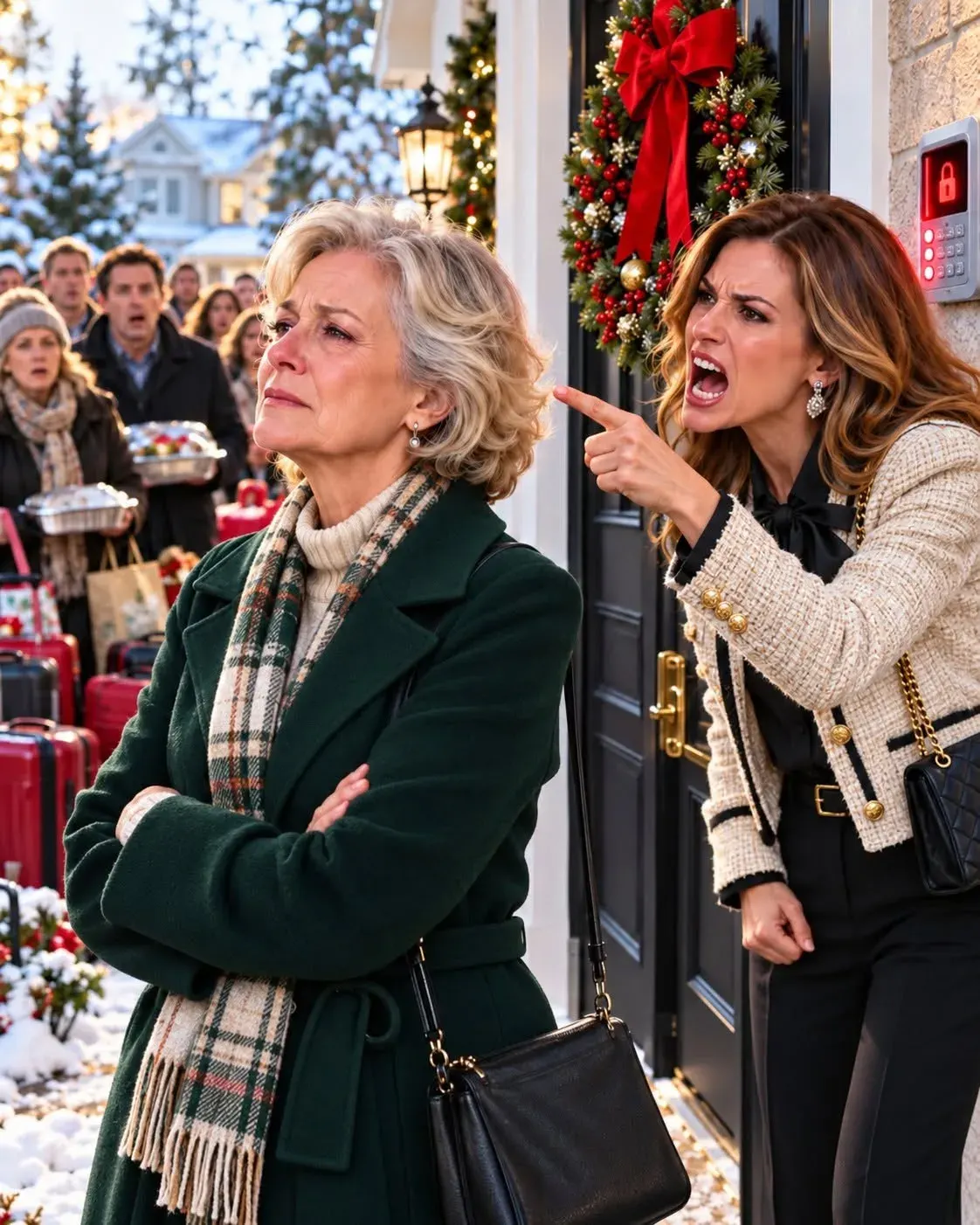
On Christmas morning, my daughter-in-law marched twenty-five of her relatives up my snowy front walk, shoved a key into a lock it no longer fit, and set off an alarm the whole street could hear. I heard it too—through my son's phone, while I sat at a little marble table in Lisbon with a cup of coffee and an entire ocean between us.
The café was called Andorinha, which the owner, a silver-haired widow named Amélia, told me meant swallow—the small bird that always finds its way home. It was just past two in the afternoon in Portugal, and the cobblestones outside glowed honey-gold under a December sun that felt more like April in Ohio.
"Mom, what on earth did you do?" Daniel shouted the moment I answered, and behind him a siren rose and fell like something wounded while a dozen voices talked over one another.
I could pick out Melissa above all the rest, complaining about a twenty-pound turkey thawing in a trunk, the plane tickets her cousins had bought, and her mother's bad knees in the cold.
"Merry Christmas, honey," I said, watching a yellow tram rattle up the hill past the window. "It's a beautiful afternoon here in Lisbon."
The silence lasted so long that Amélia, wiping down the counter, raised one penciled eyebrow as if to ask whether I needed rescuing. Then my son exploded. "You flew to Portugal and left us standing out here?"
"I told you two weeks ago that I was going away for Christmas, Daniel," I said, setting my cup down. "And I told you I wasn't hosting."
"There are twenty-five people on your lawn, Mom!"
"Then it sounds like somebody needs a bigger plan than my living room," I replied.
That was when Melissa ripped the phone out of his hand, screaming loud enough that the elderly couple at the next table turned to stare. "Ruth, you selfish old woman! My whole family is freezing out here, and your idiotic alarm won't shut up!"
Three years earlier, I had given her a brass spare key for emergencies, and she had used it every holiday since to let herself in and rearrange my dining chairs before I was out of my bathrobe. This morning, that old key had met a brand-new deadbolt, and when she yanked the handle, the sensors I'd installed in December decided she was a burglar.
And this time, I wasn't standing in my kitchen in an apron, ready to clean up the mess she had made.
Thirty-two years. That was how long I had held on to the white colonial on Hawthorne Lane in Briar Glen, Ohio, twenty minutes outside Columbus—Ruth Callahan, sixty-three, keeper of the house. Michael and I bought it when Daniel was six: a sagging porch, a furnace older than both of us, and a pantry doorframe where Michael penciled our son's height every birthday.
Three years later, on a gray morning in March, Michael collapsed in the driveway with his lunch pail still in his hand. A heart defect no doctor had ever caught took him before the ambulance turned onto our street, and at thirty-four, I was a widow with a nine-year-old boy and a mortgage I had no business carrying alone.
Everyone told me to sell—my sister, the loan officer, even the pastor's wife. But Daniel sat on the third stair in his too-big pajamas and sobbed that Daddy had promised this would be our forever home, so I knelt beside him and promised we would stay.
I processed claims at an insurance company by day and cleaned office buildings downtown until midnight. Some nights, dinner was saltines and peanut butter eaten over the sink, so my boy could have new sneakers, a class trip, and a winter coat that actually fit.
Eleven years ago, I mailed the last mortgage payment and toasted it with grocery-store champagne and Michael's photograph on the mantel. Every December, I hung a fat evergreen wreath on the black front door and told myself I was showing my son what love looks like when nobody claps for it.
"Mom," Daniel said, back on the line and breathing hard, the siren farther away now. "I'm looking through the front window. Where's the couch?"
His voice had gone thin. "Where's the piano, and Dad's recliner? There's nothing in there—the walls are bare."
I breathed in the warm, burnt-sugar smell drifting from the pastry case. "There's an envelope on the kitchen counter with your name on it," I told him. "You'll read it when I get home."
Before he could answer, Melissa's voice cut in again, closer now and more frightened than angry. "Daniel, what did she do to our house?"
Our house, she had called it. In four years, I had never once heard her slip like that, and as the alarm kept wailing through the phone, I understood that the woman on my lawn hadn't come for Christmas at all.