08 / 10
Chapter 8: The Angel's Wing
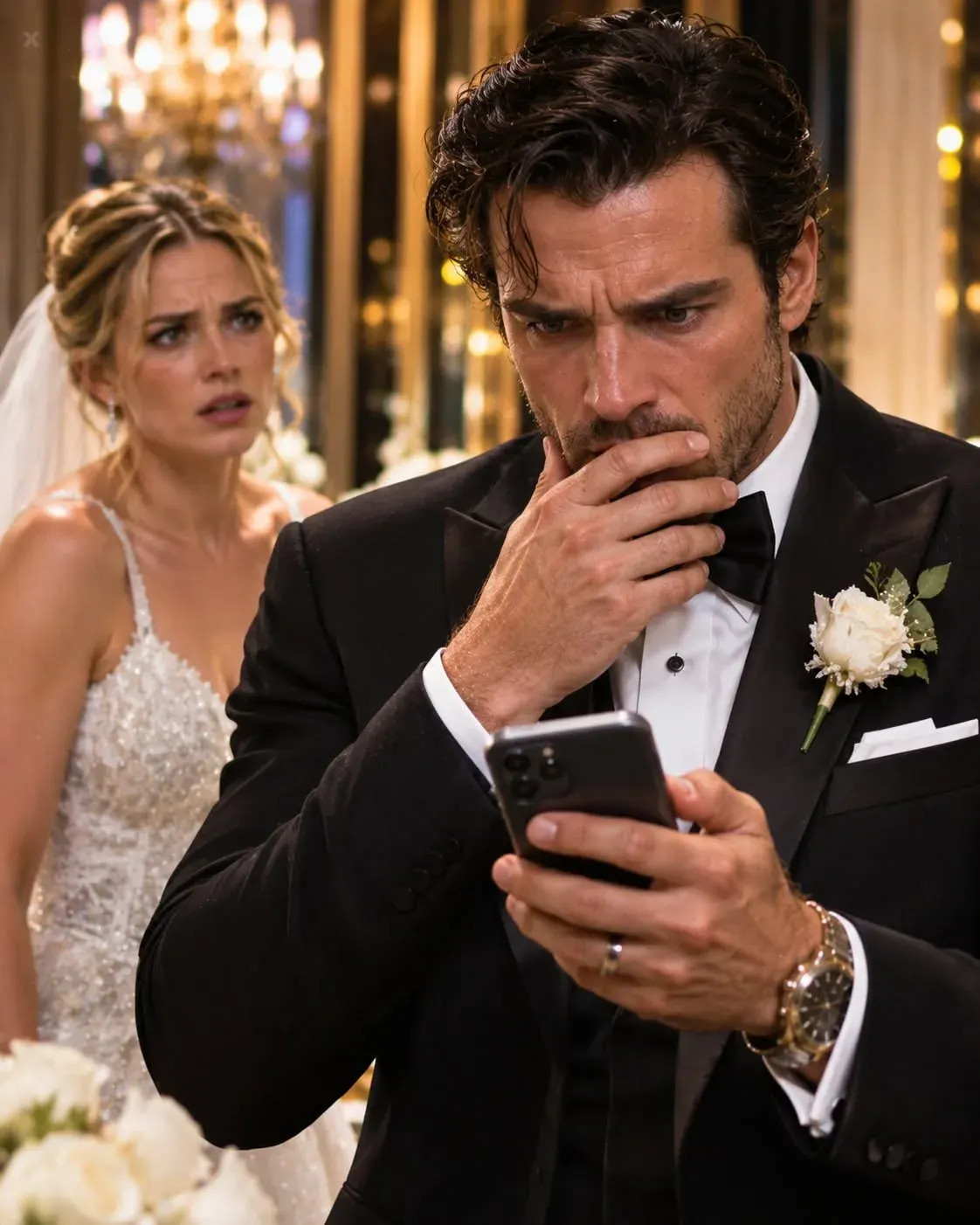
Grayson left the Aldridge Hotel through the kitchen exit twenty minutes later, after hotel security politely suggested he might prefer to avoid the front doors. Brent and the investors from table seven followed him as far as the loading dock, already on the phone with their own attorneys.
Nobody left the ballroom, though. My mother rose to her feet, tapped a fork against her water glass, and announced that she had paid for a very expensive dinner and an excellent band, and anyone who wanted to celebrate her daughter's escape was welcome to stay.
They stayed. Strangers hugged me, my aunt told me she had never liked his teeth, and Priya danced with the bartender while the band played every breakup song in their repertoire.
Charlotte and I sat at the head table in the seats meant for the bride and groom, eating wedding cake with our fingers. Owen Pryor came by once, set two cups of coffee in front of us, and told me that he had deleted every photo from the first look.
"Except one," he admitted. "I'll send it to you if you ever want it—and if you don't, I'll delete that too."
The weeks that followed moved faster than I expected. The bank's fraud team uncovered a trail of forged audits and investor money moved through shell accounts, and by January, federal prosecutors had filed charges of securities fraud and wire fraud against Grayson Caldwell.
Manhattan prosecutors filed their own charge over the false statement on our marriage license. Ruth said, with deep satisfaction, that in thirty years of practice she had never seen a man charged over a zero.
My mother's three million dollars had landed only a day before the freeze and could be traced to the cent, so it came back to her in February, thanks to a woman who had remembered she still had a signature. Brent and the other investors were less fortunate, but the court appointed a receiver, and Charlotte's father's statements became the backbone of the case.
Charlotte filed for divorce a third time in January, and this time it went through. Without the threat of a custody fight hanging over her, and with Grayson facing federal charges, his lawyers signed everything her lawyer put in front of them within a week.
I moved out of the Tribeca penthouse the week after the wedding that never happened, into Priya's spare room in Brooklyn, with two suitcases and my ivory gown. I donated the gown to a charity that gives wedding dresses to women who can't afford them, and I hoped it would go to someone whose groom deserved her.
Then I spent two long weekends on Priya's living room floor returning two hundred and twelve wedding gifts, each with a handwritten card that said only, Thank you for loving me enough to come. My mother insisted on helping, and by the second weekend, we had stopped crying over the gravy boats and started laughing at them.
Grayson sent me exactly one message in those weeks, from a number I didn't recognize. You've ruined my life, it said.
I forwarded it to Ruth and blocked the number. He had ruined his own life long before I ever met him, and I was done carrying anything that belonged to him.
The diamond was harder. On a gray afternoon in late December, I took the train back to Boston and knocked on the door of the brownstone on Marlborough Street.
Charlotte opened it with a paintbrush in her hand and blue paint on her knee. This time, she smiled.
I held out a small velvet box. "The angel's wing," I said. "It was never mine."
She opened it, looked at the stone for a long time, and then pressed the box against her chest. "I'm going to keep it for Maisie," she said. "And when she's old enough, I'm going to tell her the whole story—including the part where a stranger brought it home."
"I'm not a stranger anymore," I said.
"No," Charlotte agreed, pulling me inside out of the cold. "You're definitely not."
That evening, we ate spaghetti at the farmhouse table while Maisie showed me her art journal. On the second-to-last page, she had glued a printout of the photo she took that night—me in my good coat, Charlotte in her paint-streaked shirt—under a caption written in purple marker.
Mommy and the princess lady, she had written. Both brave.
On the train home to New York, my phone buzzed with an email from Owen Pryor. Inside was a single photograph from the Crystal Ballroom: a woman in an ivory gown, sliding a diamond off her finger, her chin up and her eyes perfectly clear.
Beneath it, he had written one line. I deleted all the others—but I thought you should see what courage looks like from the outside.