01 / 10
Chapter 1: The 2:07 Phone Call
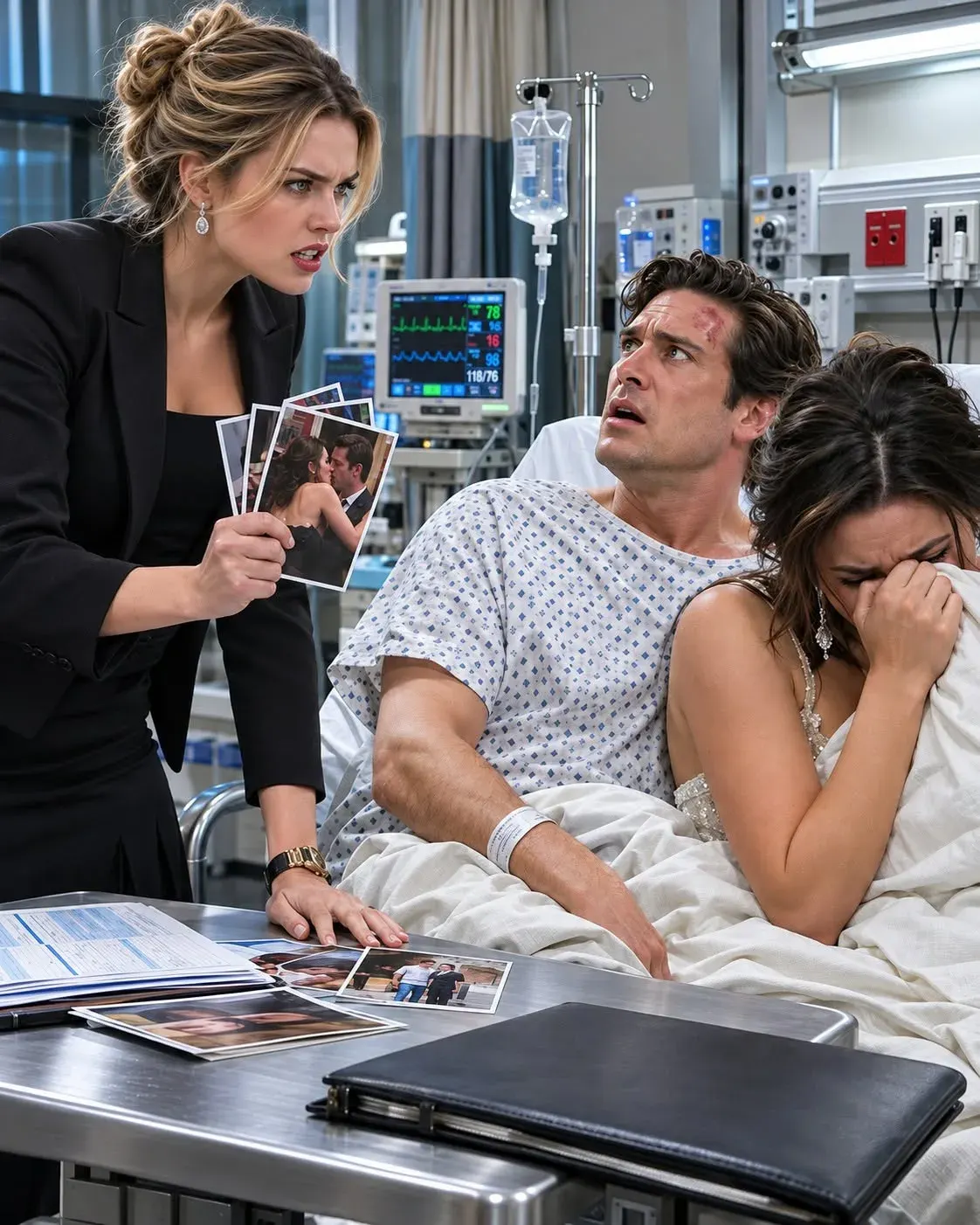
The phone rang at 2:07 in the morning, and a nurse told me my husband was lying in a Denver emergency room beside my brother's wife—and that the doctors were afraid to pull them apart. She had no idea that the reason they were stuck together had come out of a dented metal can in my garage.
Elena Vance Ashford had been the youngest chief financial officer her family's company ever appointed. Then, for fourteen long months, she became a woman who let her husband convince her she was too fragile to go back. Both of those women were me, and at thirty-two, I was only beginning to understand which one was real.
My grandfather, Walter Vance, started Vance Global Enterprises in 1971 with one secondhand flatbed truck. My father, Robert, grew it into a logistics and commercial real estate company with distribution centers from Cheyenne to Albuquerque, and he gave my brother Brandon and me equal blocks of family shares on our thirtieth birthdays.
I was twenty-nine when the board gave me the finance office on the thirtieth floor of Vance Tower. Two years later, my mother died of a stroke in her garden, and grief hit me so hard that I had a panic attack in a stairwell after an earnings call.
Julian was the one who found me there, sitting on the concrete steps with my heels in my hand.
He held me, brought me water, and drove me home. In the weeks that followed, he said all the right things so gently that I never noticed what they were doing to me—you're exhausted, sweetheart, and no job is worth your health.
By January, I had resigned "to rest," and my father had promoted Julian to vice president of corporate development. Julian even talked me into signing a power of attorney over my shares, so I wouldn't have to worry about proxy votes while I recovered.
I believed I was being taken care of. I didn't understand I was being managed.
It was the small hours of a cold Tuesday in March. Julian's side of our bed in Cherry Hills Village was empty, because he had kissed me goodbye at seven the evening before and driven off for what he called a breakfast closing in Colorado Springs.
"Mrs. Ashford?" the woman asked, her voice careful and professional. "This is Carmen, the charge nurse at Saint Anthony Medical Center—your husband gave us your name as his emergency contact."
"Was he in an accident?" I asked, fumbling for the lamp.
Carmen paused just long enough for me to hear a rolling cart and a distant page behind her. "He isn't in any danger, ma'am," she said. "But he isn't alone—a woman named Serena Vance came in with him, and the situation is a little delicate."
Serena had been married to my brother for six years, and she had cried at my mother's funeral with her hand on my shoulder.
"I'll be there in twenty minutes," I said, and hung up before my voice could break.
I put on a black top, a tailored black blazer, my mother's diamond drop earrings, and the gold watch my father gave me the day I became CFO, then twisted my honey-blonde hair into a messy knot, loose strands falling around my face, without meeting my own blue-gray eyes in the mirror.
Last, I took the black leather portfolio down from the top shelf of my closet. Inside were forty-one photographs, a stack of hotel receipts, and a flash drive I had planned to use carefully, with lawyers—not under fluorescent lights before dawn.
At the emergency desk, Carmen met me with a tablet pressed to her scrubs.
"Before you go back there, the doctor wants a word," she said, steering me into a small consultation room. "It's not a medical emergency, exactly. It's more of a logistics problem."
Dr. Leah Brennan was young, tired, and very kind, and she chose every word as if she were stepping across ice.
Julian had rubbed what he thought was his usual muscle gel along his sore ribs, she explained, but the bottle held an industrial bonding agent. When Mrs. Vance leaned against him, it cured fast and hard, sealing her bare shoulder and forearm to his side.
They had fallen trying to stand, which was how Julian scraped his forehead, and pulling them apart by force would tear skin.
"We're using solvents a little at a time, and dermatology comes in at six," Dr. Brennan said. "Do you have any idea how something like this could end up in a man's overnight bag?"
I looked down at my hands, folded over the leather portfolio, and said nothing at all.
Because I knew exactly where it came from. That can had been sitting on a shelf in our garage since the contractors finished our new kitchen countertops last month—and yesterday afternoon, I was the one who poured it into his bottle.