06 / 10
Chapter 6: Behind The Wedding Photograph
I just stood there with my hand on the cold steel door. My husband had hidden his secrets behind a photograph of our wedding and locked them with the date he first betrayed me.
Part of me wanted to close it and pretend I had never seen that green light. The rest of me—the CFO I used to be—pulled the door open.
Inside were three things: a thick accordion file, a cheap prepaid phone, and a blue velvet ring box. I opened the ring box first, because some stubborn piece of me still wanted this story to be about love.
It held a diamond engagement ring, two carats at least, with a receipt folded under the cushion—dated three weeks earlier and made out to Julian Ashford.
I set it aside and opened the accordion file on his desk.
The first section held the formation papers for Meridian Crest Holdings, filed in Wyoming in October. Julian owned seventy percent, and Serena Vance owned the other thirty.
The second section was a draft agreement selling Vance Mountain Logistics to Meridian Crest the day the restructuring closed. The price was forty-one million dollars—for a division my own audits had valued at more than two hundred million.
The third section was a proxy assigning Brandon's voting rights to Julian. I had watched my brother scrawl his lazy loop of a signature on birthday cards since we were kids, and this one was close—but the B was too careful, the work of someone copying something she had seen a hundred times.
My hands were steady until I opened the fourth section.
It was a petition to appoint a conservator, prepared for the Denver Probate Court, with my name typed at the top as the protected person. Clipped to it was a twelve-page psychiatric evaluation signed by Dr. Alan Whitcomb of Boulder, describing a woman with severe depression, paranoid thinking, and no capacity to manage her own finances.
I had never met Dr. Alan Whitcomb in my life. But I knew the name, because he had been Julian's college roommate and the best man at our wedding.
The evaluation described an in-person session at his Boulder office on March third. It quoted things I had supposedly said—that I heard coworkers whispering about me, that I couldn't trust my own memory, that my husband handled everything because I couldn't.
On top of the whole file was a yellow sticky note in Julian's neat block capitals: Friday—vote, Monday—file petition, Wedding—June.
I read it three times. Then I sat down very carefully in Julian's leather chair, because my knees had stopped working.
He hadn't stayed married to me for my shares. He had stayed married to me just long enough to take them.
After the vote, my shares would help hand Vance Mountain Logistics to his shell company for pennies. After the petition, a judge would appoint my devoted husband as my conservator, and every dollar I owned would sit under his control—permanently and legally.
Then, in June, he planned to divorce a wife the court had declared incompetent and marry my brother's wife. Serena believed he would leave me after the restructuring; she just didn't know he intended to take everything with him when he went.
I thought about fourteen months of gentle voices telling me I was too fragile—the sleeping pills he encouraged me to take, the meetings he said would only upset me, the way he finished my sentences at family dinners until I stopped trying to finish them myself.
He hadn't been protecting me. He had been building a file.
I photographed every page and emailed the images to Dana and to Grace Delgado, the attorney who had handled my mother's estate, with a single line in the subject field. Please call me the second you wake up.
It was nearly nine when I slid the last page back into the file and heard the front door open downstairs.
Footsteps crossed the marble foyer, slower than usual and uneven. A set of keys landed in the ceramic bowl on the hall table with the same careless clatter I had heard every evening for five years.
There was no time to close the safe, rehang the wedding photograph, or pretend I was anywhere but exactly where I was. The footsteps climbed the stairs, one at a time.
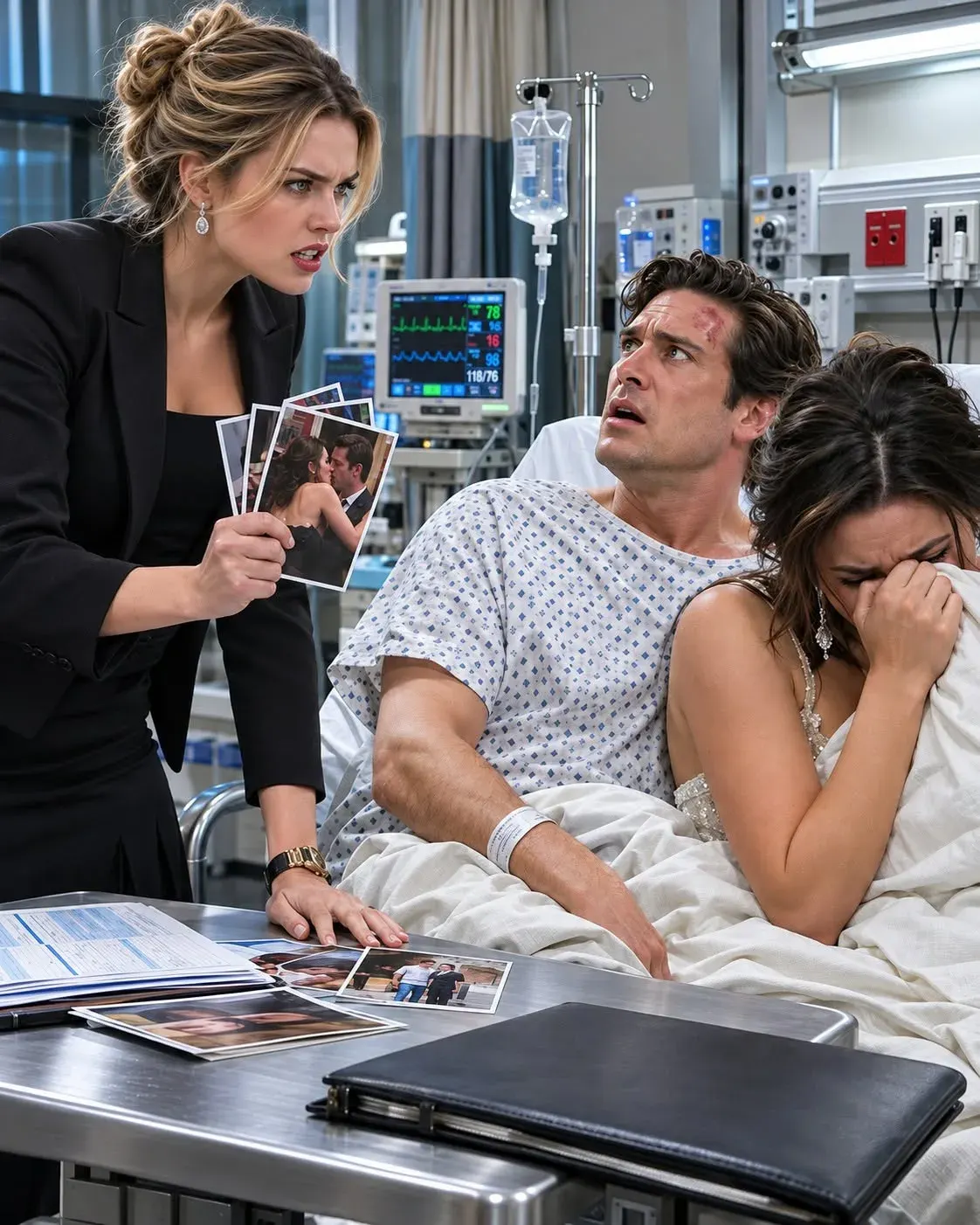
Then Julian stood in the office doorway, the hospital band still on his wrist, his left side wrapped in white gauze under a borrowed gray sweatshirt, the scrape on his forehead shiny with ointment. He looked at the bare spot on the wall, the open safe, and the file in my hands.
And he smiled.