09 / 10
Chapter 9: The Last Conversation
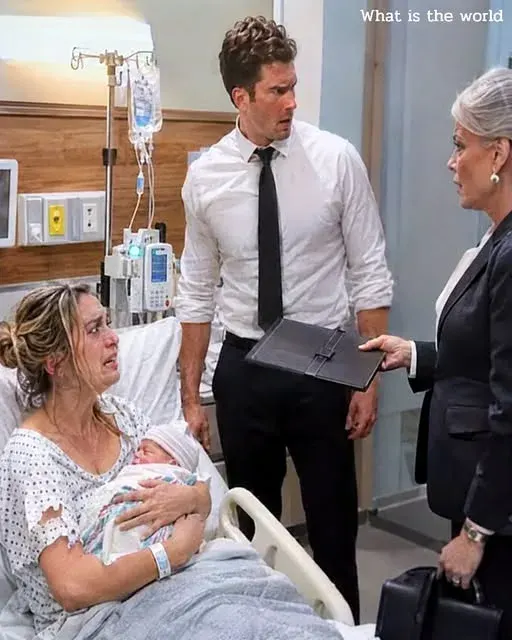
Over the next six weeks, Whitaker Development came apart like wet paper.
The acceleration deadline passed. Caleb's company couldn't pay four hundred and twelve million dollars, because a man in a jail cell can't refinance anything. Rowan Capital foreclosed on all four towers. The board of directors resigned. The Whitaker name was pried off the brushed steel lobbies one letter at a time while news cameras filmed it.
There were three hundred and forty people who worked in those buildings, from engineers and leasing agents to janitors, security guards, and the woman who ran the coffee kiosk in the Tryon lobby. Caleb had told the cameras they were the people I was trying to destroy.
On the day the foreclosure closed, I stood in the lobby of the flagship tower with Noah in a carrier on my chest and Thomas Hale at my side. Every employee was gathered in front of the elevators, nervous and silent.
"My name is Emily Rowan," I said. "Some of you have read terrible things about me. I'm not here to change your minds. I'm here to tell you that your jobs are safe, your paychecks will clear on Friday, and no one in this building will lose their health insurance because of what one man did."
There was a long silence. Then a security guard in the back, an older man named Earl, began to clap. Slowly, the rest of them joined in.
Vanessa Crane accepted a plea deal in January. In exchange for her recordings and full testimony, she pleaded guilty to assault inflicting serious injury and received three years, with eligibility for parole after eighteen months. Before her sentencing, she wrote me a letter in round, careful handwriting. She said she had returned my cashmere coat to Diane's office. She said she was sorry about four hundred times. I didn't answer the letter, but I didn't throw it away either.
In February, Diane told me that Caleb had asked to see me. Once. Before his trial.
I almost said no. But there was a question I needed to look him in the eye and ask.
The visiting room at the federal holding facility was cleaner than the county jail, with steel tables bolted to the floor. Caleb came in wearing a tan jumpsuit. Without his suits and his watch and his billboards, he looked like exactly what he was: a man from Gastonia who had wanted too much and decided other people were the price.
He sat down across from me. For a while, neither of us spoke.
"Is he healthy?" he finally asked.
"He's perfect."
He nodded, staring at the table. "I didn't know who you were. If I had known—"
"That's the problem, Caleb," I said. "If you had known I was a Rowan, you would have been kind to me. You would have been the perfect husband. You would have kissed my hand at every party and never looked at another woman. And I would never have known what you were." I folded my hands on the table. "My mother told me to watch what you did when you thought you were winning. You thought you were winning when you opened that door."
He flinched.
"I came to ask you one thing," I said. "When you laughed. Looking back at me lying on the highway. Were you laughing at me? Or were you laughing because you thought it was finished?"
For a long moment, he said nothing. Then he looked up, and there was no performance left in his face at all.
"Both," he said.
I stood up. I didn't cry. I didn't shout. I simply told him the truth.
"Then you'll spend the rest of your life knowing it wasn't."
In April, a federal jury convicted Caleb Whitaker on eleven counts. The state attempted murder trial followed in June. He was sentenced to a combined thirty-four years. Martin Glass received nine. Lorraine Fisk, who had testified against them both, received probation and three hundred hours of community service.
On the day of Caleb's sentencing, I wasn't in the courtroom. I was in Atlanta, in my mother's garden on Habersham Road, watching her take her first unassisted steps since the stroke, three of them, gripping a walker, while her physical therapist cheered and Noah babbled on a blanket in the grass.
When she reached me, she was breathing hard. She put her good hand on my cheek.
"Told you," she said slowly, clearly, every word her own. "Money tells you what people are."