01 / 10
Chapter 1: The Two Hundred Dollars
At seven minutes past midnight on the coldest night of December, I tossed two hundred dollars at my wife's feet on the wet marble outside a private club in Philadelphia and drove away without looking back. Seven hours later, I found her wedding ring in the middle of our bed, lying beside those same two rain-warped bills.
Most of what moved along the Philadelphia waterfront moved because I allowed it—the trucks, the warehouses, the cargo that crept up the Delaware after dark. My father had started with one rusted forklift and a loan from people nobody should borrow from, and by thirty-eight, I, Adrian Vale, had turned his freight yard into the kind of empire councilmen only discussed behind closed doors.
I met Mara seven years earlier at a charity gala, where she had been hired to play piano in a corner while rich people talked over her. I didn't talk over her—I stood beside that piano for forty minutes without saying a word, and six months later, she married me in a stone chapel while snow drifted past the windows.
She was twenty-six then, with golden-blonde hair she could never keep pinned up and blue eyes that noticed everything, including the scraped knuckles I thought I had hidden in my pockets. She taught piano to kids at the Halsey Street Music School in Fishtown, and she was the only person in my life who wanted nothing from me except my attention.
Somewhere in six years of marriage, that became the one thing I stopped giving her.
I ran my life like a shipping yard—business, enemies, money, and security each in its own container, with my wife parked somewhere near the back. I only opened whichever container was making the most noise, and Mara never made any noise at all.
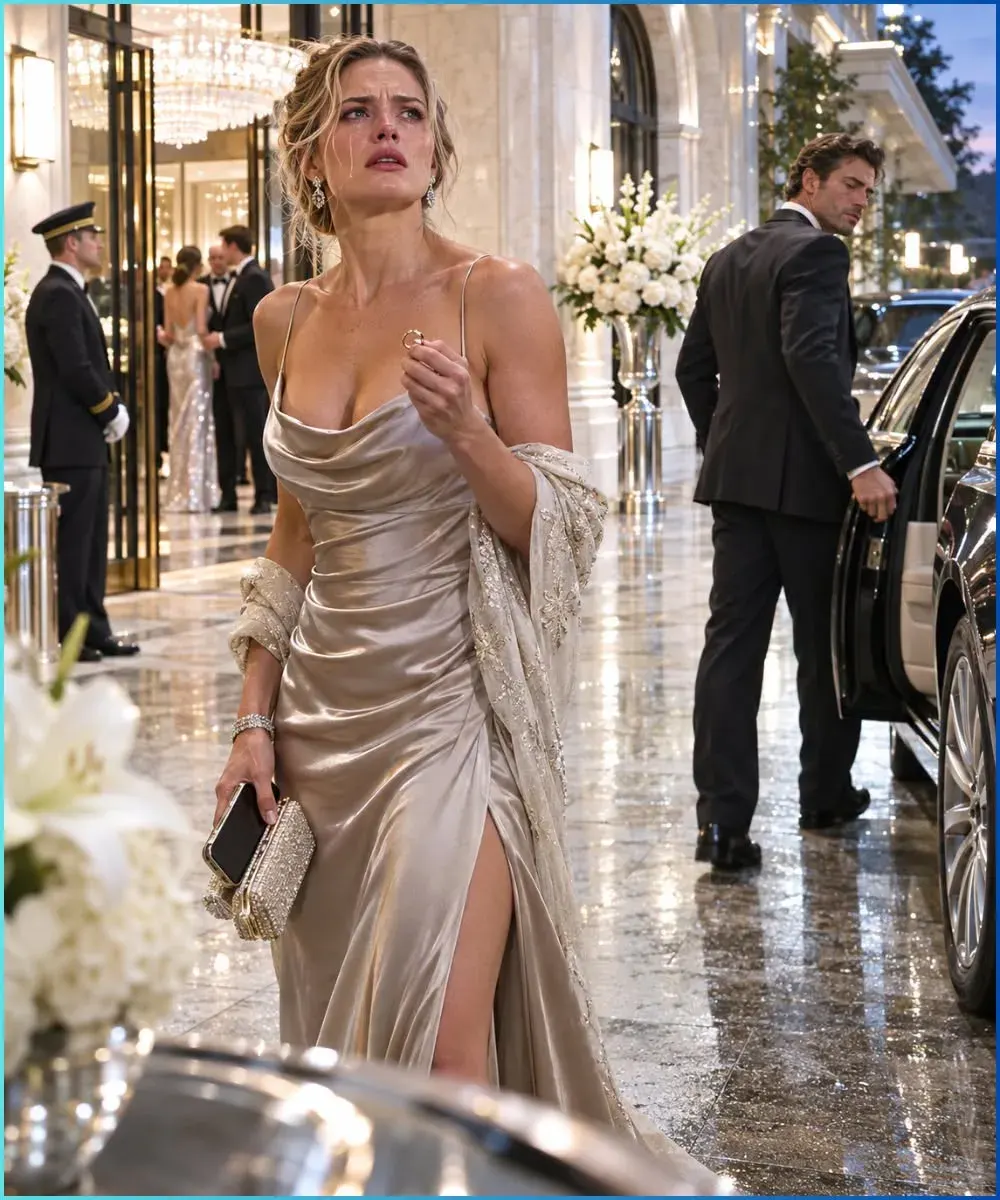
On that Saturday night in December, after a charity dinner downtown, I took her straight up to the private room of the Calder Club, because six men were waiting to argue about Pier Four. She wore a champagne satin gown with an ivory beaded shawl over her arms, plus the diamond drop earrings and matching bracelet I had given her on our fifth anniversary.
Twice that night, she pressed two fingers against her left temple. Once, she touched the cuff of my jacket and said my name under her breath—and I lifted one finger without turning my head, the way I'd signal a waiter to wait.
A few minutes before midnight, my driver, Nate, leaned down to tell me that Dominic Sorel's people wanted to finish the negotiation on the pier itself, tonight, before they changed their minds. Sorel had spent two years trying to pry Pier Four out of my hands, so I buttoned my black suit jacket over my white shirt and walked downstairs without checking whether my wife was behind me.
She was. The glass doors with their brass frames swung open onto a freezing drizzle that had turned the marble pavement into a black mirror full of chandelier light, and my car waited at the curb with its rear door open.
"Adrian, please." Her voice came from behind me, thin and shaking. "I can barely see straight."
I glanced back over my shoulder. She stood just outside the doors with her shawl slipping off one arm, a silver clutch and her phone in one hand, something small and bright pinched between the fingers of the other, and tears sliding down her cheeks.
I assumed the bright thing was an earring that had been pinching her. I assumed the tears were the headache, or the champagne, or one of the moods I'd never made time to understand.
"I need the car tonight," I said.
Then I peeled two hundred-dollar bills off my money clip and tossed them toward her. They fluttered down onto the wet marble at her feet and lay there face up in the rain.
"Have someone call you a car."
She stared at the money as if she didn't recognize it. The doorman stepped closer in his black uniform with gold trim, glancing at the bills, one white glove lifted toward the street.
"You sure, Mrs. Vale?" he asked.
Mara shook her head without a word. I slid into the back seat, Nate shut the door, and through the rain-streaked glass I saw her lips move—but I was already reaching for my phone, and I never turned around to see what she said.
At 12:31, while I sat across from Sorel on the pier, my phone buzzed with Mara's name, and I declined the call without taking my eyes off him. By the time I got home to our stone house in Chestnut Hill at 3:19, I had shaken hands on a deal that gave Sorel a sliver of the pier and kept the rest in my fist.
I told myself I didn't want to wake her, poured a bourbon in my study, and fell asleep in the leather chair with my tie still knotted. At 7:12, I climbed the stairs with an apology already polished in my head—pressure, timing, I'll make it up to you.
The bed was perfectly made, and nobody had slept in it. In the center of the white comforter lay her phone, her wedding ring, and two hundred-dollar bills, wrinkled and stiff from drying after the rain.
The champagne gown hung in her closet, and the diamond earrings and bracelet sat in their velvet boxes on the dresser, lined up like evidence. Her heavy winter parka was gone, and so were the scuffed brown boots she'd owned since before she met me.
I picked up her phone with hands that didn't feel like mine, and the screen lit up with a reminder in plain white letters. Pre-surgical consultation, Dr. Nadia Brennan, Neurosurgery—Wednesday, 9:00 a.m.
I read it three times. My wife was scheduled for brain surgery, and I was the last person in her life to find out.