10 / 10
Chapter 10: The Same Door
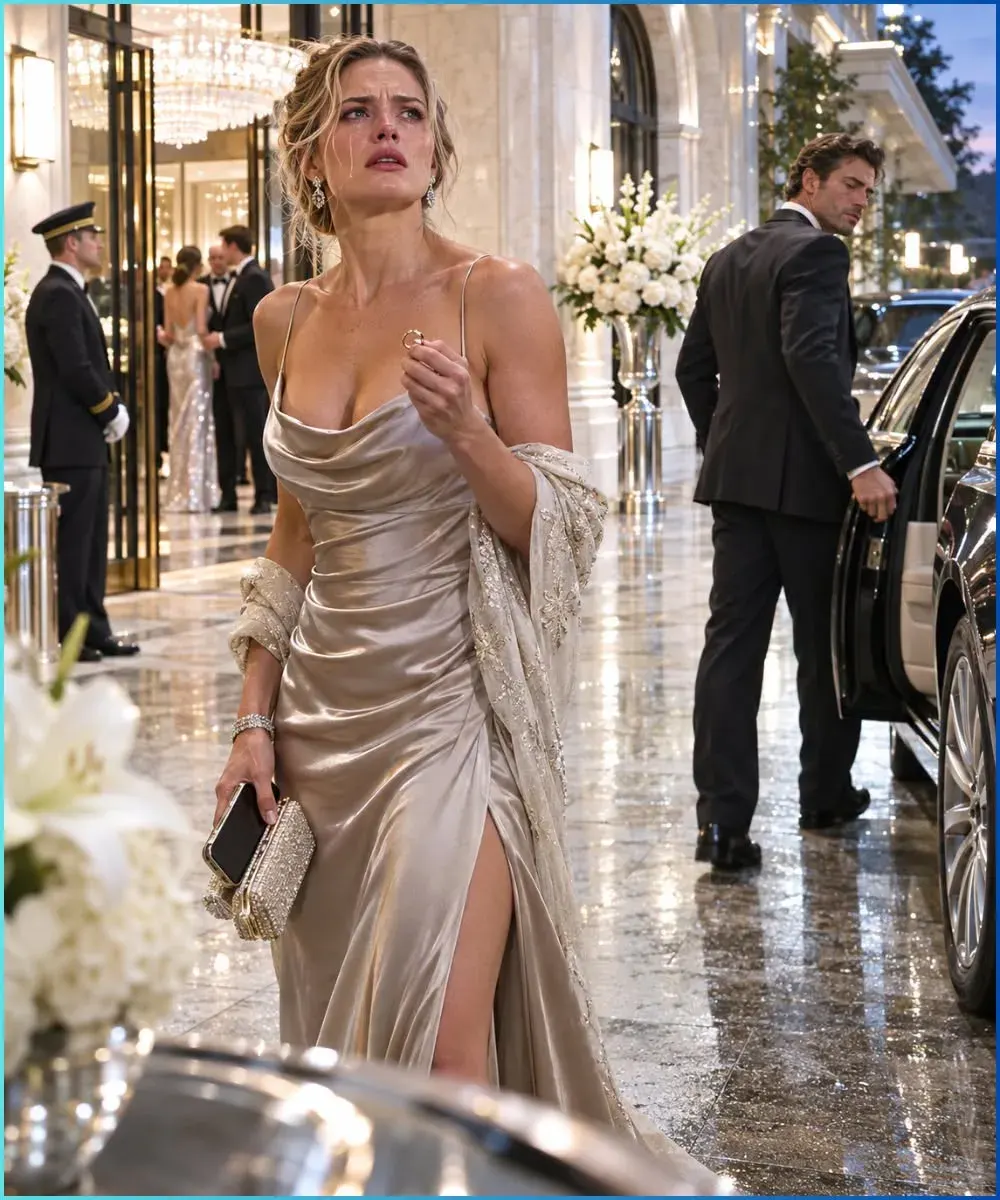
The next December, on another freezing night, I stood at the curb outside the Calder Club with rain glittering on the black marble, holding open the rear door of my car. Behind the glass doors with their brass frames, the chandeliers burned just as brightly as they had the night I drove away.
A lot had changed in twelve months, and almost none of it had happened the way I would have planned it. That was probably why it worked.
Mason untangled my father's empire one contract at a time, and by April, the only business with the Vale name on it was a trucking company with honest books, a boring accountant, and more profit than I had ever expected from honesty. Dominic Sorel got his pier, and as far as I know, not one of his people has come near my wife since.
I sold the stone house in Chestnut Hill with its iron gates and its guard booth. We bought a narrow brick row house in Fishtown two blocks from Halsey Street, with a creaky staircase and a secondhand upright piano in the front window, where the whole block can hear her practice.
Mara's left eye came back gradually over the winter, the way spring comes to the marsh—first light, then shapes, then color. The edges are still a little soft on that side, and she wears tortoiseshell glasses to read sheet music, which she claims make her look like a librarian and I claim make her look like trouble.
In the fall, she started a free Saturday program at the music school for kids whose parents couldn't afford lessons, and she named it the Agnes Holloway Piano Room. Agnes came up for the opening in a brand-new green cardigan, played a duet with a nine-year-old, and ordered the newspaper photographer to get her good side.
I drive groceries down to Linden Cove once a month. I rebuilt Agnes's porch steps in June, and she has beaten me at gin rummy twenty-three times in a row.
I learned to make Mara's lemon chicken, badly at first and then not so badly. I also learned that the most important part of any meeting is knowing when to walk out of it.
And Mara still leaves me voicemails—silly ones, about a student who finally nailed a scale, a dog wearing boots on Frankford Avenue, a song stuck in her head. I listen to every single one the moment it arrives, and I have never deleted any of them.
Tonight, the Halsey Street Music School held its first charity dinner upstairs at the Calder Club, in the same private room where I once ignored my wife to argue about a pier. Mara played the Chopin nocturne for the guests, and I stood beside the piano for every note.
Now the glass doors swung open, and she stepped out into the drizzle in a deep blue velvet dress, her golden hair coming loose from its pins. The same doorman stood under the brass lamp in his black uniform with gold trim, and when Eli saw me at the car, he grinned like a man who had been waiting a full year for this.
I didn't stay by the car door. I walked across the wet marble to meet her halfway, and I looked at her—really looked—the way I should have every single day of our first six years.
"You came back for me," Mara said, smiling up at me through the rain.
"I'm always going to come back for you," I said, and I got down on one knee on that cold, glossy marble, right where two hundred-dollar bills had once landed at her feet.
I opened my hand, and the same wedding ring lay in my palm. "Mara Vale," I said, "will you marry me again—in Linden Cove, in Agnes's church, with me paying attention the whole time?"
She laughed, and she was crying, and she held out her left hand without a flicker of hesitation.
Behind her, Eli cleared his throat, playing his part to perfection. "You sure, Mrs. Vale?" he asked.
"I'm sure," Mara said, and this time she nodded.
We'll renew our vows in March in the white church on the main street of Linden Cove, with Agnes at the piano and Claire on the cello. Mason has already sworn he won't cry, and nobody who knows him believes it.
The two hundred dollars hangs in a small frame in my study, still wrinkled from the rain. Whenever my wife walks behind me now—in a hallway, on a sidewalk, in a downpour—I turn around. Every single time.