05 / 10
Chapter 5: Cubic Zirconia
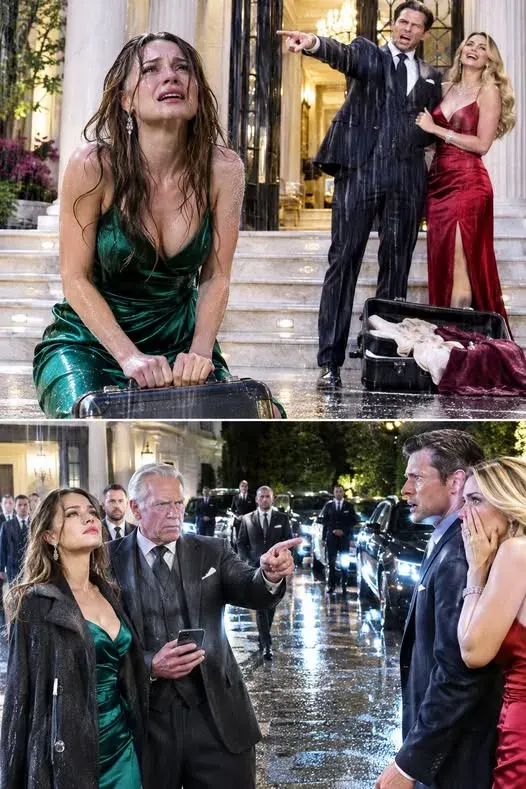
Margaret's investigator, a quiet former FBI forensic accountant named Simon Park, came to the house on Wednesday with a laptop and a box of donuts.
"You asked me to look into Collins Development," he said, setting both on the library table. "I think you're going to want a donut."
He opened a spreadsheet.
"Howard Collins has the most famous name in the Seaport and no money," he said. "His last three projects went over budget by a combined sixty million dollars. He owes forty-five million to lenders who are losing patience. And his option on the Harbor Point land expires in ninety days. If he can't show financing by then, he loses the site, and probably his company."
I leaned forward. "So he needed a partner with a clean balance sheet."
"He needed Bennett Construction," Simon said. "Specifically, the twenty-two million dollars in cash reserves sitting in Bennett's accounts. The draft joint venture agreement, which I found attached to a filing with the city's planning office, requires Bennett to contribute twenty-two million in cash up front. Collins contributes the land option."
"An option that expires in ninety days," my father said dryly.
"And the timing gets better," Simon went on. "Vanessa Collins met Daniel at a charity gala eight months ago. Within six weeks, Howard Collins had sent Bennett a partnership proposal. Vanessa wasn't falling in love. She was closing a deal for her father."
I sat back. I thought about Vanessa's sweet laugh on the steps. Men like Daniel deserve women who actually belong in their world.
She had never wanted Daniel's world. She wanted his bank account.
"There's one more thing," Simon said, and an almost guilty smile crossed his face. "It's about the necklace."
Margaret had sent Vanessa's lawyer a formal demand on Monday for the return of the diamond necklace as marital property. On Tuesday, Vanessa had apparently decided to find out what it was worth before giving it back.
She took it to a jeweler on Newbury Street.
"The jeweler is a friend of a friend," Simon said. "He told the whole story at lunch. The stones are cubic zirconia. Very good cubic zirconia, but glass, essentially. The setting is white gold, not platinum. Retail value, maybe nine hundred dollars."
My father put down his coffee cup very slowly.
"Vanessa apparently screamed so loudly in the shop that they had to ask her to leave," Simon added.
Margaret looked at me. "Emily, did you know?"
I looked down at my hands.
"I knew the night he gave it to me," I admitted. "I grew up around real diamonds. My mother had a pair of earrings she wore every day. The fake ones don't hold light the same way. They sparkle too much, all at once, like they're trying too hard."
"And you never said anything?"
"He was so proud when he gave it to me," I said quietly. "The company was finally doing well. I thought maybe he'd been tricked by a jeweler. I didn't want to embarrass him. I wore it to every gala for a year."
Later, Simon found the truth. Daniel had bought the real necklace for eighty-five thousand dollars, returned it two weeks later for a full refund, and given me a replica. The money had gone toward a membership at a private golf club in Brookline.
My father let out a long breath.
"So when I said he threw away a diamond for a cheap piece of glass," he said, "I was more accurate than I realized."
"Twice," Margaret said.
That evening, Tom from Bennett's accounting department, a man I'd had to dinner in our home a dozen times, sent me an anonymous email from a personal account. It contained one attachment: a list of personal loans Daniel had taken from the company over the past two years, totaling three million one hundred thousand dollars.
None of them had ever been approved by the board.
None of them had ever been repaid.