01 / 10
Chapter 1: One Way Or Another
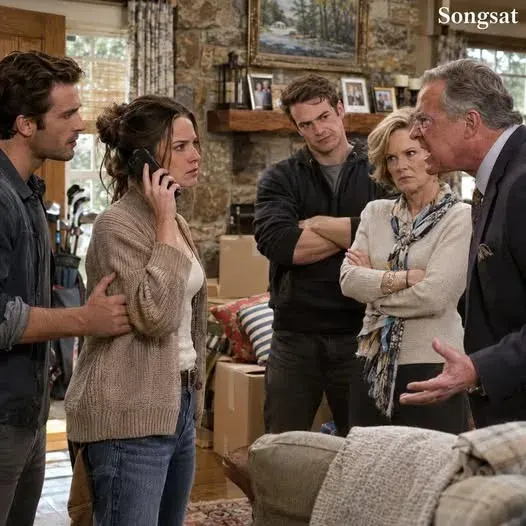
My mother stood in the middle of my living room, in front of the stone fireplace my grandmother used to warm her hands at, and told me I didn't have a family.
"You don't have a family, Sabrina," she said, arms crossed over her lavender blouse. "You have a house. And we'll take the house."
My father stood beside her, completely confident. "One way or another," he said.
My name is Sabrina Wilson. I was thirty-two years old, and five years earlier, these same people had left me homeless in the rain. Now they had broken into the cottage my grandmother left me, moved their belongings inside, and decided I was the one who needed to compromise.
I didn't scream. I looked at my father, then reached for my phone.
What he didn't understand was that I had already taken precautions.
The cottage sat at the end of Maple Ridge Lane in Saline, Michigan, a white clapboard house with green shutters, a wraparound porch, and a rose garden my grandmother had tended for forty years. Grandma Margaret had left it to me in her will, along with her savings and a brass key on a faded blue ribbon. For three years, it had been the only place on earth I felt completely safe.
Two days earlier, I had been in Boston at a design conference, standing at the Elevation Designs booth with a stack of business cards, when my neighbor Mrs. Jenkins texted me. Sabrina, honey, I see lights on at your place and people moving around. Are you renting it out?
I opened my security app with shaking hands.
There was my father's silver Lexus in my driveway. There were the suitcases. And there was my father, in his navy cardigan, kneeling at my back door with a screwdriver, forcing the lock while my mother held the flashlight and my brother Brian carried in a mattress.
I watched my family move into my home from seven hundred miles away.
I called all three of their cell phones. Nobody answered. Finally, I called the cottage's old landline, the one Grandma had refused to cancel.
Brian picked up. "Hello, Wilson residence."
"Brian, what the hell are you doing in my house?"
He sounded almost bored. "We're just getting settled in."
When I told him to get out, he laughed. He said they had talked to a lawyer about challenging Grandma's will, because she hadn't been mentally competent when she wrote it. Then he hung up on me.
I booked the first flight home the next morning. My best friend Patrick Doyle met me at Detroit Metro in his work truck, still in his green flannel shirt and boots, sawdust on his sleeves. Patrick was a carpenter. He had spent two summers helping me renovate that cottage board by board, and he had already called my lawyer from the road.
"Walter says your grandma had cognitive assessments every six months for the last two years of her life," Patrick said, merging onto I-94. "Signed by a neurologist. She was sharp as a tack when she made that will. They don't have a case."
"They don't need a case," I said, staring out the window at the gray March fields. "They've never needed one. They just push until you give up."
When we pulled into Maple Ridge Lane, my mother's decorative pillows were on Grandma's porch swing. My father's golf clubs leaned beside the front door like he'd lived there twenty years.
Inside, they had rearranged everything. My furniture was shoved against the walls. My framed design prints were stacked face-down behind the couch, replaced by family photos, the ones from Christmases I hadn't been invited to. In my bedroom, my father was hanging his suits in my closet. My clothes lay in a heap on the floor.
In my office above the garage, where I ran a business that had paid for every shingle on that roof, Brian had shoved my drafting table and two monitors into a corner to make room for his bed. A half-eaten sandwich sat on my drawing tablet.
I gathered them in the living room. "You all need to leave," I said. "Now."
That was when my mother told me I didn't have a family. And my father promised they would take the house, one way or another.
"We have documentation," he went on, smoothing his cardigan. "Medical evidence of your grandmother's declining mental state. Brian's already spoken with an attorney. You can leave quietly, or you can drag this through court and lose everything, including that little computer business of yours."
I knew he was bluffing. I took out my phone and dialed 911.
"What are you doing?" my mother demanded.
"Calling the police to report trespassers in my home."
"We're not trespassers," she snapped. "We're your family!"
I looked at her, at the woman who had shut her front door on me with my whole life packed in a Honda Civic. "Family doesn't break into each other's homes," I said.
As I gave the dispatcher my address, my father lunged for my phone. Patrick stepped between us so fast my father bounced off his chest. Patrick didn't touch him. He just raised one hand.
"Don't make this worse, Mr. Wilson," he said quietly.
Brian, leaning against my shiplap wall in a gray hoodie, stopped smirking.
For the next fifteen minutes, nobody said much. My mother sat on Grandma's floral armchair with her lips pressed white. My father paced. Brian kept checking his phone and texting someone furiously.
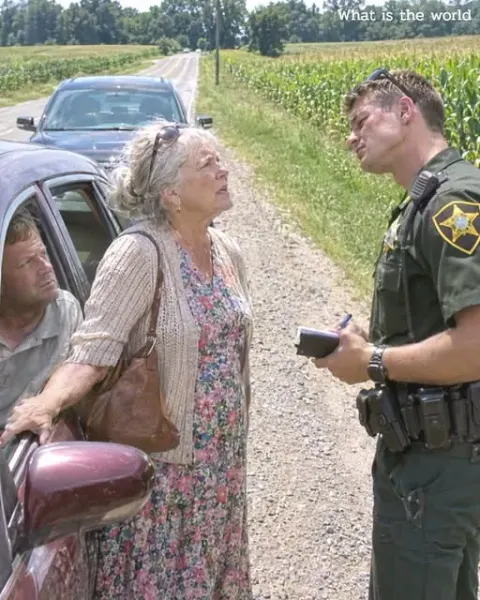
Then came a knock at the front door. Two Saline police officers stood on the porch, a young woman with a tight bun and an older man with a white mustache and kind, tired eyes. I opened the door with my driver's license and the deed to Grandma's cottage in my hand.
My father pushed past me before I could speak. "Officers, thank you for coming. This is just a family disagreement. My daughter is emotional. My mother left this house in a confused state, and we're simply—"
The older officer held up one hand. He was looking past my father, at the living room. At the stone fireplace. At the armchair.
"Richard Wilson," he said slowly. "I thought that was you."
My father blinked.
"Ray Teague," the officer said. "I went to St. Andrew's with your mother for thirty years. I helped carry her casket." He turned to me, and his voice softened. "And I was one of the two witnesses in Walter Hollis's office the day Margaret signed her will. She beat me at cribbage that same afternoon, and then she told me, 'Ray, if my son ever tries to take this house from Sabrina, you remember this day.'" He looked back at my father. "I remember it real well, Richard."
My mother made a small sound in the armchair.
"Also," the young officer said, glancing at her tablet, "Ms. Wilson filed a no-trespass notice with our department three weeks ago, naming all three of you. You were each served by mail. That means you're not having a family disagreement. You're trespassing."
That was my precaution. The day after my father announced which bedroom he wanted, I had walked into the Saline police station and filed it.
My father's face went red, then gray. "This is outrageous. We have documentation."
"Then you can bring it to a judge," Officer Teague said. "Tonight, you're packing up and leaving, or you're leaving in the back of my car. Your choice."
It took them an hour. I sat on the porch steps with Patrick while they dragged suitcases back to the Lexus and Brian's rusted Jeep. My mother walked past me without a word. My father stopped in front of me, his golf bag on his shoulder.
"This isn't over," he said.
"It was over five years ago," I said, "in the rain."
Brian came last, carrying a cardboard box overflowing with chargers and papers. As he stepped off the porch, the bottom of the box gave way, and everything spilled across Grandma's flagstone path.
He scrambled to grab it all, but one envelope slid right to my feet. It was from Lakeshore Credit Union. It had already been opened. It was addressed to Brian Wilson, at my address, and the letter inside had slipped halfway out.
Congratulations, Mr. Wilson. Your home equity line of credit in the amount of $165,000, secured by your property at 14 Maple Ridge Lane, has been funded.
I looked up. Brian was standing frozen on the path, his face the color of chalk.
My house. His name.
"Brian," I said, very quietly. "Why does the bank think you own my house?"
He didn't answer. He grabbed the envelope out of my hand, ran to his Jeep, and drove away so fast his tires threw gravel across Grandma's roses.