03 / 10
Chapter 3: The Brass Key
Grandma Margaret had been a schoolteacher for thirty-five years, a widow for twenty, and a terror at cribbage for as long as anyone could remember. She grew roses she named after dead movie stars. She read three library books a week. She didn't believe in self-pity, bad coffee, or giving up.
The morning after she brought me home, she set a cup of coffee in front of me and a laptop she'd bought at Best Buy the day before.
"I don't understand what you do," she said. "But I understand that you're good at it. So do it."
I freelanced from her kitchen table. I designed a new logo for her church's food pantry, then for the hardware store downtown, then for a winery in Traverse City whose owner had seen the hardware store sign. By spring, I had eleven clients. By the next winter, I had enough to pay Grandma rent, which she refused, so I paid the property taxes instead without telling her. She found out, and she didn't speak to me for an entire afternoon.
In the summer of that first year, Grandma started making appointments.
Every six months, she drove to a neurologist at the University of Michigan for cognitive testing. Memory tests, problem-solving, the works. She came home and filed the reports in a green folder in her desk.
"Grandma, nothing's wrong with your memory," I said. "You remembered my third-grade teacher's dog's name last week."
"Of course nothing's wrong," she said, tucking the newest report into the folder. "That's the point. I'm building a paper trail, sweetheart. I've known your father for sixty-one years. When I'm gone, he's going to say I was senile. I want to make sure he looks like a fool when he does."
That fall, she drove me to the office of her attorney, Walter Hollis, a soft-spoken man in a bow tie whose office smelled like pipe tobacco and old books. Officer Ray Teague from church and a retired nurse named June Albright met us there as witnesses. Grandma signed her will in steady blue ink. She left me the cottage, everything in it, and her savings, about two hundred and twenty thousand dollars.
She left my father a set of her late husband's cufflinks and a single sentence: I love you, Richard, but you have never needed anything from me except money, and you have had enough of mine.
She left Brian her late husband's pocket watch and a note telling him to call his sister.
Then she handed Walter a sealed envelope with Only to be opened if my family contests this will written across the front in her careful schoolteacher handwriting. Walter locked it in his safe.
Grandma died eighteen months later, in her sleep, in early spring, with a library book open on her chest. She was eighty-five.
The night before, she had pressed the brass key on its faded blue ribbon into my palm while we watched Jeopardy. "House is yours," she said. "Always meant for you." I thought she was just being sentimental. I think now that she knew.
My parents came to the funeral. They sat in the front pew. My mother cried delicately into a monogrammed handkerchief. My father gave a eulogy about family values that made Ray Teague get up and walk out to the parking lot.
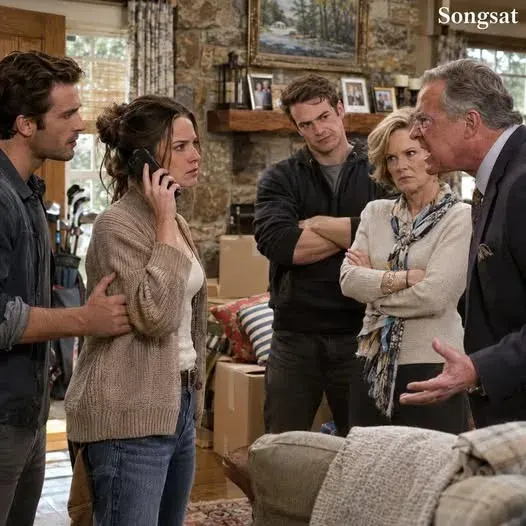
At the reading of the will in Walter's office, my father's face went through every color a face can be. When Walter read the sentence about the cufflinks, my father stood up so fast his chair tipped over.
"She was senile," he said. "She didn't know what she was doing. Sabrina manipulated a confused old woman."
Walter calmly opened the green folder and laid two years of neurology reports on the table, one after another. "Mrs. Wilson anticipated that you might say that, Richard," he said. "She asked me to tell you she was sorry to disappoint you one last time."
My father walked out. My mother followed. Brian lingered at the door, the pocket watch in his hand, and for one second, I thought he might say something.
Then he left too.
None of them called me for three years.