09 / 10
Chapter 9: What My Mother Said In Court
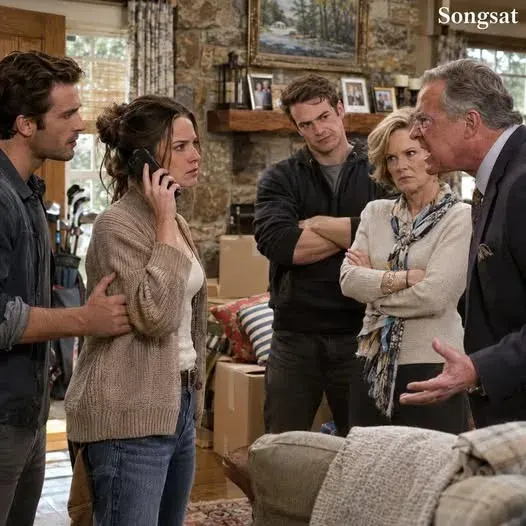
My mother testified at my father's trial in September.
She had moved out of the apartment on Ford Road the week after his arrest and into a one-bedroom senior apartment in Ypsilanti, four miles from the Walmart where I had slept in my car. She told me that on the phone, quietly, and then said, "I drove past it last week. I sat in the parking lot for an hour. I wanted to know what it felt like." She didn't say what she had found out. She didn't need to.
My father's defense attorney tried to paint her as a confused, vindictive wife. She sat in the witness chair in a plain gray dress, her swollen hands folded in her lap, and did not look at my father once.
"Mrs. Wilson," the prosecutor asked, "whose idea was it to forge your daughter's signature?"
"My husband's," she said.
"How do you know?"
"Because I was in the room when he said it." She took a breath. "He said, 'Sabrina has always been the weak one. She'll fold. She always folds.'" She finally turned and looked at him, across the courtroom, for the first time. "She didn't fold, Richard. She called the police. I wish I'd had half of her courage forty years ago."
The jury deliberated for three hours.
My father was convicted on all counts and sentenced to four years in state prison. Brian pleaded guilty to bank fraud and forgery in exchange for his testimony and was sentenced to two and a half years, with restitution to Lakeshore Credit Union of one hundred forty-one thousand dollars, to be paid from future wages for most of his life. Gary Finch got probation and lost his notary commission. Dr. Pruitt lost his medical license permanently.
The man in Detroit was arrested in a separate FBI case six months later. Brian's testimony helped.
Two weeks before he reported to prison, Brian asked if he could see me. We met at a diner in Saline, the one with the vinyl booths where Grandma used to order rhubarb pie every Sunday after church. He had lost weight. He was wearing Grandpa's pocket watch.
He slid an envelope across the table. Inside was a letter, four handwritten pages, and a check for two hundred dollars.
"It's the first payment," he said. "Toward your legal fees. I know it's nothing. I'm going to send something every month, even from in there. They pay you for kitchen work." He stared at his coffee. "Grandma left me a note with the watch. You know what it said?"
"Call your sister."
He nodded. His eyes were red. "It took me three years and a felony, but I'm calling, Sab."
I didn't forgive him that day. But I put the check in my wallet, and I let him pay for the pie.


