01 / 10
Chapter 1: The Shoebox On The Shelf
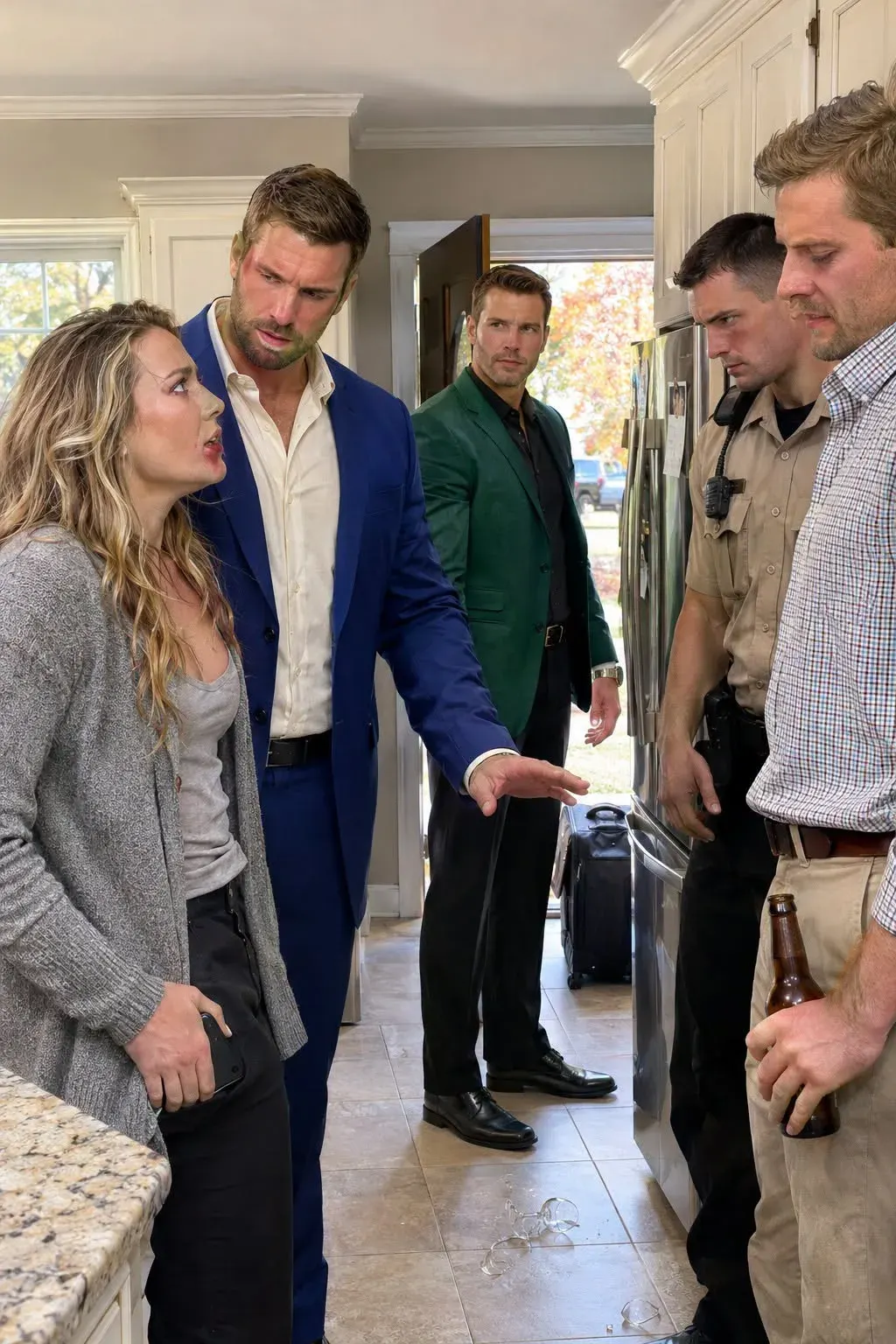
On the October afternoon my husband leaned against our kitchen counter with a cold beer while his deputy brother tried to teach me a lesson, the phone in my cardigan pocket was still connected to the two brothers he had kept from me for seven years. Mitchell believed nothing that happened inside our yellow house on Sycamore Lane would ever leave it—he had no idea Shane and Brendan Halloran were forty minutes away and pushing their rental car faster with every mile.
To the third graders at Maple Hollow Elementary in Millbrook, Ohio, I was Mrs. Ames. To everyone else in that town of church suppers, Friday-night football and porches with flags that never came down, I was Ray. For almost seven years, I told all of them—my principal, my dentist, the mothers in the afternoon pickup line—that I had a good marriage, and I said it so often that some mornings I nearly believed it myself.
Everyone in Millbrook loved Mitchell Ames. He taught American history at Millbrook High, coached the varsity offensive line, and served as a deacon at First Covenant Church, where he carried casseroles to widows and remembered the name of every parent who had ever shaken his hand.
At home, he kept score. He read my moods like a thermostat, corrected my memories until I stopped trusting them, and handed out kindness the way you'd hand a treat to a dog that had finally learned to sit.
His younger brother, Brock, was twenty-eight and a deputy with the Calder County Sheriff's Office, and he treated family dinners like an open-mic night where I was the only joke. At a Labor Day cookout, he squeezed my wrist hard enough that I wore long sleeves for a week in the heat, and Mitchell laughed it off as horseplay.
Dale Ames, their father, had retired as a sheriff's captain, and his name still opened doors from the county courthouse to the bait shop on Route 9. Their mother, Sylvia, had moved into the in-law suite above our garage after her hip surgery two years earlier, "just until she healed," and somehow never went back to Dale's farmhouse.
She flinched whenever anyone raised a voice. For a long time, I mistook it for shyness.
Before I go any further, you should know about the family I walked away from, because in that chapter of my life, I was not the innocent one.
Seven years earlier, my mother, Maureen Halloran, died in a hospice bed at St. Brigid's in Columbus. My brothers, Shane and Brendan, were twenty-nine and twenty-seven then, running a freight company out of a rented garage with two secondhand box trucks and sending every dollar they could scrape together toward her medical bills.
They drove double shifts and came to the hospice whenever the road let them. I was the one who sat beside her bed through the long nights, counting her breaths, holding a hand that grew lighter every day, and hating the whole world because we couldn't buy her one more spring.
At the luncheon after her funeral, in the church basement in front of our aunts and cousins, I turned on both of them. "You two mailed checks while I watched her disappear," I said, my voice carrying over the coffee urns. "So don't ever call yourselves my brothers again."
Shane went completely still. Brendan started crying right there beside the folding tables, and I grabbed my coat and walked out without taking back a single word.
Mitchell and I had been dating for four months. In his car afterward, he wrapped an arm around my shoulders and said, "You don't need them anymore, Ray—you have me now."
I wanted someone to make the grief feel simple, so I let him. We were married the next spring, and my brothers never called—or so I believed for seven years.
That October Saturday started with nothing more dramatic than a missing key. Mitchell was at a booster club meeting at the high school, and I was digging through his side of our walk-in closet for the extra key to the rented storage locker on Route 9, where I kept the paper pumpkins and cardboard skeletons for my classroom's Halloween party.
I stretched onto my toes to search the top shelf behind his winter sweaters, and my elbow caught the corner of an old dress-shoe box. It tipped, hit the carpet, and burst open at my feet.
Envelopes slid across the floor—dozens of them, some yellowed and soft at the corners, others still crisp and white.
I knelt to gather them up, and my hands stopped moving. Every single envelope was addressed to me, in handwriting I would have known anywhere.
And every one of them had been slit open and taped shut again, so neatly that you had to tilt it toward the window to see.