05 / 10
Chapter 5: The Captain's Word
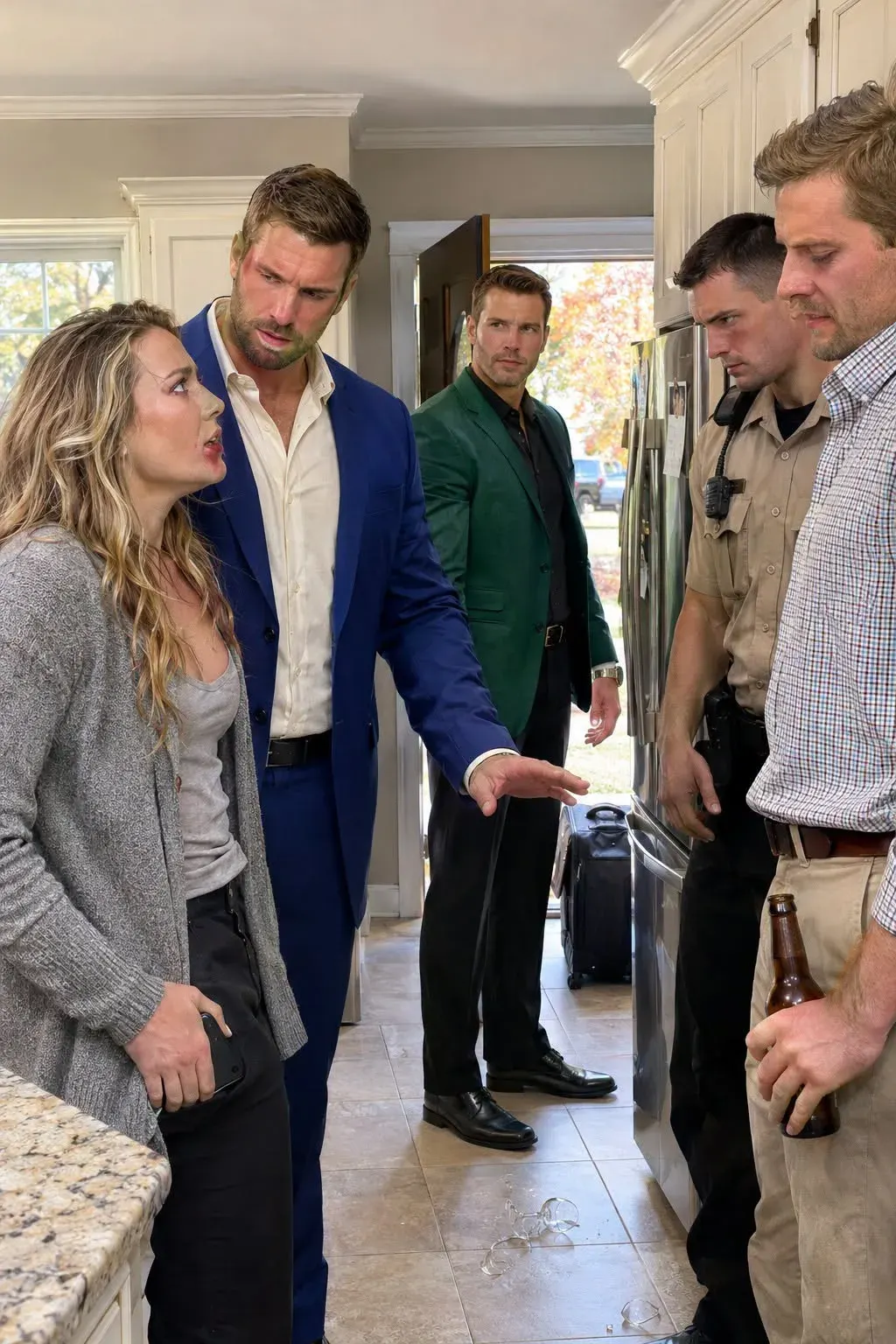
The officer's name tag read Pruitt, and he couldn't have been older than twenty-five. Dale steered him up our front steps with one big hand on his shoulder, chatting the whole way as if they were walking into a church potluck.
"Nate, son, how's your mother's knee holding up?" Dale asked, and then, before Pruitt could answer, "My boys had a family disagreement, that's all. And my daughter-in-law's brothers, who haven't bothered to visit in seven years, decided to turn it into a circus."
Officer Pruitt stepped into the kitchen and took in the broken glass, the suitcase, Brendan's jacket around my shoulders, and the deputy standing in the middle of it all. "Captain Ames, I still have to take statements from everybody."
"Of course you do," Dale said warmly. "Write it up as a verbal dispute, and let's give everybody a chance to cool off."
Shane held out Brendan's phone. "There's a recording, Officer—thirty-eight minutes of it."
Dale chuckled and shook his head. "Recordings get edited every day of the week, Nate. I spent thirty years around evidence rooms, and I've seen what people can do with a phone."
I felt the old reflex rise in me like a tide. Smooth it over, apologize, say you overreacted, make everyone comfortable again—I had seven years of practice, and the words were already climbing up my throat.
"Maybe we could just—" I began.
Then the side door to the mudroom creaked open.
Sylvia Ames came down the last two steps from the in-law suite with one hand clamped on the railing, wearing a lavender cardigan and house slippers, her silver hair coming loose from its pins. I had never once seen her come downstairs while Dale was in the house.
"Nobody edited anything, Dale," she said.
Her voice shook, but it carried all the way across the kitchen. "I heard every word through the floor. I've been hearing things through floors for thirty-four years."
Dale's face went dark red, and the warmth vanished from it like a light switched off. "Sylvia," he said. "Go back upstairs."
"I've gone back upstairs my whole life," she answered, gripping the railing tighter. "That's how I ended up living over a garage."
Nobody spoke. Officer Pruitt looked at Dale—really looked at him, the way you study a familiar painting after someone points out a crack in the canvas.
"Mrs. Ames," he said carefully, "can you tell me what you heard?"
She told him everything: Brock ordering me to apologize, Mitchell telling me it would end if I did, my refusal, and the sounds in between.
Then she lifted her chin toward her husband. "My boys learned that voice at my kitchen table," she said. "I stayed silent while they learned it, and I am done being silent."
Pruitt asked Shane for the phone, stepped into the hallway, and listened with one hand pressed over his other ear. When he came back two minutes later, his face had gone pale, and he didn't look at Dale at all.
"Deputy Ames," he said, unsnapping the handcuff case on his belt, "I need you to turn around and put your hands behind your back. And I'm going to need your duty weapon."
Brock stared at his father, waiting for the rescue that had arrived every time he had ever been in trouble. Dale opened his mouth, closed it again, and said only, "You'll regret this, Nate."
"Maybe so, sir," Pruitt said, clicking the cuffs shut. "But I listened to the recording."
Brendan held my arm while they walked Brock down the front steps, past the maples, and into the back of the cruiser. Half of Sycamore Lane had come out onto their lawns to watch, and that afternoon, I didn't care what anybody saw.
Mitchell wasn't arrested. Pruitt told him that standing by wasn't something he could charge on the spot, but that a detective would be calling him, and Mitchell nodded gravely, already wearing his deacon face again—I could see him memorizing the version of this story he would tell on Sunday.
I picked my mother's photograph out of the glass, shook it off, and tucked it into my pocket beside my phone. Brendan carried my suitcase.
On the porch, a cool hand caught my wrist—gentle, nothing like Brock's grip at that cookout. Sylvia had followed us out, and she leaned close so nobody else could hear.
"Both Decembers I've lived over that garage, Mitchell met the mail carrier at the end of the driveway," she murmured. "Last year an envelope tore open in the wind, and a check blew onto the gravel with your name on it—he told me it was a refund from your school."
Her fingers tightened around my wrist. "Ray, ask your brothers what they sent you."