10 / 10
Chapter 10: Our Own Terms
On a crisp Sunday morning the following September, the bells of Saint Brigid's in Astoria rang out over the rooftops while I stood on the church steps in a pale blue dress, holding our daughter in a white christening gown that had once belonged to my mother.
Her name was Maura, after my mother, and she had Matteo's dark eyes, my freckles, and a voice that could rattle windows. She had arrived during an April thunderstorm after fourteen hours of labor, while her father held my hand so tightly that the nurse kept checking on him instead of me.
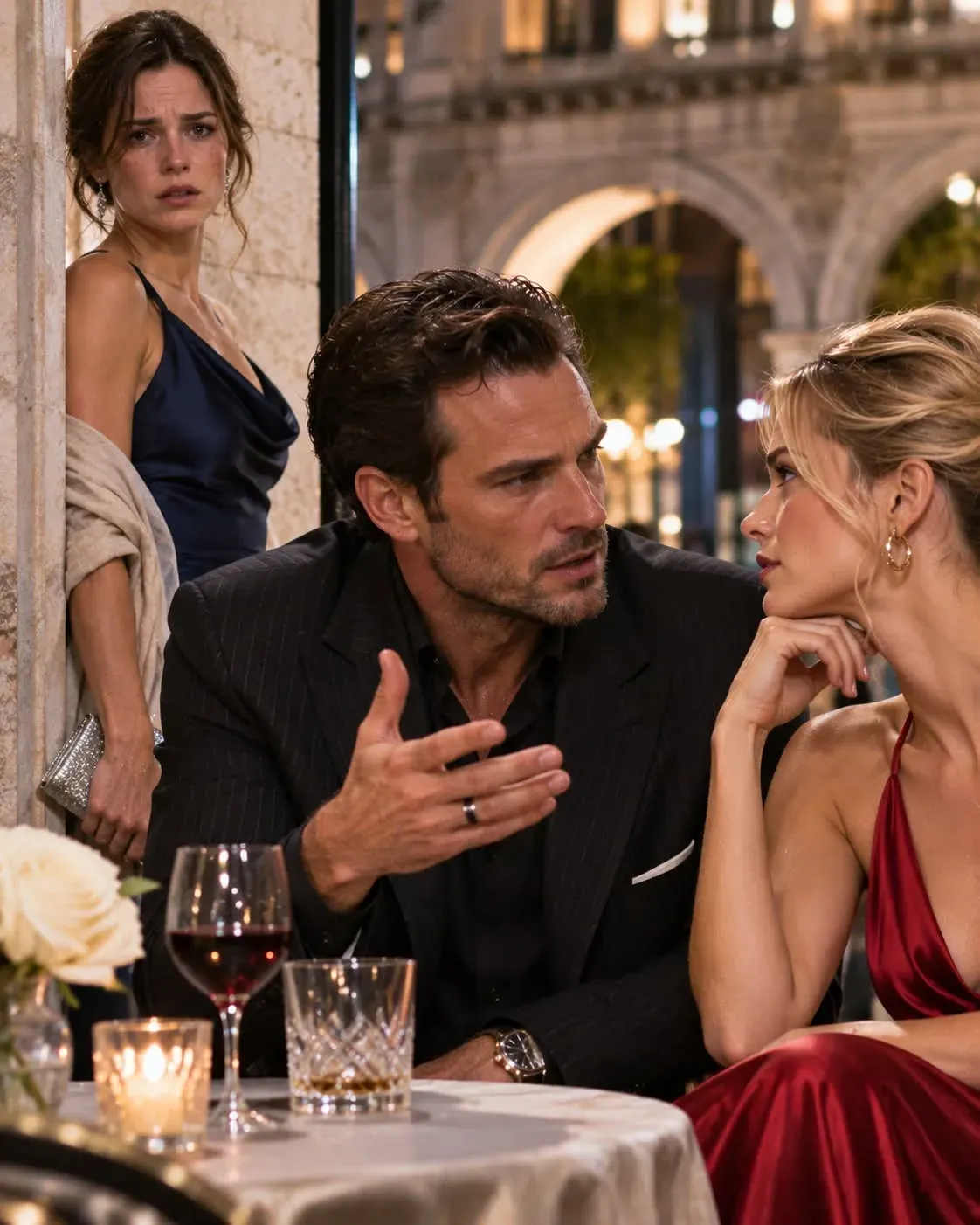
A single year had rearranged my whole life, and yet some mornings I still woke up expecting to find myself standing behind that stone pillar.
Leo and Bianca Romano repaid every dollar by the Friday deadline and left New York that same weekend. The last I heard, Bianca was doing manicures in a strip mall outside Phoenix and Leo was selling used boats, which my father found so funny that he laughed until he had to sit down.
The piers stayed with the O'Connors, just as I'd promised in my note. I ran them now from my mother's old office above the loading yard, with a partnership agreement on my desk that split everything between our families down the middle, and my name typed on every single page.
There hadn't been a single fire on the waterfront in a year, or a single man coming home with stitches. Finn ran the dispatch office, Declan Shea finally retired to Florida, and my father moved up to Saltbrook, where he played cards with Rosie every Thursday night and lost on purpose because she cheated.
Matteo courted me exactly the way he'd promised—patiently, stubbornly, and without a single shortcut.
He showed up every morning at six with coffee, learned the name of every man on the loading crew, and let Finn beat him at darts every Friday night at the pub on Vernon Street without once complaining about the score. He came to every appointment, read every pregnancy book twice, and attempted my mother's soda bread so badly that Rosie banned him from her kitchen for life.
He never once asked me to move back to Tribeca. Instead, that fall, he sold the penthouse and rented a cramped one-bedroom over a bakery two blocks from the piers, where the radiator banged all night and everything smelled like rye bread by four in the morning. He swore it was the best apartment he had ever lived in, because he could walk to my door in three minutes.
Somewhere in those months, I stopped waiting for him to turn back into the man on the terrace. And one night in March, when I was enormous and couldn't sleep, I called and asked him to come over and read to me about Roman emperors until I drifted off against his shoulder.
He proposed in June, in Rosie's diner, on the same stool where Bianca had once sat and called me paper.
There was no velvet box. He simply set a plain gold band on the counter beside my slice of blueberry pie and said, "No lawyers, no contracts, no merger—just me, asking."
I said yes before he finished the sentence, and Rosie dropped an entire tray of coffee mugs.
We married for the second time at the end of the Vernon Street pier on a warm evening in August, with my father giving me away again and grumbling that it had better be the last time. There was no cathedral, no mayor, and nothing to sign—just our two families standing together on cobblestones they had once fought over, while Maura shrieked happily at the seagulls.
Now, on the steps of Saint Brigid's, Matteo stood beside me in a dark suit with our daughter's tiny hand wrapped around his finger. When the photographer called for everyone to look at the camera, he looked at me instead.
"What?" I asked, smiling.
"Nothing," he said, his voice rough. "I'm just remembering how close I came to losing all of this."
He kept his hand at the small of my back as we walked down the steps into the sunshine. This time, I knew it wasn't theater.
The first time I married Matteo Falcone, I was a signature on a page that two families needed. The second time, there was nothing to sign at all—and I've learned that the promises worth keeping are the ones nobody ever has to write down.