05 / 10
Chapter 5: The Woman In Red Satin
Bianca Romano walked into my aunt's diner as if she owned it, shaking rain from a red wool coat that cost more than Rosie's griddle, her blonde waves pinned up and her gold hoops catching the light. The little brass bell above the door jingled cheerfully behind her.
"Black coffee," she said, sliding onto a stool at the counter. "And whatever pie the locals keep bragging about."
Rosie looked at me. I nodded once, and my aunt poured the coffee with a face like a closed fist before retreating into the kitchen, where I could hear her very deliberately not washing anything.
"You look tired, Carla," Bianca said, blowing across her cup. "Small towns do that to people—all this fresh air."
"What do you want?" I asked, keeping the counter between us.
She smiled with her red lips, slow and patient. "You took something that doesn't belong to you, and I've come to bring it home."
"The ledger belongs to my husband," I said evenly. "Funny that you'd drive two hours in the rain to collect it for him."
"Matteo doesn't know I'm here," Bianca said, setting down her cup. "Matteo doesn't know a lot of things."
"Like Harbor Line Freight?" I asked, picking up the coffee pot Rosie had left on the warmer, just to give my hands something to hold. "Or the storefront on Eighty-Sixth Street where it's registered?"
For one second, her smile slipped. Then it came back, colder and thinner, like ice forming over a puddle.
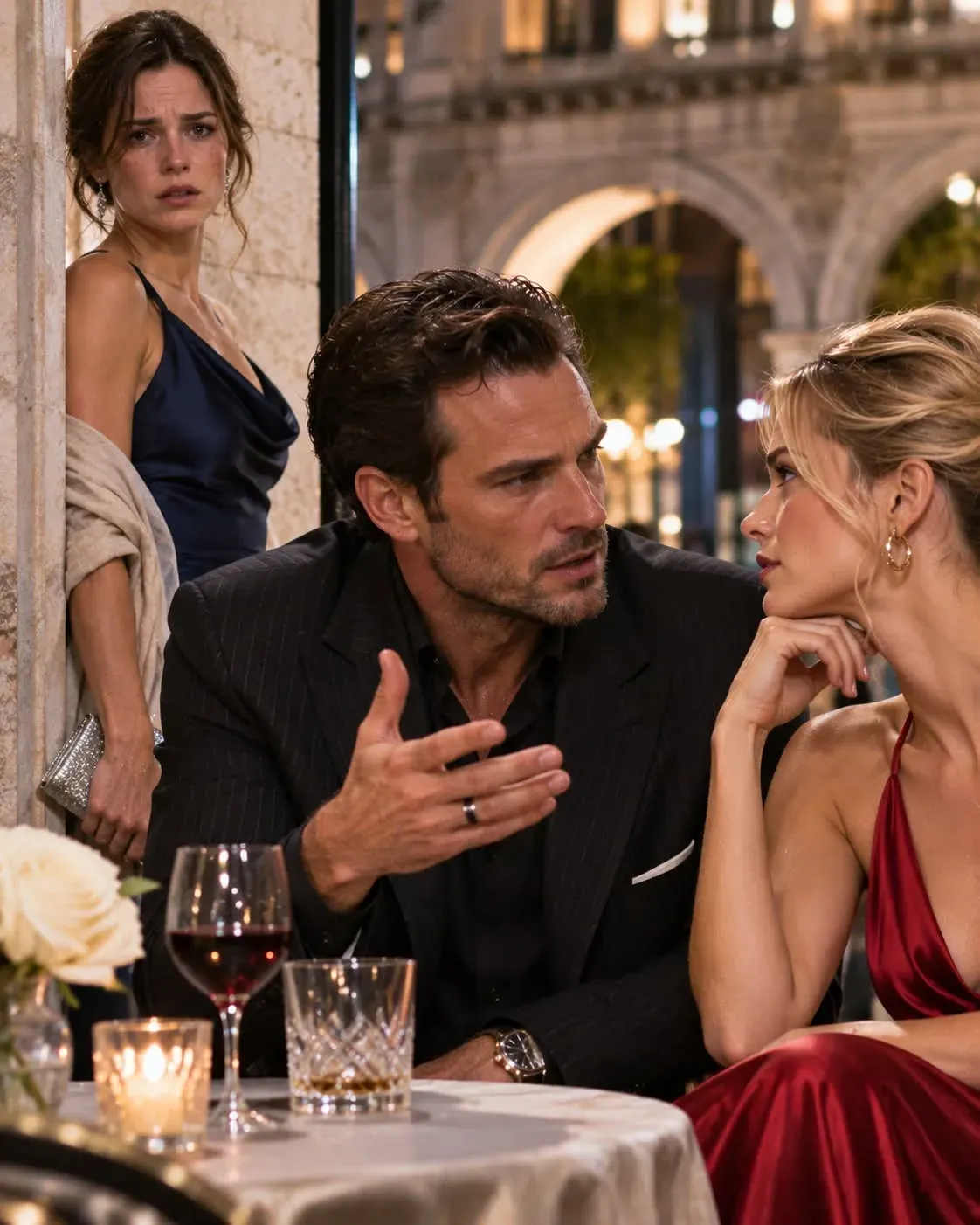
"You always were the clever one," she murmured. "Leo warned me the O'Connor girl could read a balance sheet the way other women read magazines, and I told him not to worry, because clever girls are easy—they believe what they overhear."
My hand tightened on the coffee pot. "You knew I was behind the pillar."
"I saw your shawl," Bianca said, almost kindly. "Beige, honey—nobody wears beige to the Plaza unless they're trying to disappear."
"So you asked the question on purpose," I said.
"I asked the question," she agreed, tilting her head so her earrings swung. "But Matteo answered it all by himself, and I didn't write a single word he said—I only made sure you were standing there to hear it."
That landed exactly where she meant it to, somewhere under my breastbone, and she watched it land with real pleasure. I made myself breathe.
"He'll know what you did," I said. "The minute I show him the numbers."
"Will he?" Bianca leaned forward, chin resting on her hand, the same way she had leaned toward him that night. "A man who called you paper, choosing your arithmetic over my brother, who's bled for him for fifteen years—you heard him, Carla, you don't matter to him."
She reached into her coat and laid a phone face up on the counter between us. On the screen was a photograph of my father at his desk above the loading office, reading glasses perched on his nose, taken through the window from the street—and the time stamp said four o'clock that afternoon.
"Your father has a bad heart, doesn't he?" Bianca asked, her voice smooth as silk. "It would be such a shame if he had any more stress this week."
My knees nearly buckled. I gripped the edge of the counter and held on.
"Midnight," she said, standing and buttoning her red coat. "End of the town pier, by the bait shack—just you and the book, and then you can go raise your baby wherever you like."
I stared at her.
Her eyes dropped to the saltines beside the register, then to my left hand, which had drifted to my stomach without my permission. "Oh, please," she said with a little laugh. "You held it exactly like that behind the pillar—congratulations, by the way."
She dropped a twenty on the counter for the coffee she hadn't finished and walked out, and the brass bell jingled as cheerfully as it had when she came in. Rosie burst out of the kitchen with a rolling pin in her fist, but the black car was already pulling away.
I stood at the front window with my heart slamming against my ribs, watching its taillights dissolve into the fog. That was when I noticed him.
Across the street, in the dark doorway of the hardware store, a broad-shouldered man stood with his collar turned up against the rain, watching the diner. He raised a phone to his ear, and the streetlight caught a flash of gold at his wrist.
I knew that watch. I had fastened it around my husband's wrist myself on the morning of our wedding.