02 / 10
Chapter 2: The Safe In Tribeca
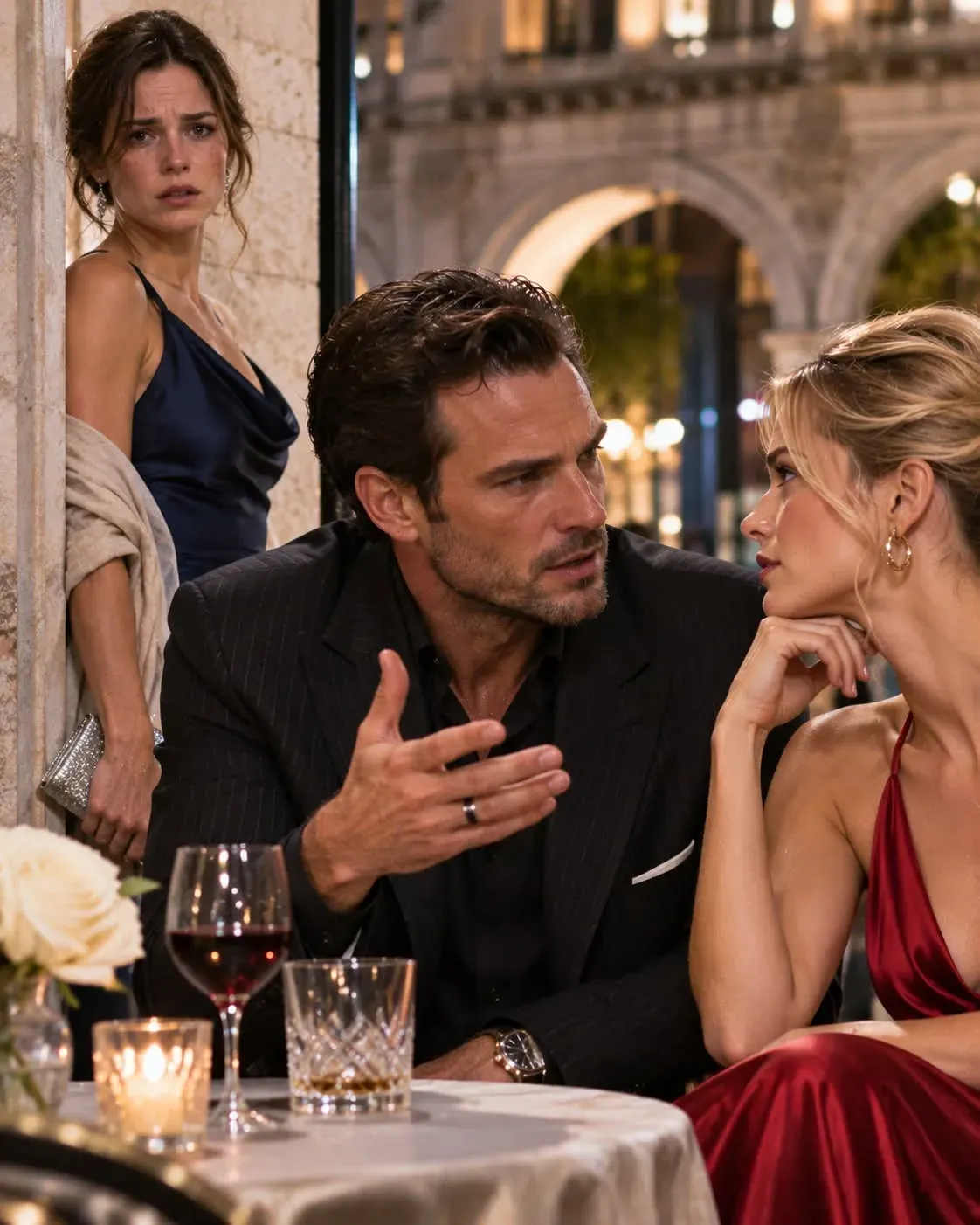
The penthouse was silent except for the hum of the wine refrigerator and the faraway wail of a siren crossing Canal Street.
I stepped out of the navy satin dress in the middle of the bedroom and left it lying on the hardwood like something that belonged to another woman. Then I pulled on jeans, a gray sweater, and my old canvas sneakers, and dragged a duffel bag out from the back of my closet.
I had packed it three weeks earlier, the same afternoon I saw those two pink lines. At the time, I told myself it was a silly habit from a girl who grew up in a family where bags were sometimes packed in a hurry, but some quiet part of me had always known I might need it.
Matteo's office sat at the end of the hallway, all dark walnut and leather and floor-to-ceiling windows overlooking the Hudson. Behind a gloomy oil painting of a ship caught in a storm was the safe.
He had given me the combination in our second month of marriage, rattling off six numbers while he knotted his tie, saying only that if anything ever happened to him, I should open it before anyone else did. I'd been foolish enough to think that meant he trusted me.
My fingers were steady as I turned the dial. Inside were neat bricks of cash in paper bands, a velvet tray of his father's old watches, a handgun I refused to touch, and a slim black leather ledger lying on a shelf by itself.
I had seen him handle that book exactly once, late on a Sunday night. He had held it the way some men hold a newborn, and he'd put it away the moment he noticed me standing in the doorway.
I counted out fifty thousand dollars—enough to disappear for a while, not enough to make me a thief in any court that mattered—and pushed it into the bottom of the duffel. Then I picked up the ledger.
It was heavier than it looked.
I sat down in his leather chair and twisted the diamond wedding band over my knuckle. The skin underneath was pale and faintly ridged, like a scar that had healed around a promise nobody meant.
I laid the ring in the center of his green leather blotter and pulled one of his fountain pens from its silver stand. My handwriting came out sharper than I expected.
Matteo—I was behind the pillar, and I caught all of it. The piers go back to my father, the book stays with me, and you won't come looking. You said so yourself tonight, so let's both call this what it always was, a business arrangement.
I left by the service elevator, nodded to the porter mopping the lobby floor, and walked six blocks before I hailed a yellow cab on West Broadway. "Grand Central," I told the driver, and I didn't turn around to look at the building once.
The last train north left at one-thirty in the morning. I bought a ticket with cash, found a seat in the empty rear car, and watched the city lights slide away into the dark like coins dropping into black water.
Then, because I had always handled fear by reading numbers, I opened the ledger.
I expected bribes. I expected the names of judges and harbor inspectors and the price of every crooked captain on the West Side, and some of that was in there, written in Matteo's small, slanted hand.
But most of the pages were simpler than that—columns of dates, amounts, and company names, the plain bones of a business. I ran my finger down them the way my father taught me at nineteen, hunting for the number that didn't belong.
It didn't take long. One company appeared again and again, month after month, for "pier security" along the Long Island City waterfront—a fee that had crept higher and higher until it reached forty thousand dollars every thirty days, always in cash.
Harbor Line Freight.
My finger froze on the page, and the train rocked beneath me as we crossed into the Bronx.
I knew that name. I had written it in my own handwriting at least two dozen times, because for the past two years O'Connor Marine had been paying Harbor Line Freight the same climbing fee, forty thousand dollars a month by now, for security on the very same piers.
The same company had been collecting from both sides of a war.
I turned the pages faster, matching dates in my memory to dates on the paper, and a cold, sick feeling spread through my chest. Somebody had been getting rich keeping the Falcones and the O'Connors at each other's throats—and whoever it was had danced at my wedding.