04 / 10
Chapter 4: The Letter In Her Hand
I opened it standing at the window, with the lake lying flat as pewter under a low March sky. Declan had written it on yellow legal paper, the only kind of paper he ever trusted.
Jonny—if my girl handed you this, then he has shown her who he is. You kept me out of prison for twenty-four years, so spend one more keeping her out of his.
Don't fight him with fists, because he has more of them. Fight him with paper, because he never reads it.
And call Hannah. I sent you to a bail hearing the night Ellen went into hospice, and I'm taking that debt to my grave unpaid—don't let it become yours.
My wife, Ellen, died six years ago of ovarian cancer, the kind of long illness that gives everyone time to say goodbye, except the people who aren't there. The night they moved her to hospice, one of Declan's men was arrested, and Ellen squeezed my hand and told me to go, because we needed the fee.
She was gone two days later. Our daughter, Hannah, was twenty-three and in her second year of law school, and she has spoken to me perhaps a dozen times since—none of them in the last three years.
I folded the letter into my breast pocket and kept my back to Serena until I could trust my face.
"When the Larkspur and the restaurants showed up on my statement three years ago, I thought Nate had done it for me," she said behind me. "I used to read those statements in the bathtub and think he loved me so much he didn't even need me to know."
She laughed once, without any humor at all. "Then yesterday, he called me a medical crisis."
I explained what I could and couldn't do. I couldn't be her divorce lawyer, because I had represented her husband, but I was still counsel to Trust 1147, and I could testify to every page I had drafted.
That afternoon, I brought Celeste Okafor to her bedside. Celeste was the most feared family lawyer in Cook County, tall and gray-haired, with reading glasses pushed up on her head, and she read the memo twice before looking at me over the top of it.
"Mr. Pierce," she said, "either you are the most dangerous lawyer in Chicago or the most foolish."
"It depends on the decade," I said.
Celeste's plan was simple and merciless. She would file for divorce on Serena's terms before Nathaniel's people could file on his, enforce the prenup to the letter, and make sure he never got within arm's reach of Trust 1147.
Celeste's first move landed before his deadline did. When Nathaniel's forty-eight hours ran out on Thursday afternoon, a judge had already granted Serena exclusive possession of the penthouse she owned, and it was Nathaniel who had to pack.
Dr. Caldwell came by at the end of that first week with the genetic results. Serena's leukemia was a higher-risk type, which meant chemotherapy alone probably wouldn't keep it away; once she reached remission, she would need a stem cell transplant from a donor.
"Do you have brothers or sisters?" he asked.
"I'm an only child," Serena said.
"Then we search the registry," Dr. Caldwell said, squeezing her hand. "Somewhere out there, a stranger may already be carrying the cells that can save you—our job is to find them."
The second week was brutal. The chemotherapy filled her mouth with sores and turned her stomach inside out, and her chestnut hair came away in her brush, so she started wearing her late mother's silk scarves, a different color every day.
I visited each afternoon at four with the newspaper crossword folded in my pocket. She finished it faster than I did, even on the days she could barely lift her head, and she never once let me forget it.
"Eight letters, a binding promise," I read aloud one gray afternoon.
"Covenant," she said, without opening her eyes. "Something my husband never learned to spell."
Nathaniel never came to the eleventh floor, not once. By the end of the first week, Serena had stopped glancing at the door whenever footsteps passed it.
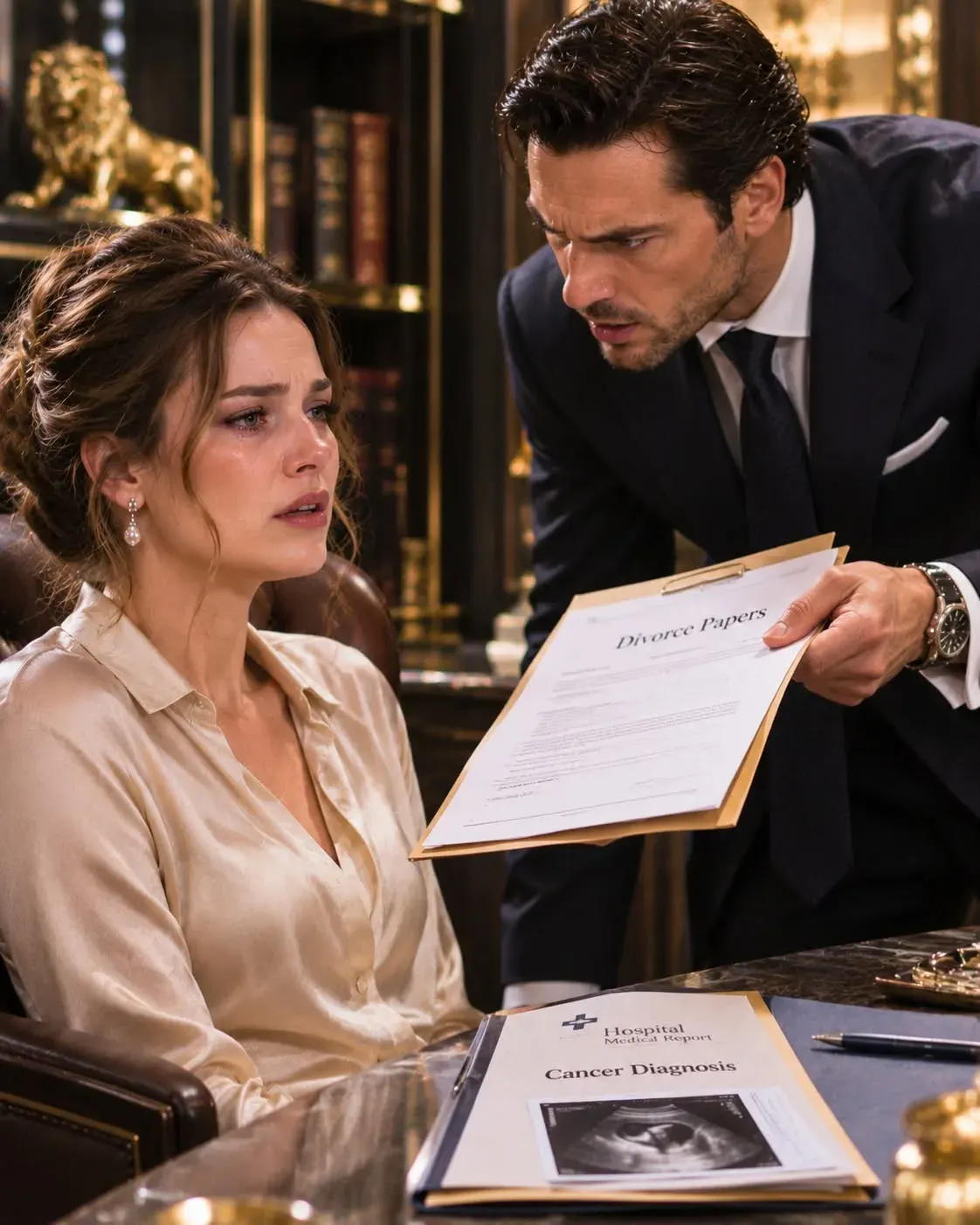
On the twelfth day, Celeste called me as I was leaving the hospital garage. "Nathaniel just filed a petition in probate court," she said, her voice tight. "He's asking to be appointed guardian of Serena's person and estate, claiming the chemo has left her unable to manage her own affairs."
"He can't win that," I said.
"He's attached an affidavit from a psychiatrist who has never met her," Celeste said. "And Jonathan—if he wins, he controls her money, her trust, and her medical decisions, including whether she ever gets that transplant."