07 / 10
Chapter 7: Exhibit Twelve
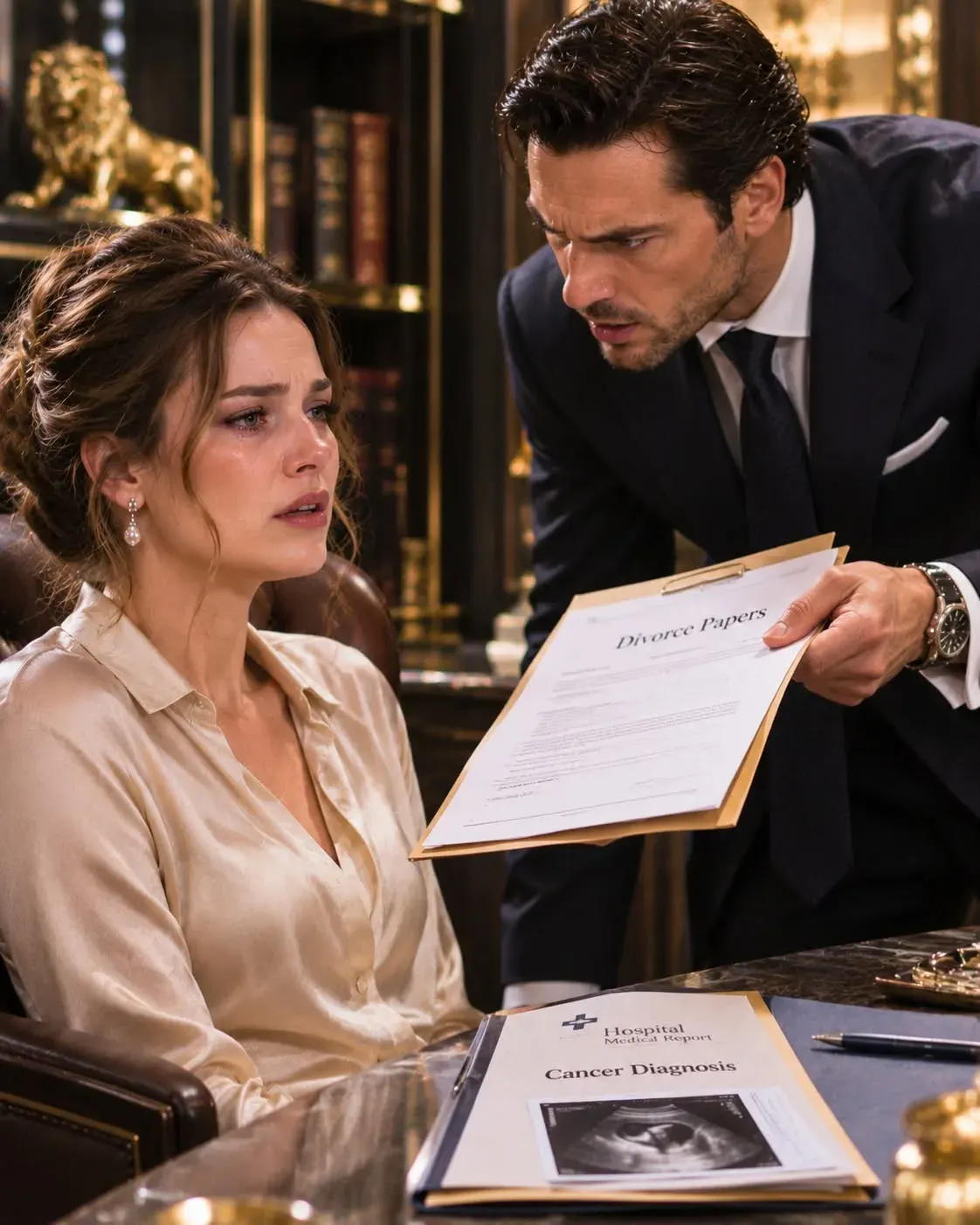
Serena reached remission on the twenty-ninth day. Dr. Caldwell delivered the news standing at the foot of her bed, and he was careful with it, the way good doctors are careful with anything fragile.
"This is the first door, not the last," he said. "Because of your genetics, we still need the transplant to keep it away—but the registry has found you a perfect match, Serena, a young woman in Wisconsin who said yes the same day we called."
Serena cried then, harder than she had cried in that office on the day of her diagnosis. Hannah, who had come to prepare her for the hearing, held one of her hands, and to my surprise, Serena reached out and took mine with the other.
The hearing took place three days later in a wood-paneled courtroom on the twentieth floor of the county courthouse downtown. Judge Marguerite Osei presided, a small, sharp-eyed woman who had been handling guardianship cases for longer than Preston Kingsley had been practicing law.
Serena came in a wheelchair pushed by a nurse, wearing a surgical mask, a green silk scarf, the champagne blouse, and her pearls. When Nathaniel saw her from the petitioner's table, he looked away first.
He sat rigid beside Kingsley in a fresh navy suit, his silver watch catching the courtroom lights every time he checked it, which was often. Rocco Benedetti was nowhere in sight, and I wondered whether Kingsley had advised him to stay home.
Kingsley called Dr. Brandt, who testified smoothly for twenty minutes about cognitive impairment and chemotherapy. Then Hannah stood up for cross-examination, pushed her glasses up her nose, and I watched my daughter take him apart one bolt at a time.
"Dr. Brandt, how many minutes have you spent with Mrs. Costello?" she asked.
"I conducted a thorough review of the records," Brandt said.
"So, zero," Hannah said. "And did the records you reviewed include the next morning's nursing note, stating that the patient was alert, fully oriented, and asking for the newspaper crossword?"
Brandt hadn't seen that note, because whoever copied the chart hadn't copied it. Kingsley stopped taking notes.
Then Serena asked to address the court herself. She lowered her mask and answered every question Judge Osei put to her—her medications by name and dose, her transplant schedule, the number of the trust, and Section 7(c) of her prenuptial agreement, which she recited word for word.
"Your Honor, my husband doesn't want to protect me," she finished, her voice thin but clear. "He wants the deeds."
Kingsley called me as a hostile witness, which I had expected. He held up Declan's amendment and asked, with great theatrical patience, whether I didn't find it convenient that a career mob lawyer had ended up in control of a sick woman's fortune.
"Mrs. Costello isn't in my control, and she's not dying," I said. "I learned about that amendment five days ago, at the same table as my daughter."
Then Hannah handed me Exhibit Twelve, the certified duplicate from Harborview's vault, and asked me to read it to the court. I did, every word, and when I finished, I told the judge exactly why I had written it.
"I drafted this memo to help Mr. Costello keep his property away from a federal investigation," I said. "I'm not proud of its purpose, Your Honor—I'm only here to tell you what it says, and he signed it."
Gloria Pak testified next, with a copy of Rocco Benedetti's driver's license and a forged power of attorney in a plastic sleeve. Judge Osei examined both for a long time, then looked over her glasses at the petitioner's table until Nathaniel's lawyer found something interesting on the ceiling.
"Petition denied," she said. "This court finds Mrs. Costello entirely competent—frankly, I've rarely met anyone who knows her own trust documents better while receiving chemotherapy—and the forged instrument is referred to the State's Attorney."
In the hallway afterward, Serena squeezed my hand from her wheelchair, and Hannah stood beside me closer than she had in six years. Then two people in dark suits stepped out from beside the elevators and showed me federal badges.
"Mr. Pierce," said the taller one, handing me an envelope. "That was very interesting testimony about hiding property from a federal investigation—a grand jury would like to hear the rest of it."