02 / 10
Chapter 2: The Girl Who Enlisted
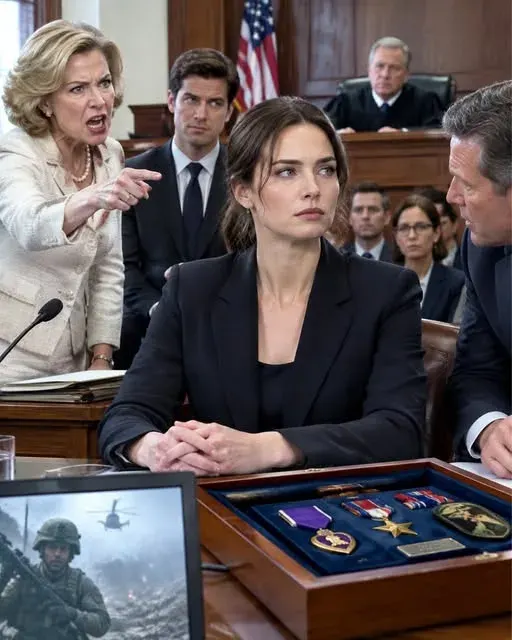
To understand how my own mother could swear I never served, you have to understand what my enlistment did to her.
I grew up in a big colonial house in McLean, Virginia, with a basketball hoop in the driveway and a mother who had my whole life planned before I could walk. I was supposed to go to the University of Virginia, marry someone from the club, and eventually take a seat on the Bennett Meridian board as a respectable figurehead.
Caleb, two years younger, was the golden boy. Charming, handsome, never in trouble that money couldn't fix. When he crashed his BMW into a mailbox at seventeen, my mother called it "an accident." When I got a B-plus in calculus, she called it "a disappointment."
My father was different. He took me to his workshop on Saturdays and let me solder circuit boards beside him. He taught me how radar worked, how signals bounced and returned. "You've got an engineer's brain and a soldier's spine," he told me once. "Your mother doesn't know what to do with either."
On my eighteenth birthday, I drove to the Army recruiting office in Tysons Corner and signed my name.
My mother didn't speak to me for four months. When she finally did, it was to tell me I had humiliated her in front of every woman at the Chesterbrook Garden Club. "Bennett women do not crawl through mud," she said.
I crawled through a great deal of mud.
Four years enlisted, then Officer Candidate School at Fort Benning. Intelligence work. Then, at twenty-six, a quiet man in civilian clothes asked if I would consider a "special assignment." He couldn't tell me what it was until I agreed.
I agreed.
For the next six years, I served in a small joint unit that did things the government doesn't put in press releases. I can say more about it now than I could then, but not very much more. My official file became a placeholder. My letters home could say only that I was fine and that I loved them.
I wrote my parents every month for six years. My father wrote back every single time. My mother never did.
On the night of September 9th, nine years ago, my team flew into a valley in northern Syria to recover two kidnapped American aid workers. The intelligence was wrong. Someone had told the people holding them that we were coming.
As our helicopter lifted out with both hostages aboard, a missile struck the tail. We went down in an orchard and burst into flames. Shrapnel tore open my left side from my armpit to my hip. I remember the smell of jet fuel and burning olive trees and my own blood.
Major Daniel Hayes, my commanding officer, pulled me out of that burning wreck with three broken fingers and a gash in his neck that later took forty stitches. He carried me two hundred yards under fire to the rescue bird. Both hostages survived. Three of our team did not.
I received the Silver Star and the Purple Heart in a closed ceremony in a windowless room at Fort Bragg. There were no photographs. My father was the only family member allowed to attend, after a security background check. He wept the whole time.
My mother stayed home. She said she had a garden club luncheon.
After my medical retirement three years later, I came home to McLean and joined Bennett Meridian as vice president of operations. My mother told her friends I had been "doing consulting overseas." I let her. It was easier than explaining something I wasn't allowed to explain.
I never imagined that silence would one day be turned into a weapon against me.


