09 / 10
Chapter 9: The Board Vote
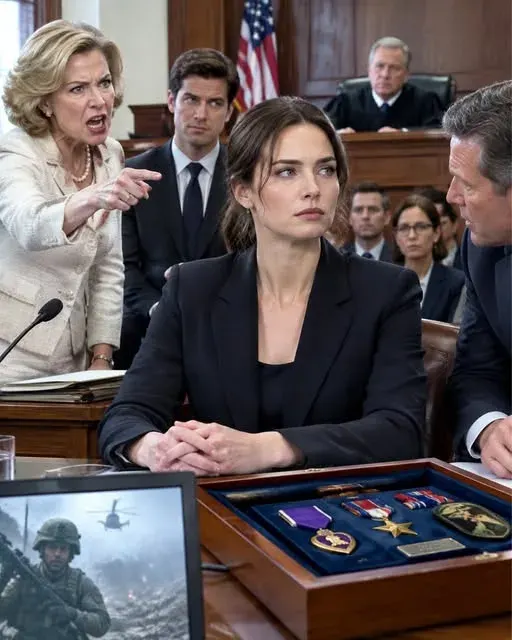
Two weeks after the trial, I walked back into the lobby of Bennett Meridian Systems in Reston for the first time since I'd been led out in handcuffs.
The receptionist, a young woman named Destiny who had cried the day I was arrested, burst into tears again and ran around her desk to hug me. By the time I reached the elevators, a small crowd of employees had gathered in the lobby. Somebody started clapping. Then everybody was.
The board of directors met that afternoon. With Caleb's forged will declared void by the Fairfax County probate court, my father's real will stood. My fifty-one percent was mine again. The board voted unanimously to remove Caleb as acting CEO and to appoint me interim chief executive officer.
My first act was to call the Department of State and the Department of Defense and voluntarily disclose every illegal shipment. My second was to hire an independent compliance firm to audit every sale we had made for five years. My third was to stand in the company cafeteria in front of nine hundred employees and tell them the truth.
"My brother broke the law and endangered American lives," I said. "This company is going to pay for that, and it's going to fix it. Nobody here is losing their job because of what he did. My father built this place to protect people. That's what we're going to do again."
Caleb pleaded guilty in February to conspiracy to violate the Arms Export Control Act and money laundering. Tyler Brandt's testimony, the bank records, and the shipping manifests left him nowhere to hide. He was sentenced to nine years in federal prison and ordered to forfeit eleven million dollars.
At his sentencing hearing, our mother testified. Not for him. Against him.
She told the court about the forged will, about the night he'd brought it to her kitchen table with a pen, about how he had coached her testimony with printouts of replica medal websites. Fairfax County had offered her a deal: a misdemeanor plea for false witnessing, probation, and community service, in exchange for her full testimony.
"I lied about my daughter under oath," she told the judge. "I will regret it for the rest of my life. She deserved a mother who stood up for her. Instead, she stood up for all of us, and I sat there and called her a liar."
When she stepped down, Caleb wouldn't look at her. But she stopped beside the defense table anyway and put her hand on his shoulder for a moment.
"I'll write to you," she said. "And I promise I'll read every one of yours."
Karim Haddad was arrested by Greek authorities on a yacht off the island of Mykonos that spring and extradited to the United States. Colonel Hayes and I both testified at his trial in Alexandria. This time, in open court, I told the story of the night in the valley from beginning to end, and I said the names of Ramirez, Cho, and Webb out loud.
It was the first time I'd been allowed to.
After the verdict, a reporter from the Washington Post caught me on the courthouse steps, the same steps where cameras had flashed at me in handcuffs a year earlier.
"Captain Bennett," she said, "for nine days, you were called a fraud in front of the whole country. You could have stopped it with one sentence. Why didn't you?"
I thought about it for a moment. Behind her, across the street, I noticed an older man in a VFW cap standing by the crosswalk. The same one who had spat at my feet. He took off his cap when he saw me looking, and held it over his chest, and nodded once.
"Because I gave my word," I told the reporter. "My father taught me that your word isn't worth much if you only keep it when it's easy."


