10 / 10
Chapter 10: The Friday Bag
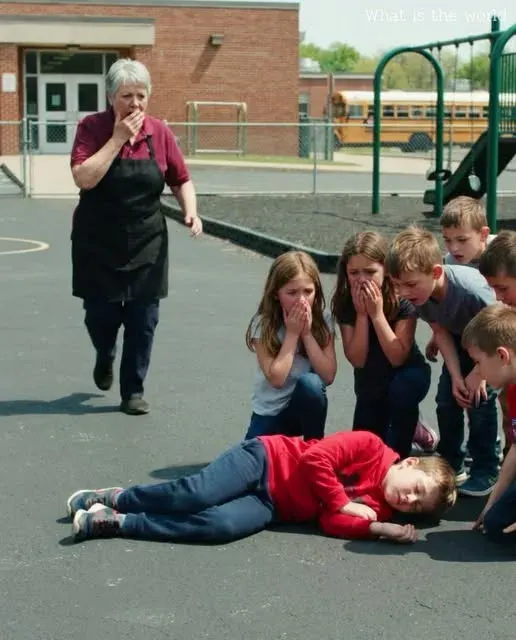
One year later, on a cold Friday afternoon in October, I stood in the gymnasium at Lincoln Elementary behind three long folding tables piled with brown paper grocery bags.
Inside each bag: peanut butter, bread, two cans of pasta with pull-tab lids, cereal, apples, crackers, applesauce, a carton of shelf-stable milk. Two hundred and forty bags, for two hundred and forty children across six schools, every Friday of the school year.
The district called it the Weekend Nutrition Program. The paperwork called me its coordinator. The kids called it what it had always been.
The Friday Bag.
Ciaran Doyle, eight now and almost two inches taller, wore a brand-new red sweatshirt that actually fit and an insulin pump clipped to his belt, which he showed off to every adult who would stand still long enough. He was helping me load bags into wagons for delivery to classrooms, and he took the job extremely seriously.
"Mrs. K," he said, "how come nobody's name is on the bags?"
"Because it doesn't matter who it's from," I said. "It only matters that it gets there."
He thought about that, nodded, and went back to loading.
Brianna worked days now. With the money she no longer spent on insulin co-pays, thanks to a patient assistance program the endocrinologist had found, she had enrolled in community college to become a dental hygienist. She volunteered every Friday at four, packing bags beside Rosa and Gloria.
And at the end of the table, sleeves rolled up, sorting cans into rows with the precision of a man who had always been good with numbers, stood Danny Quincy.
He didn't work for the district anymore. He worked for the Toledo Northwestern Ohio Food Bank, running its school partnerships program for eleven counties, at about half his old salary. He had used the money he'd once been promised as a bonus, plus some savings, to buy a refrigerated van, and every Friday afternoon he drove it to Lincoln and loaded it himself.
He'd apologized to Ciaran in person in the spring, kneeling on the cafeteria floor so they were eye to eye. Ciaran had listened very solemnly and then asked, "Do you like SpaghettiOs?" When Danny said they were the best food ever invented, Ciaran forgave him on the spot. Children are better at that than grown-ups.
At three-thirty, the dismissal bell rang. The children streamed out of their classrooms, and every one of them who needed one walked out the side door with a brown paper bag, nobody pointing, nobody staring, nobody in a corner.
When the gym was empty, Danny came over and leaned on the table beside me.
"Mrs. K," he said, "I never thanked you. Not out loud. Not when I was a kid."
"You drew me a picture," I said. "It's hanging in my hallway."
He smiled, the same crooked smile I remembered from a skinny eight-year-old in a red sweatshirt with a broken zipper.
"Thank you for the Friday bag," he said quietly.
"You're welcome, Danny."
I drove home that evening in my old Buick with the coat-hanger muffler, past the Tony Packo's mural and the cracked blacktop playground where a little boy had once fallen and gotten back up. A small blue tube of glucose gel still rode in my glove box, right where Walt left it.
For twenty-two years, I thought the most important thing I did in that cafeteria was serve lunch. I was wrong. A tray of spaghetti only feeds a child for one afternoon—but a child who knows somebody cared whether he ate will carry that bag for the rest of his life, and someday, if you're lucky, he'll come back and carry it for someone else.