08 / 10
Chapter 8: Danny
He came to my house two nights later, at nine-fifteen, in the rain.
I knew it was him before I opened the door. Nobody else knocked like that—three soft knocks and then a long pause, as if they were half hoping no one would answer.
Daniel Quincy stood on my porch in the gray hoodie, rain dripping off his dark hair, and he looked nothing like the man in the expensive suit. He looked like an eight-year-old boy standing at the side door of the cafeteria, waiting to see if I was going to hand him a bag.
"Mrs. K," he said. "I'm sorry to come so late. I understand if you want me to leave."
I looked at him for a long moment. Then I stepped aside.
"Wipe your feet," I said. "Walt hated wet footprints on the carpet."
He stopped in my hallway, in front of the framed drawing. A lunch lady with gray hair. A boy in a red sweatshirt. THANK YOU MRS K FOR THE FRIDAY BAG.
He stood there for a very long time. Then his shoulders started to shake.
I made a pot of coffee and put out the rest of Gloria's paczki and let him sit at my kitchen table until he could talk.
"I knew it was you the first day," he said finally, wrapping his hands around the mug. "At the staff meeting. I saw your name on the list. Dacey Kowalski. I almost walked out of the building."
"Why didn't you say anything?"
"Because I didn't want to be him anymore." He stared into his coffee. "The kid in the red sweatshirt. The kid who stole crackers from the classroom snack bin and hid food under his mattress in foster care. I went into five foster homes after they took me from my mom. The last one was a man named Roger Haskins in Columbus. He was strict and he was hard, but he kept me fed and got me through high school. And every single night at dinner, he said the same thing. Nobody owes you anything, Daniel. You pay your own way, or you go without."
He laughed, a short, terrible sound.
"I believed him. I put myself through Ohio State working two jobs. I got my master's. I got hired by a charter network that loved numbers, and I was really, really good at numbers. Every time I saw a kid with a debt balance, I saw myself. And I hated it. I thought if I made them pay, if I made the rules matter, then I'd be proving I wasn't that kid anymore."
"And the bonus?"
He winced. "Twelve thousand dollars. I told myself it was just a metric. That the policy was the district's, not mine." He looked up at me with red, wet eyes. "When I saw your payments on that screen, I knew exactly who'd been doing it. You'd been doing for those kids what you did for me. And I couldn't stand it. I fired you because I couldn't stand to look at you."
The rain drummed on the window.
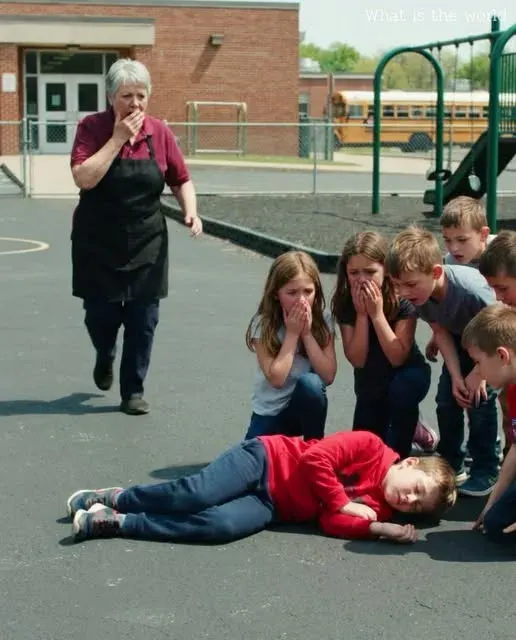
"Then Ciaran fell," he whispered. "And I stood there on the blacktop and I didn't know what to do. I froze. I'm the principal, and I froze, and a sixty-one-year-old woman I'd just fired ran past me and saved a child I'd put in danger. And all I could think was, she's still packing the Friday bag. Twenty-two years later. She never stopped."
I didn't say anything for a while.
"Do you know what you said to me on the last day of second grade?" I asked finally.
He shook his head.
"You said, 'Mrs. K, when I grow up, I'm going to make sure nobody's hungry.'" I folded my hands on the table. "You were eight. You meant it. I believed you."
He put his face in his hands and cried the way children cry, completely and without any shame at all, and I sat across from him in my kitchen and let him, because some people have been holding things in for twenty-two years.