01 / 10
Chapter 1: The Little Thief
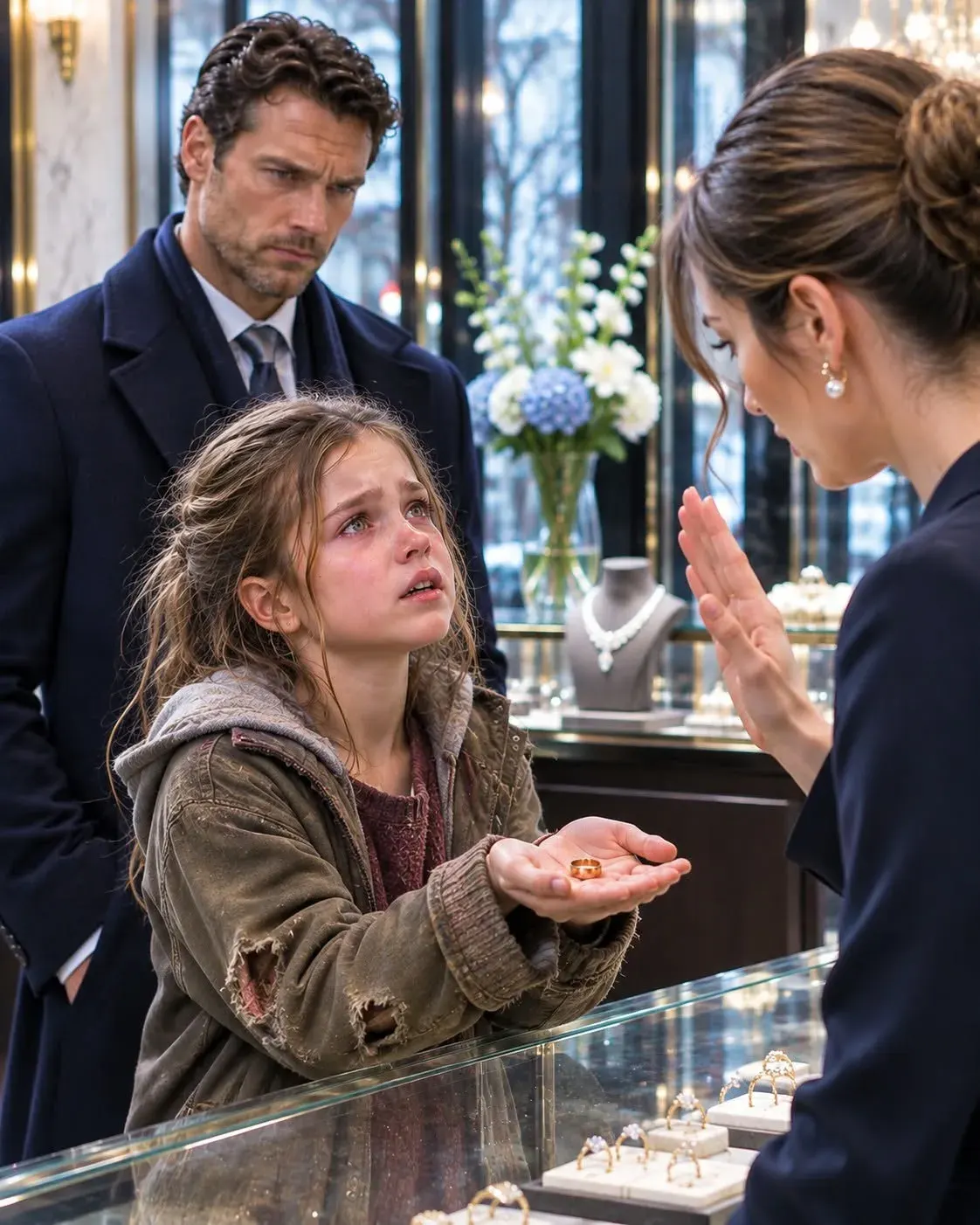
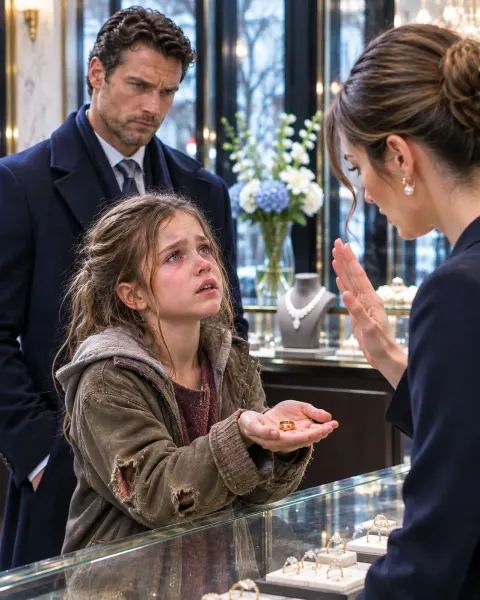
A nine-year-old girl in a torn jacket walked into my flagship jewelry store and asked if one small gold ring could pay for her mother's heart surgery, and my best saleswoman called her a thief in front of my customers. Then I knelt on the wet marble, turned that ring toward the window, and read my own words engraved inside it—words I had given the woman I was supposed to marry ten years earlier.
In 1958 my grandfather opened a one-room workshop on Maxwell Street. Sixty-odd years later, Hayes & Company Jewelers had six stores across the Midwest, and I—Daniel Hayes, thirty-eight and still single—had my name on every one of them. Magazines called me one of Chicago's most eligible bachelors, which mostly meant I worked eighty hours a week and ate dinner standing up.
That Thursday in January, I left a board meeting early and walked four blocks through the slush to our flagship on East Oak Street without telling anyone I was coming. My father had taught me that before his stroke—if you want to know what your store really is, walk in when nobody expects you.
The store looked the way it always did in winter, with marble walls glowing under brass lamps, diamond rings on white stands inside the glass counters, a strand of pearls draped over a gray velvet bust, and a tall vase of white and blue hydrangeas by the door. Through the big front windows, the street was gray and freezing, the curbs lined with dirty snow.
I had barely stepped inside and unbuttoned my navy overcoat over my gray silk tie when I heard the voice.
"Absolutely not," Vanessa Pruitt was saying, loud enough that two women at the bridal counter turned around. "This is not a pawn shop, and I'm not going to tell you again."
Vanessa had been our top saleswoman for four years—polished and precise, her dark-brown hair always in a neat low bun, pearl drops at her ears, her fitted navy blazer worn like armor. I had never heard her raise her voice.
Across the counter from her stood a little girl who couldn't have been older than ten. Her light-brown hair was tangled from the wind, her olive-brown hooded jacket was torn at the elbow and shoulder, and under it she wore a maroon knit sweater with the cuffs pulled over her knuckles.
Her sneakers were soaked through, leaving small dark puddles on our marble floor. Her cheeks were streaked with tears, and she was holding her left hand out flat over the glass, palm up, trembling.
"Please," she said, her voice cracking. "My mommy needs heart surgery, and the hospital says it costs thirty-eight thousand dollars."
Vanessa let out a short, disbelieving laugh. "Thirty-eight thousand dollars," she repeated, glancing at the customers as if they were in on the joke. "For that?"
The girl didn't lower her hand. She lifted it higher, the small gold ring shining in the center of her palm, and looked up at Vanessa with enormous, desperate eyes. "Will this ring pay for Mommy's surgery?"
Vanessa raised one hand like a crossing guard stopping traffic. "Where did you get that ring—does your mother know you took it?" she demanded.
The girl's chin wobbled, and she shook her head.
A cold smirk curved Vanessa's mouth. "Security," she called over her shoulder. "Get this little thief out."
Frank Doyle, the flagship's head of security—broad-shouldered, in a black suit with an earpiece curling behind one ear—strode in from the right and closed his big hand around the girl's thin shoulder. She cried out and twisted toward the door, clutching the ring to her chest.
"Please don't take me away!" she sobbed. "My mommy's in the hospital!"
I was right behind her by then, close enough to see the snow melting in her hair. "Let her go," I snapped.
Frank released her instantly, the way men do when they recognize the voice that signs their paychecks, and the entire store went silent.
Vanessa's face went pale, then pink. "Mr. Hayes—I didn't know you were here," she stammered. "She admitted she took it from her mother, so she's a thief."
"She's a child," I said, turning to face her. "And you humiliated her in front of our customers because she asked us for help."
I knelt beside the girl on the wet marble until my eyes were level with hers.
"Hey," I said gently. "My name is Daniel, and nobody is going to hurt you, okay? What's your name, sweetheart?"
"Emma," she managed, wiping her nose on her sleeve.
"May I see your ring, Emma?"
She studied my face with eyes the color of Lake Michigan in winter, blue fading into gray. Then she opened her fingers, and I lifted the ring carefully from her palm.
My heart stopped.
It was a narrow gold band with one small diamond in a raised setting, and right beside the setting was a tiny scratch—the one my grandmother Eleanor made in 1961, when she caught her hand in the door of my grandfather's first car. I knew that scratch better than my own signature.
I turned the ring toward the window light, and there, inside the band, in the delicate script an old engraver on Wabash Avenue had cut by hand, were four words.
Claire and Danny, Always.
My breath caught. "Emma," I asked, my voice barely holding together, "what's your mother's name?"
She wiped her tears and looked up at me. "Claire Brooks."