03 / 10
Chapter 3: The Letter I Never Got
Nobody in Room 412 moved. Emma stood between us holding the ring, looking from her mother's face to mine with growing alarm.
"What letter?" I asked.
Claire laughed, a short, painful sound that made the monitor beside her bed chirp faster. "Don't," she said. "Not in front of her."
Then she saw the ring in Emma's hand, and her whole face changed. "Emma Grace Brooks," she breathed. "Where did you get that?"
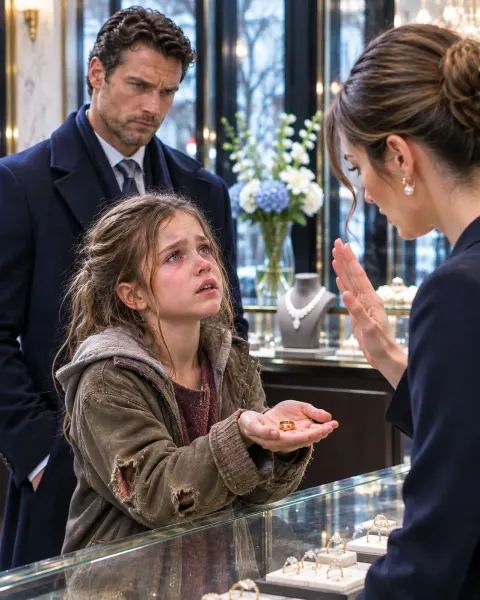
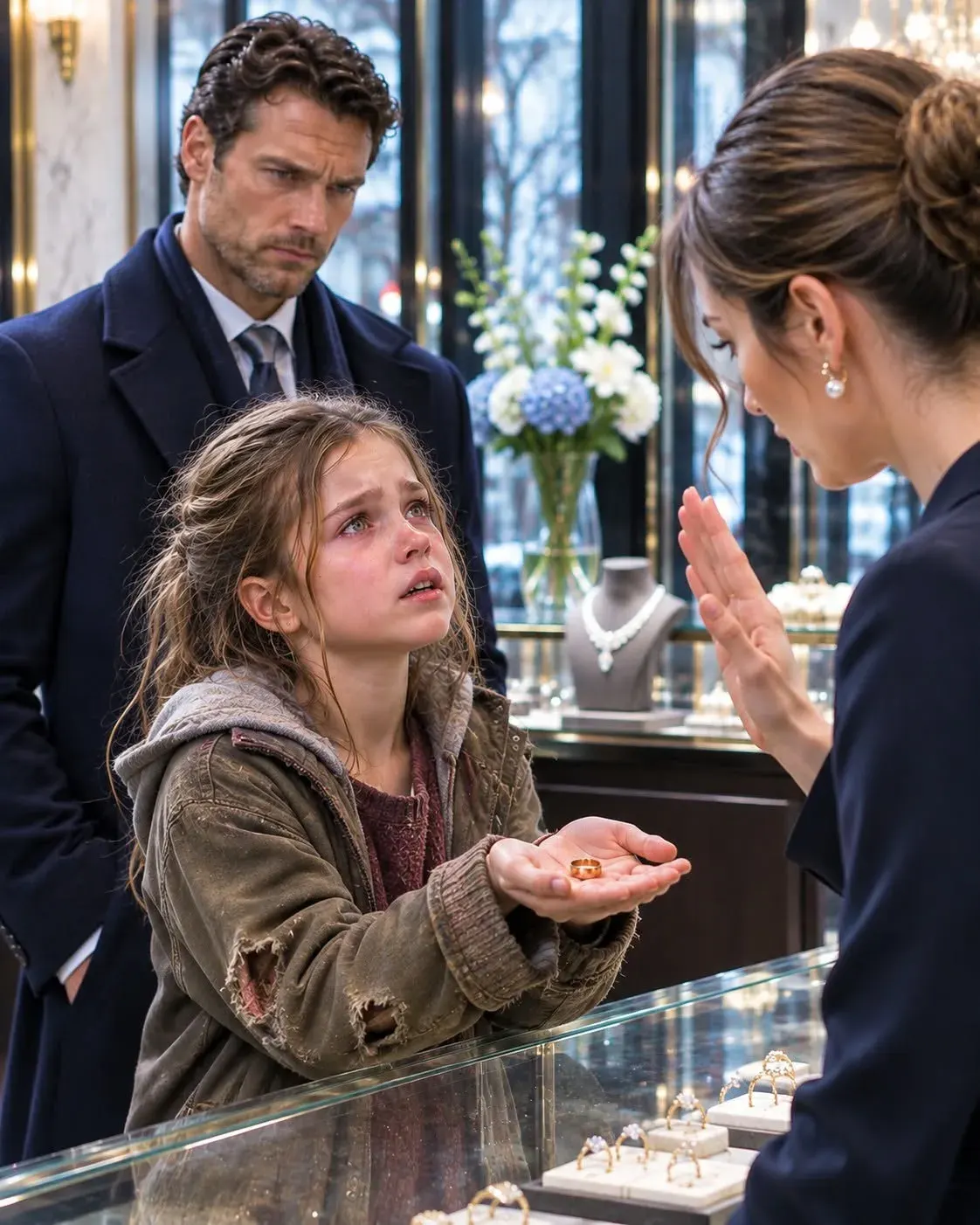
Emma's lower lip trembled, and she confessed everything in one long, wobbly breath—the jewelry box, the train, the pawn shop on Broadway, the lady who called her a thief. "I just wanted to pay for your heart," she finished, and burst into tears.
Claire held out her arms, and Emma climbed carefully onto the bed and buried her face against her mother's shoulder. Over her daughter's tangled hair, Claire looked at me with wet, furious eyes.
A knock interrupted us. Dr. Helen Osei, the cardiac surgeon—tall and silver-haired, with reading glasses pushed up on her head—stepped in with a tablet and stopped short at the sight of a stranger in an overcoat.
"I'm an old friend," I said, before Claire could say otherwise. "Daniel Hayes, and I'd like to understand what's happening."
Claire looked away, which Dr. Osei seemed to take as permission. She explained it kindly and plainly: a mitral valve damaged by rheumatic fever when Claire was a girl, failing faster this winter, and a replacement that needed to happen within weeks, not months.
"Her insurance ended when she lost her job," Dr. Osei said, glancing at Claire. "Our financial office won't schedule a planned procedure without a payment arrangement, and the deposit they require is thirty-eight thousand dollars."
"Then schedule it," I said. "I'll take care of the bill—all of it."
"No," Claire said instantly, her voice hoarse but firm. "I don't want your money, Daniel—I never did."
Dr. Osei looked from her to me, read the room like a woman who had seen every family drama there was, and tactfully excused herself.
Emma had cried herself to sleep against her mother's side, the ring still clutched in her fist. Claire stroked her hair for a long time before she spoke again.
"I wrote to you," she said, staring at the ceiling. "The week she was born, I sent a letter to your parents' house in Lake Forest, because I didn't know where else you'd be. I told you about her, and I put in a photograph."
"I never got it," I said.
"You answered it," she said, her voice breaking. "Typed, on your company letterhead—Mr. Hayes asks that you not contact the family again—with a check for ten thousand dollars, like I was a bill you were settling."
I stared at her. "Claire, I swear to you, I never saw a letter, and I never sent a check."
"Then who did?" she asked bitterly. "The tooth fairy?"
I sank into the vinyl chair by the window, my mind racing back through ten years of empty mornings at the Copper Kettle.
"Why did you leave?" I asked finally. "Just tell me that much, because I've spent ten years wondering what I did wrong."
Claire closed her eyes. "You didn't do anything," she said. "That's what made it so easy for them."
"Them?" I repeated.
Instead of answering, she reached for the canvas tote hanging on the bed rail and pulled out a worn leather wallet. From behind her library card, she slid an old envelope, soft as cloth from being folded and unfolded, and held it out to me.
"I kept it so I'd never be foolish enough to hope again," she said. "Go ahead—look me in the eye and tell me you didn't send it."
My hands weren't steady as I unfolded it. Inside was a single typed page on our old company letterhead, the one with the gold H in the corner that we had stopped using eight years ago.
The message was three lines long and colder than the wind off the lake. Mr. Hayes has been informed of your situation, it read, and he asks that you make no further attempt to contact him or his family—please accept the enclosed as a final settlement.
Folded inside it was a personal check for ten thousand dollars, never cashed, dated the second of April, nine years ago. The paper had gone yellow at the edges, and someone—Claire, I realized—had drawn a single thin line through the amount, as if she could cancel the insult herself.
The signature at the bottom wasn't mine. It was written in a tall, elegant hand I had known my entire life—the same hand that had signed my report cards, my birthday cards, and the notice announcing my father's funeral.
Margaret Hayes. My mother.