08 / 10
Chapter 8: The Vote
The boardroom on the top floor of the Oak Street building had a long walnut table, tall windows overlooking the frozen lake, and a portrait of my grandfather that watched every meeting with his sleeves rolled up and a jeweler's loupe in his eye.
My mother sat at the head of the table in a charcoal suit and pearls, exactly where she had sat for nine years. Six directors filled the leather chairs on either side, and several of them avoided my eyes when I walked in.
"Thank you all for coming on short notice," my mother began smoothly. "I'm afraid this is a painful matter, but I believe my son's judgment has been seriously compromised."
She laid out her case like a deck of cards. I had humiliated a top-performing employee in front of customers, removed a child from the store without parental permission, and spent a week neglecting company business at the bedside of a woman with a documented history of seeking money from this family.
She slid a copy of the check across the table. "Nine years ago, Ms. Brooks requested a settlement," she said. "Now her daughter appears in our store with a family heirloom and a story about surgery, and my son—grieving, lonely, sentimental—has handed her a blank check."
Then she read a written statement from Vanessa Pruitt, describing a child who admitted to theft and an executive who lost control of himself on the sales floor.
A few directors shifted in their seats. Harold Benning, who had known my father for forty years, frowned at me over his glasses. "Daniel," he said, "is any of this untrue?"
"Almost all of it," I said, standing. "But I'd rather you see for yourselves."
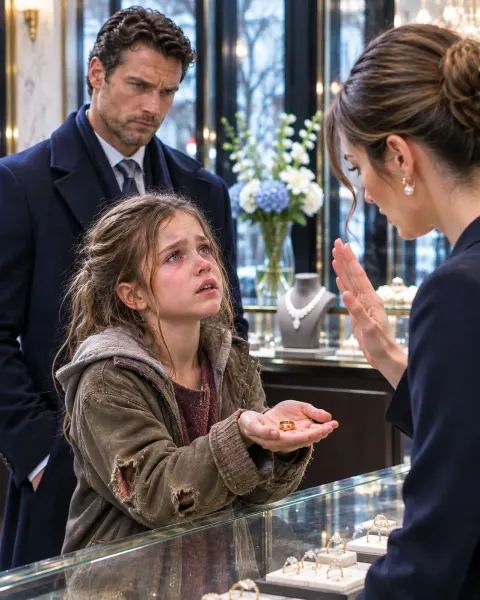
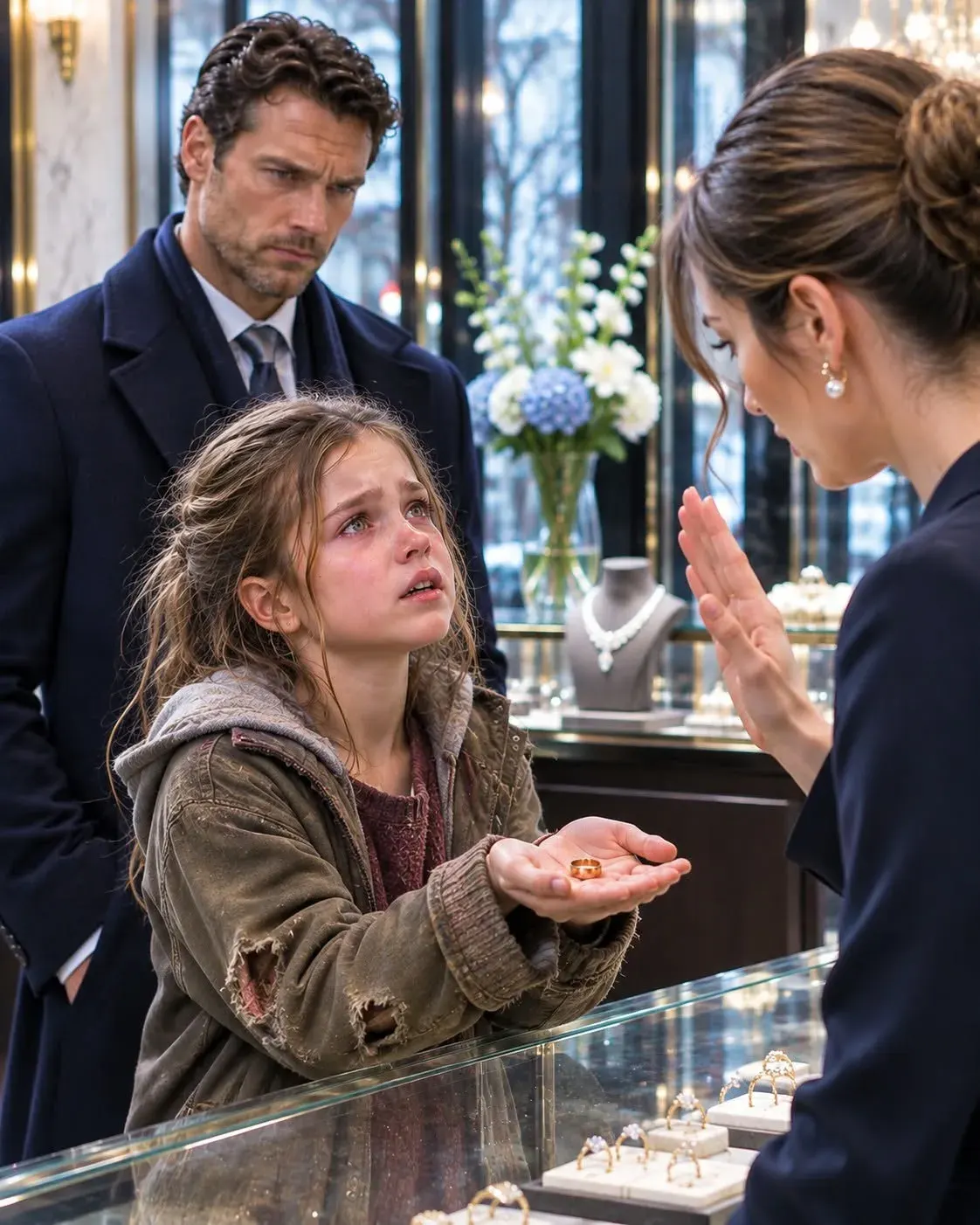
Joyce dimmed the lights, and the security footage from that Thursday afternoon played across the screen at the end of the room. The directors watched a little girl in soaked sneakers holding out a ring with a trembling hand, and Vanessa Pruitt's cold smirk, and Frank's big hand closing around a crying child's shoulder.
Get this little thief out, Vanessa said on the recording, and one of the directors, a grandmother of six named Lorraine Alder, put her hand over her mouth.
When the lights came up, I set the check on the table. "Ms. Brooks never cashed this," I said. "Nine years, and she never touched it—she even drew a line through the amount, which is strange behavior for a gold digger who won't take the gold."
Then I untied the blue ribbon and laid nine envelopes down the center of the walnut table, one for every year of my daughter's life. I read only one card out loud, the last one, and I didn't need to read anything else.
The room was utterly silent.
"There's one more thing," I said, nodding to Joyce, who opened the door for Frank Doyle.
Frank stood at the end of the table with his hands clasped behind his back. "About ten minutes after Mr. Hayes left with the girl, I found Ms. Pruitt in the stockroom on her phone," he said. "I heard her say Mrs. Hayes's name, and she said the boss just walked out with the Brooks woman's kid."
Every head turned toward my mother.
"Vanessa Pruitt is your goddaughter," I said evenly. "You placed her in the flagship four years ago, and she has reported to you about everything I do in that store ever since—which is how your lawyers found Claire within four days."
My mother's face didn't move, but her knuckles had gone white around her pen.
The vote took less than five minutes. Six hands rose to remove Margaret Hayes as chair of the board, and the seventh—her own—stayed folded on the table.
She stood, gathered her papers, and walked to the door with her spine perfectly straight. Then she stopped with her hand on the brass handle and turned back to look at the portrait of my grandfather.
"Did you know your grandmother refused to give me that ring?" she asked. "When I married your father, I asked her for it, and Eleanor told me it belonged to someone who would marry for love, not for a name."
She looked at me, and for a moment, beneath forty years of polish, I saw something raw and old and bitter. "Nearly thirty years, I watched that ring—on her hand, then in that safe—and then you gave it to a girl from a coffee shop."
Then she was gone, her heels clicking down the marble hallway until the elevator doors closed.
I stood in that silent boardroom and finally understood. My mother hadn't been protecting the company from Claire at all—she had been punishing Claire for being given the one thing she had never been offered.