04 / 10
Chapter 4: My Mother's Signature
I read the name three times, as if it might rearrange itself into something else.
"That's my mother's signature," I said, and my own voice sounded far away. "Claire, I give you my word—I never knew about this letter, or this check, or Emma."
She studied me without blinking. Ten years ago, she used to tease that she could read me like one of her picture books, and I watched her read me now, line by line.
Something in her face gave way. "She told me you'd say that someday," Claire said, barely above a breath. "She told me you'd come back with a sad story and I shouldn't believe a word of it."
Then, in a voice worn thin by the oxygen and the years, she told me what happened.
The week after I proposed, my father had his stroke. I remembered that week in fragments—the hospital corridor, the machines, sleeping in a plastic chair—and that I barely called Claire at all.
On the Thursday of that week, my mother appeared at Claire's apartment in Andersonville wearing a camel coat and carrying a leather folder. She sat on Claire's thrift-store couch without taking off her gloves and explained, very calmly, how the world worked.
My father was dying, she said, and the board was nervous. If Daniel married a coffee-shop girl who drew pictures for a living, Richard Hayes would change his will from his hospital bed, and Daniel would lose the company his grandfather built.
"She said you'd told her you had doubts," Claire said, her eyes on the window. "That you proposed in a rush, and you were too much of a gentleman to take it back."
"That's a lie," I said, my voice rough. "Every word of it."
"I know that now," she said. "But you weren't answering my calls, Daniel, and I was twenty-five and terrified, so I believed her."
My mother had offered her money to disappear, and Claire had refused it. A few days later, she packed her apartment in one night, moved in with an old college roommate in Milwaukee, and left me a note so I wouldn't have to choose between her and my dying father.
Six weeks later, she found out she was pregnant.
I sat there with my elbows on my knees and my face in my hands. "My father asked about you," I said when I could speak again. "Before he lost his words, he asked me to bring you to the hospital so he could meet the girl who made me smile—and I had to tell him you were gone."
Claire made a small, broken sound and turned her face toward the window.
"Claire," I said carefully. "Is she—"
"Look at her, Daniel," Claire said tiredly.
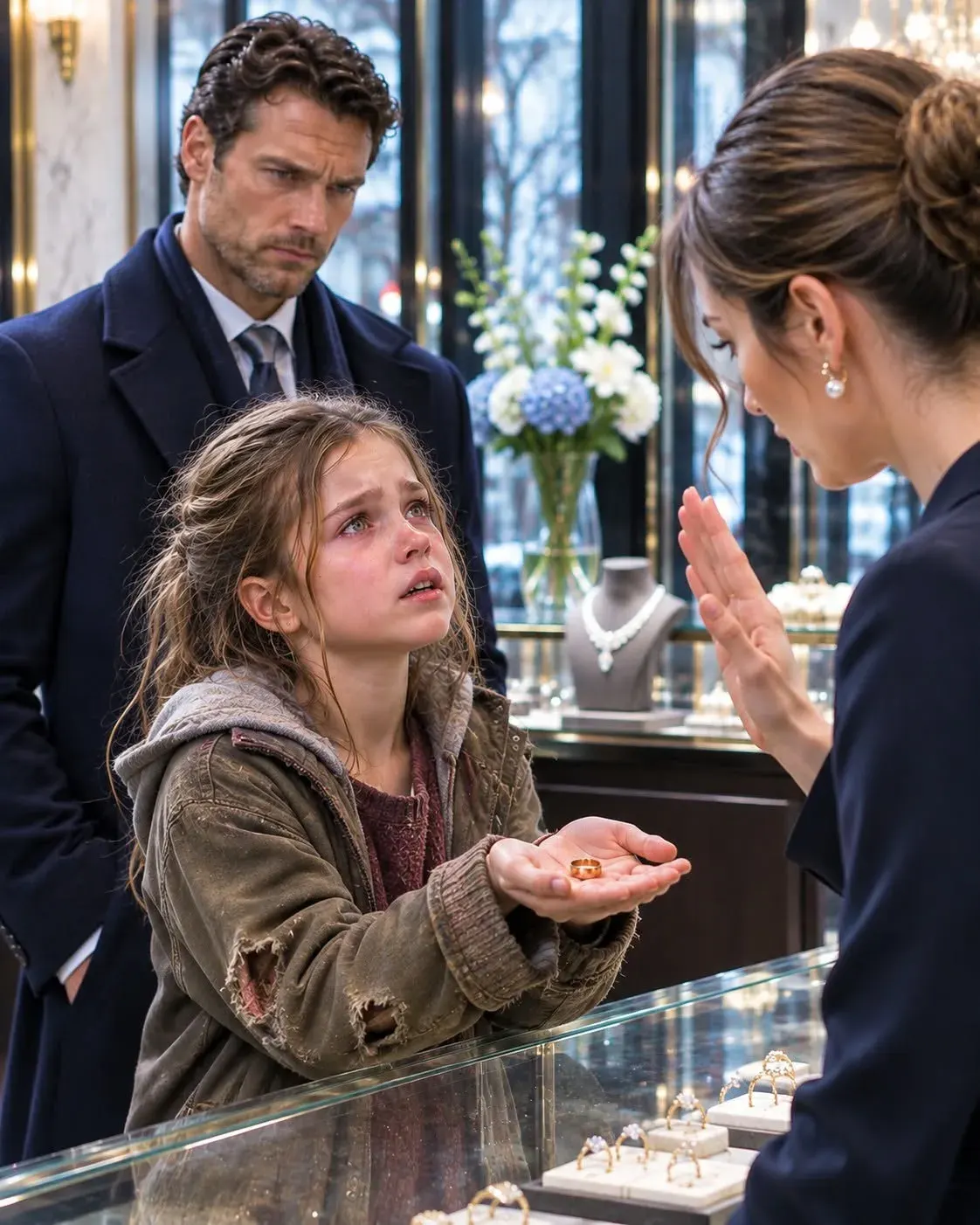
So I looked. At the crown of Emma's head, a stubborn cowlick stuck straight up in exactly the place mine always had, the one my mother used to flatten before church. And the hand clutching my grandmother's ring was her left, the same as mine, and my father's, and his father's.
My throat closed. "Let me pay for the surgery," I said. "Not for you, if you don't want it—for her."
Claire was silent for a long time. "A loan," she said at last. "With papers, and interest, and I pay back every cent."
"Whatever you want," I said.
"I want my daughter to have a mother," she said, her eyes filling. "That's all I've ever wanted."
Within the hour, I had spoken to the hospital's financial office, and Dr. Osei scheduled the valve replacement for Monday morning. Joyce took Emma home to Mrs. Whitaker with a promise that I would see her tomorrow, and Emma made me pinky-swear on it.
Then I drove north through the falling snow to Lake Forest.
My mother's house sat at the end of a long, curving drive, all gray limestone and tall windows glowing gold against the dark. She was in the library, as she always was at nine o'clock, with a glass of sherry and a fire burning, her silver hair perfectly bobbed and her reading glasses on a thin chain.
She looked up and smiled. "Daniel, what a surprise—you look frozen."
I laid the yellowed check on the table beside her sherry without a word.
The smile went away, but she didn't flinch, and she didn't deny it.
"I wondered when that would surface," she said, folding her hands. "Your father was dying, the company was fragile, and you had handed your grandmother's ring to a girl from a coffee shop you'd known for three months."
"She was pregnant," I said.
"I didn't know that when I went to see her."
"You knew when you sent this," I said, tapping the check.
My mother took off her reading glasses and let them fall against her chest. "A child is a claim, Daniel—on the company, on the name, on everything your grandfather built," she said. "I protected you."
Then she rose, crossed the room to her antique writing desk, and unlocked the bottom drawer with a small brass key. She lifted out a bundle of envelopes tied with a faded blue ribbon and set it in my hands.
"She didn't stop at one letter," my mother said. "She sent one every March."