01 / 10
Chapter 1: The Twelfth Caregiver
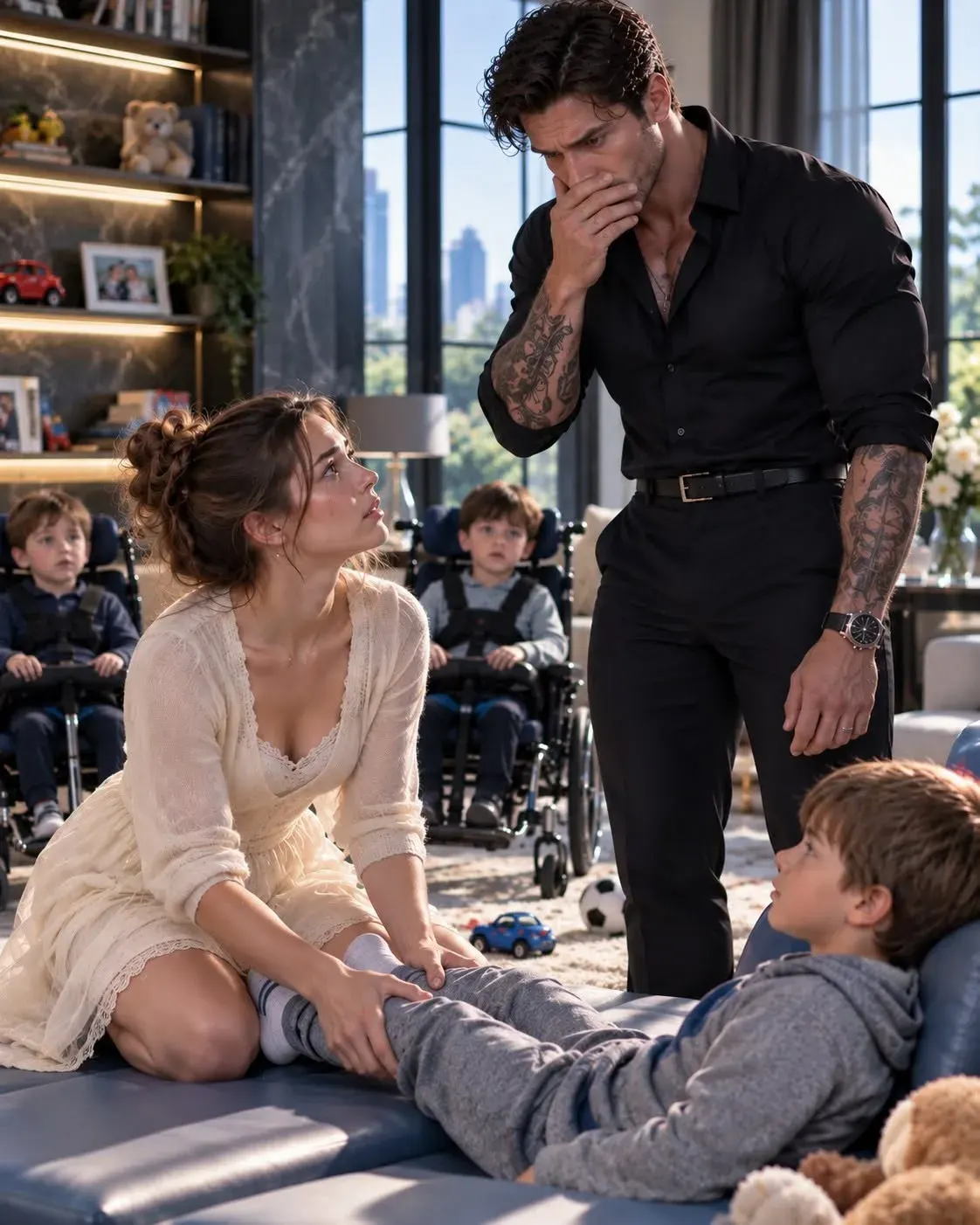
I had forty-one cameras watching every corner of my twenty-seven-room mansion because eleven caregivers had already failed my paralyzed triplet sons, and I fully expected those lenses to catch the twelfth one failing too. Instead, they caught Angela Bailey quietly doing the one thing America's top specialists had dismissed as pointless—and three weeks later, one of my boys lifted his leg without anyone touching him.
My father built our family from a single smoky bar on the West Side; I turned it into something the newspapers only whispered about. By thirty-eight, Andrew Grant was a name aldermen returned calls to before their wives', and grown men lowered their voices when I walked into a steakhouse on Rush Street.
But none of that power meant a thing on the December night two years earlier, when my wife, Nora, drove our five-year-old sons home through freezing rain and her car slid off a drawbridge into the black water of the Chicago River.
Nora never came home, and when the divers pulled our sons out after nearly eight minutes underwater, the boys who came back to me were no longer the loud little tornadoes who raced down my marble hallways.
Now they were seven, living in the east wing of my limestone mansion on the edge of Lincoln Park among beeping monitors and padded wheelchairs with black harnesses. Victor Hale, the most celebrated pediatric neurologist in the Midwest, had told me they would never walk, never speak, and might never truly know I was there—and I paid him a fortune every month to keep them comfortable.
Eleven caregivers had come through my door in two years, and every one had disappointed me. The first fell asleep during Adam's night feeding, the sixth tried to sell photos of my boys to a gossip site, and the ninth decided Nora's diamond earrings would look better in her own purse.
I never raised my voice with any of them; most simply discovered they preferred working in other states.
After the ninth, I had cameras installed in every room except the bathrooms, all feeding a wall of glowing screens in my third-floor office. Trust had become a luxury, and I had stopped paying for luxuries that kept disappointing me.
Then, on a gray Monday morning in February, Angela Bailey walked through my wrought-iron gate with snow melting in her hair.
She was twenty-nine, with warm brown eyes, brown hair twisted into a loose, messy bun, and a cream lace knit dress under a wool coat that had seen better winters. She didn't flinch at Leo Marsh, my head of security, who stood behind me like a locked steel door—instead, her eyes went straight up the stairs toward the east wing, as if she already knew exactly where my sons were.
"Let me save us both some time, Ms. Bailey," I said, stepping close enough that she had to tilt her chin up. "My sons have a medical protocol written by Victor Hale, and you will follow it to the letter—no improvising, no experiments, and no miracles."
"I understand, Mr. Grant," she answered, and she said it so easily that I almost believed her.
She broke my rule before lunch.
From my office, I watched her walk into the therapy room, the old living room we had gutted after the accident. Every caregiver before her had gone straight to the charts, but Angela pulled a chair between my sons and told them about the pancakes my housekeeper, Ruth, had burned that morning and the fat gray squirrel robbing the snow under the empty bird feeder.
"Somebody forgot to feed the birds," she told them, leaning in like she was sharing a secret. "Where I come from, that's practically a crime."
My hand tightened on the edge of my desk. Nora had hung that feeder the spring the boys turned four, and nobody had filled it since her funeral.
Victor Hale's voice echoed in my head—talking to them comforts you, Andrew, not them. When Leo offered to go downstairs and remind the new girl of the rules, I heard myself say, "Not yet."
On Thursday afternoon, she started singing.
It was a small, silly tune, a little off-key, the kind a grandmother makes up while stirring soup. Little red bird on the windowsill, the sun is up and the world is still.
Phillip was lying back against the blue cushions in his gray hoodie, his worn teddy bear tucked against his side, his eyes half open and fixed on nothing—the way they had been for two endless years. Then, slowly, an inch at a time, my son turned his head toward her voice.
I stopped breathing, because Phillip hadn't turned toward anything or anyone since the night the river took his mother.
On the screen, Angela kept singing as if nothing had happened at all. But her hand drifted down to Phillip's and squeezed it once, very gently—and in eleven caregivers, not one had ever made my son turn his head.