09 / 10
Chapter 9: A Man Who Never Apologizes
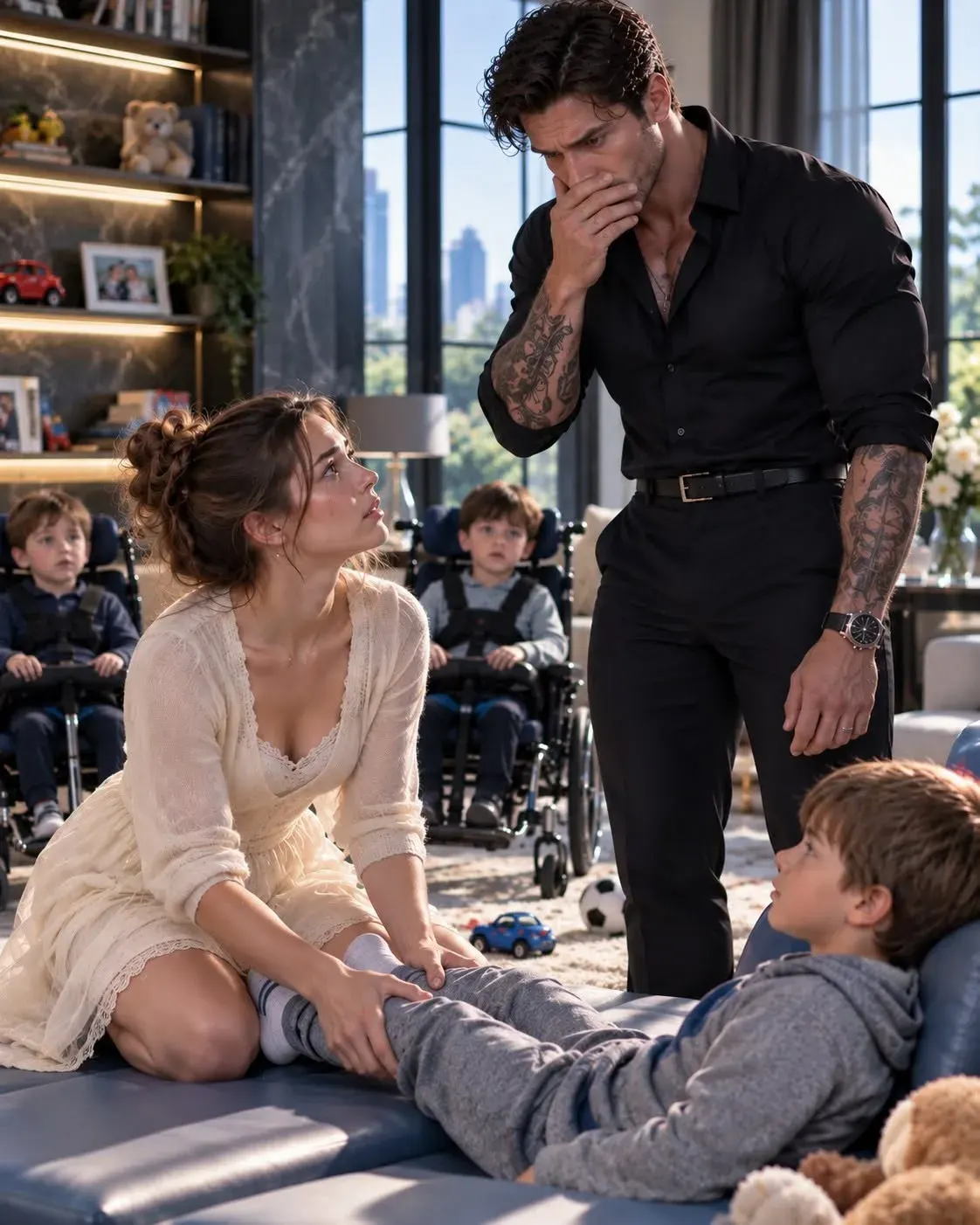
Adam came off the ventilator four days later, weak and pale and absolutely furious about his oxygen mask, which Dr. Lowe called the best sign she'd seen all week. When I leaned over his bed, he looked right at me—and then his eyes slid past my shoulder and searched the empty doorway.
He was looking for her.
That afternoon, I left the hospital after eight straight days and drove myself across Chicago with nobody watching my back, down the Dan Ryan and into the narrow side streets of Bridgeport.
Angela's address was a brick two-flat that had once belonged to her grandmother, with a chain-link fence, a cracked concrete path, and a plastic bird feeder swaying from the porch rail. Of course there was a bird feeder.
She opened the door in faded jeans and an old sweatshirt, and behind her, half-packed boxes covered the floor. "Is it Adam?" she asked immediately—fear first, before anything else.
"He's off the ventilator and breathing on his own," I said quickly, and she closed her eyes and gripped the doorframe.
When she opened them again, she didn't invite me in, and I didn't blame her. "You're moving," I said, nodding at the boxes.
"A children's clinic in Columbus needs an aide," she said, crossing her arms against the wind off the lake. "They don't ask about Lakeshore."
I had rehearsed something on the drive—a neat, controlled speech, the kind I used to deliver in the back rooms of supper clubs. It vanished the second she looked at me.
"I was wrong," I said, and the words felt strange in my mouth, like a language I had never practiced.
"I was scared out of my mind, and I took it out on the one person who never once lied to my sons," I continued, my voice rough. "You didn't put Adam in that hospital, Angela—you're the reason he had something to fight his way back to."
She didn't say anything, but her eyes were shining.
"I sang to him," I admitted, shoving my hands into the pockets of my light jacket. "Your grandmother's song—I'm terrible at it."
"You sang?" she asked, her voice catching.
"Like a car alarm," I said, and a crooked smile tugged at my mouth. "He squeezed my hand anyway."
She laughed, and it was half a sob, but it was still a laugh.
"I'm not here to ask you to work for me again," I said. "I'm here to tell you I'm sorry, and that my sons miss you—and so do I."
That last part slipped out before I could stop it, and I let it stand. "There's something else you should know," I added. "I've stepped away from the family business—all of it."
She stared at me, stunned. "Men in my world don't usually get to retire," I explained. "It cost me time, money, and a few old friendships, and Leo is handling the last of it now."
"Why?" she asked.
"Because I was supposed to drive them home that night, and I missed it for a meeting," I said, swallowing hard. "I'm not missing anything else."
Angela was quiet for a long time while a city bus rumbled past and a dog barked somewhere down the block. Then she lifted her chin. "I have conditions," she said.
"Name them," I said instantly.
"I go back to school this fall to finish my physical therapy degree, and Dr. Lowe has already offered to supervise my hours," she said, holding up one finger. Then she held up a second. "And you stop treating hope like a bill that's about to come due."
"Done," I said.
"The boys hear about their mother every single day—pictures, stories, her laugh," she continued, her eyes softening. "They deserve to know her."
My throat closed, and I could only nod.
"One more," she said, a small smile tugging at the corner of her mouth. "Keep the cameras."
"Why?" I asked, genuinely confused.
"Because someday, you're going to want to watch them walk," she said softly. "Over and over again."
I glanced at the boxes behind her, then back at her face. "Is that a yes?"
Angela Bailey reached for her keys.
Adam came home the following week. Leo carried him through the front door himself, and Ruth had hung a crooked, hand-painted welcome banner across the grand staircase.
Phillip and Eric were waiting by the tall windows, and when Angela wheeled Adam into the therapy room, Phillip turned his head so fast that Dr. Lowe actually gasped. Then Eric, who hadn't made a single sound in two and a half years, opened his mouth and laughed.
It was Nora's laugh—every last bit of it.